

The Essential Guide to Business Values Importance
Over 85 percent of american workers say a company’s values directly shape their daily experience and loyalty. Strong business values are much more than slogans. They become the heartbeat of how organizations work, hire, and engage customers. When clear values drive business decisions, companies build trust from the inside out and stay resilient even in competitive markets. Understanding what truly defines these principles can shape the future success of any american business.
Table of Contents
- Defining Business Values And Their Significance
- Types Of Business Values In Modern Organizations
- How Business Values Shape Company Culture
- Business Values’ Role In Customer Loyalty
- Risks Of Neglecting Core Business Values
Key Takeaways
| Point | Details |
|---|---|
| Importance of Business Values | Business values guide organizational behavior and decision-making, driving effectiveness and alignment across teams. |
| Types of Business Values | Modern organizations recognize diverse value types including economic, customer, employee, and societal values, contributing to a comprehensive growth strategy. |
| Impact on Company Culture | Core values shape company culture by establishing behavioral expectations and guiding hiring and decision-making processes. |
| Customer Loyalty Connection | Authentic values foster emotional connections with customers, transforming transactions into meaningful relationships that enhance loyalty. |
Defining Business Values and Their Significance
Business values are foundational principles that guide an organization’s behavior, decision-making, and strategic direction. They represent the core beliefs that define a company’s identity, culture, and approach to achieving its goals. Beyond mere words on a wall, these values serve as a critical compass that shapes internal operations and external interactions.
Research indicates that organizational values play a profound role in driving business effectiveness. A comprehensive study on organizational dynamics highlights how strategic values directly influence business strategies and critical decision-making processes. These principles aren’t abstract concepts but tangible frameworks that impact everything from employee engagement to customer relationships.
Successful businesses understand that well-defined values create alignment and purpose. They act as a unifying force that helps teams make consistent choices, even when facing complex challenges. When brand consistency intersects with strong organizational values, companies can create powerful cultural narratives that attract top talent, inspire customer loyalty, and differentiate themselves in competitive markets.
At their core, business values serve multiple critical functions. They provide:
- Behavioral guidelines for employees
- A framework for ethical decision-making
- A shared understanding of organizational priorities
- A mechanism for building trust with stakeholders
- A strategic tool for long-term organizational development
By articulating and living these values, businesses transform abstract principles into actionable strategies that drive sustainable growth and meaningful impact.
Types of Business Values in Modern Organizations
Organizational values extend far beyond simple operational guidelines, representing a complex ecosystem of strategic principles that drive business success. Research on organizational frameworks reveals that modern businesses typically categorize their values across multiple interconnected dimensions, each playing a critical role in shaping corporate identity and performance.
Modern organizations typically cultivate four primary value categories. Business values focus on economic performance and strategic objectives, while relational values emphasize interpersonal dynamics and collaboration. Development values center on continuous improvement and learning, and contribution values highlight the organization’s broader societal impact. These categories work synergistically to create a holistic approach to organizational management and growth.
Business value creation has become increasingly multifaceted, encompassing more than traditional financial metrics. Contemporary organizations now recognize multiple value streams, including:
- Economic value: Financial performance and shareholder returns
- Customer value: Meeting and exceeding customer expectations
- Employee value: Creating meaningful workplace experiences
- Societal value: Contributing to broader community and environmental goals
By understanding and integrating these diverse value types, businesses can develop more resilient, adaptive, and purpose-driven organizational cultures. This approach transforms values from abstract concepts into actionable strategies that drive sustainable growth and meaningful stakeholder engagement.
How Business Values Shape Company Culture
Company culture emerges as a powerful manifestation of an organization’s core values, transforming abstract principles into tangible workplace dynamics. Corporate DNA reveals how an organization’s fundamental values, visions, and sense of purpose fundamentally bind employees together, creating a unique organizational identity that goes far beyond standard operational protocols.

Modern organizations increasingly recognize that values are not static declarations but living frameworks that actively shape employee behavior and organizational interactions. Teal organizations demonstrate how values centered on self-management, wholeness, and evolutionary purpose can dramatically transform workplace environments, promoting unprecedented levels of employee autonomy and authentic engagement.
The impact of business values on company culture manifests through several critical mechanisms:
- Establishing behavioral expectations
- Guiding decision-making processes
- Creating a shared sense of organizational purpose
- Influencing hiring and talent retention strategies
- Defining acceptable workplace interactions
When brand voice aligns seamlessly with core organizational values, companies can create powerful cultural narratives that inspire team members, attract top talent, and differentiate themselves in competitive markets. These values become the invisible yet powerful architecture that determines how teams communicate, collaborate, and pursue collective goals.
Business Values’ Role in Customer Loyalty
Customer loyalty transcends traditional transactional relationships, emerging as a complex emotional connection deeply rooted in an organization’s authentic values and consistent behavior. Modern consumers are increasingly discerning, seeking brands that demonstrate genuine commitment to principles that extend beyond mere financial transactions.
Businesses that successfully communicate and embody their core values create powerful emotional resonance with customers. Building customer loyalty online requires more than surface-level marketing tactics. It demands a holistic approach where every customer interaction reflects the organization’s fundamental beliefs and commitment to ethical, transparent practices.
The connection between business values and customer loyalty manifests through several key dimensions:
- Establishing trust through consistent ethical behavior
- Demonstrating genuine commitment to customer experiences
- Creating emotional connections beyond product features
- Showing transparency in business operations
- Aligning brand actions with stated organizational principles
Customers today are sophisticated stakeholders who evaluate brands not just on product quality, but on their demonstrated values. When organizations develop branding strategies that authentically reflect their core principles, they transform casual transactions into lasting, meaningful relationships that drive long-term business success.
Risks of Neglecting Core Business Values
Organizational integrity crumbles when businesses treat their core values as mere decorative statements rather than fundamental operational principles. Research on organizational performance reveals that neglecting core values can precipitate a cascading series of strategic and cultural failures that undermine long-term business sustainability.
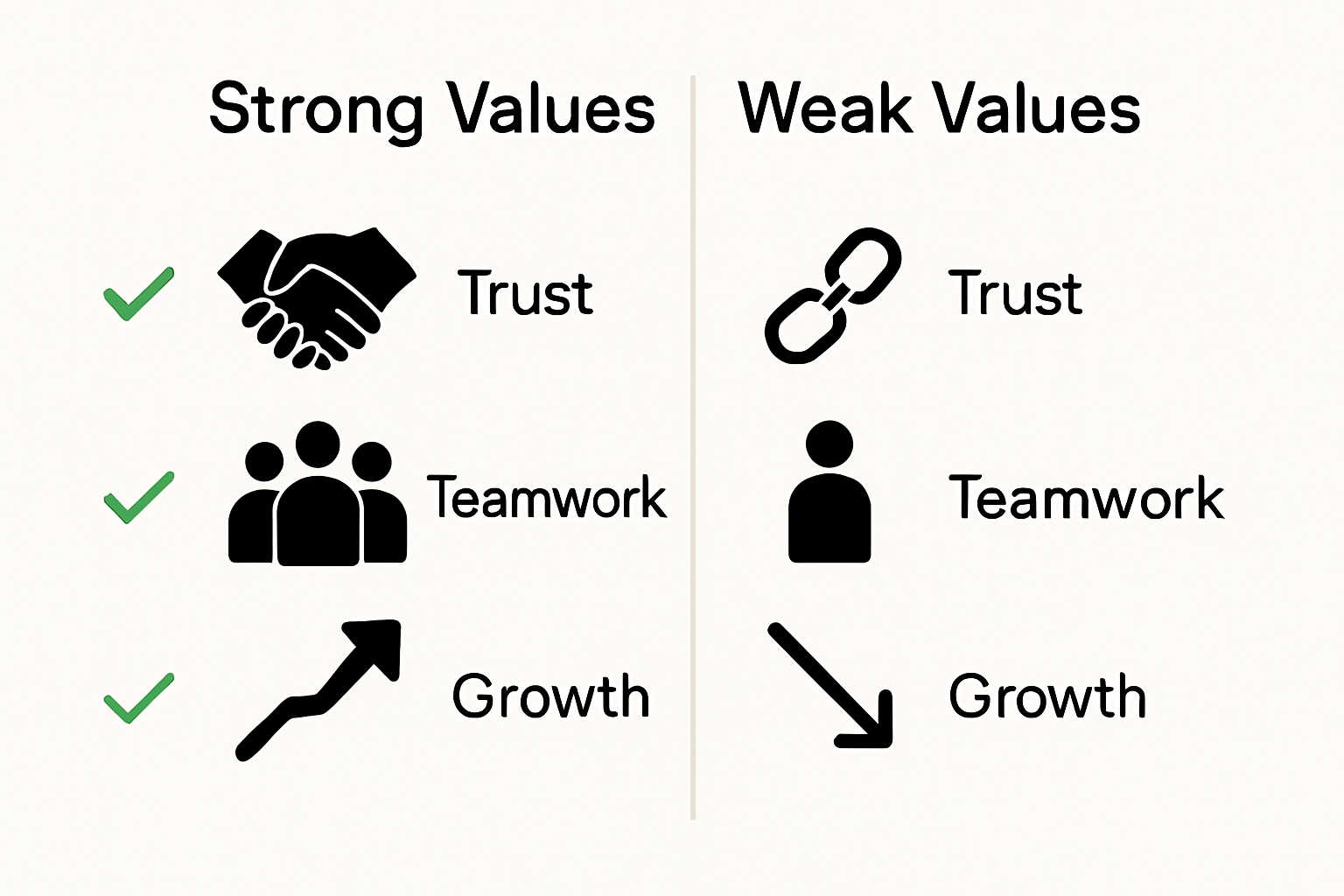
Business value frameworks highlight the profound consequences of value erosion, demonstrating how organizations that ignore their fundamental principles risk significant stakeholder disengagement. When companies fail to authentically embody their stated values, they create a destructive disconnect that undermines trust, damages reputation, and ultimately threatens their competitive positioning.
The multifaceted risks of neglecting core business values include:
- Diminished employee morale and commitment
- Reduced customer trust and loyalty
- Increased vulnerability to ethical breaches
- Weakened organizational cohesion
- Compromised brand reputation
Businesses that overlook critical branding strategies risk transforming their organizational identity from a purposeful entity into a hollow corporate shell, disconnected from the meaningful principles that originally inspired their creation. The price of such disconnection extends far beyond immediate financial metrics, fundamentally eroding the organization’s capacity for sustainable, purpose-driven growth.
Align Your Business Values with Powerful Email Marketing Strategies
The article highlights how crucial it is for businesses to live by their core values to build trust, inspire loyalty, and create a strong company culture. If you find challenges in consistently expressing your brand’s authentic values to your customers or worry about losing emotional connection in your communications, there is a solution. Take Action specializes in email marketing that not only automates and optimizes engagement but also ensures your brand voice and organizational values shine through every message.

Discover how to transform your email campaigns into a strategic tool that reinforces your business values and drives lasting customer loyalty. Whether you want to increase open rates, recover abandoned carts, or deepen emotional connections with your audience, our email flow setup and data-driven strategies help you achieve measurable growth fast. Don"t wait for disengagement to take its toll. Visit Take Action to start turning your brand values into automated, high-impact marketing that fuels sustainable growth today.
Frequently Asked Questions
What are business values and why are they important?
Business values are foundational principles that guide an organization’s behavior and decision-making. They are crucial because they shape company culture, influence employee engagement, and help build trust with stakeholders.
How do business values impact employee engagement?
Well-defined business values create alignment and purpose among employees, guiding their behaviors and decisions. This alignment fosters a positive work environment where employees feel connected to the organization’s mission and objectives.
How can business values enhance customer loyalty?
Businesses that authentically communicate and embody their core values build trust and emotional connections with customers. When customers see organizations consistently aligning their actions with stated values, it leads to greater loyalty and long-term relationships.
What are the risks of neglecting core business values?
Neglecting core business values can lead to diminished employee morale, reduced customer trust, and a weakened organizational identity. This disconnect can harm reputation and ultimately threaten the organization’s sustainability and competitive edge.
Recommended
- Understanding the Importance of Brand Consistency | Take Action Blog | Take Action
- Complete Guide to Blogging for Business Success | Take Action Blog | Take Action
- Complete Guide to Sustainability in Business | Take Action Blog | Take Action
- Understanding the Importance of Brand Voice for eCommerce | Take Action Blog | Take Action
- Understanding Corporate Social Responsibility Events - team I
- What is Branding for Small Business? Understanding Its Importance | Reddog Consulting Group