

Digital and Social Media Marketing Explained: Key Strategies
Tracking down lost sales and nurturing repeat buyers is a constant challenge for every ecommerce brand, especially when abandoned carts threaten your bottom line. As brands across the world refine their approach to digital marketing, the importance of integrated strategies and precise targeting is more obvious than ever. By exploring the differences and connections between digital and social media marketing channels, you can discover powerful ways to automate customer retention, build meaningful loyalty, and maximize every opportunity in your Klaviyo campaigns.
Table of Contents
- Defining Digital and Social Media Marketing
- Types of Digital Marketing Channels
- How Social Media Platforms Drive Engagement
- Audience Targeting and Personalization Methods
- Risks, Compliance, and Common Mistakes
Key Takeaways
| Point | Details |
|---|---|
| Digital Marketing Evolution | Digital marketing has evolved into a multifaceted approach that integrates strategies for immediate engagement and measurable outcomes across various platforms. |
| Social Media Impact | Social media has transformed engagement, enabling brands to create immersive experiences that foster genuine connections with audiences. |
| Targeting and Personalization | Implementing sophisticated audience targeting and personalization methods increases the relevance and effectiveness of marketing communications. |
| Risk Management | Brands must navigate legal and ethical risks while maintaining data privacy to protect consumer trust and ensure compliance across regions. |
Defining Digital and Social Media Marketing
Digital and social media marketing represent strategic approaches to connecting brands with audiences through online platforms and interactive digital channels. At its core, digital marketing encompasses all marketing efforts that leverage electronic devices and the internet to reach potential customers. Social media marketing, a critical subset of digital marketing, focuses specifically on using social media platforms to engage, communicate, and build relationships with target audiences.
The landscape of digital marketing has dramatically evolved from simple online advertising to a complex, multidimensional marketing intelligence source. Modern digital strategies now integrate multiple approaches, including:
- Social commerce strategies
- Content marketing techniques
- Real-time audience monitoring
- Customer relationship management (CRM) digital tactics
- Personalized engagement campaigns
Understanding digital marketing requires recognizing its fundamental components and strategic objectives. Unlike traditional marketing, digital channels provide unprecedented opportunities for precise targeting, real-time interaction, and measurable outcomes. Brands can now track engagement metrics, analyze consumer behavior, and adjust strategies instantaneously.
Social media platforms have transformed from simple communication tools to sophisticated marketing ecosystems. They enable businesses to create immersive experiences, generate user-generated content, and build communities around their brand identity. These platforms offer granular targeting capabilities that allow marketers to reach specific demographics with unprecedented precision.
Pro tip: Develop a comprehensive digital marketing strategy that integrates multiple channels and focuses on creating genuine, value-driven interactions with your target audience.
Types of Digital Marketing Channels
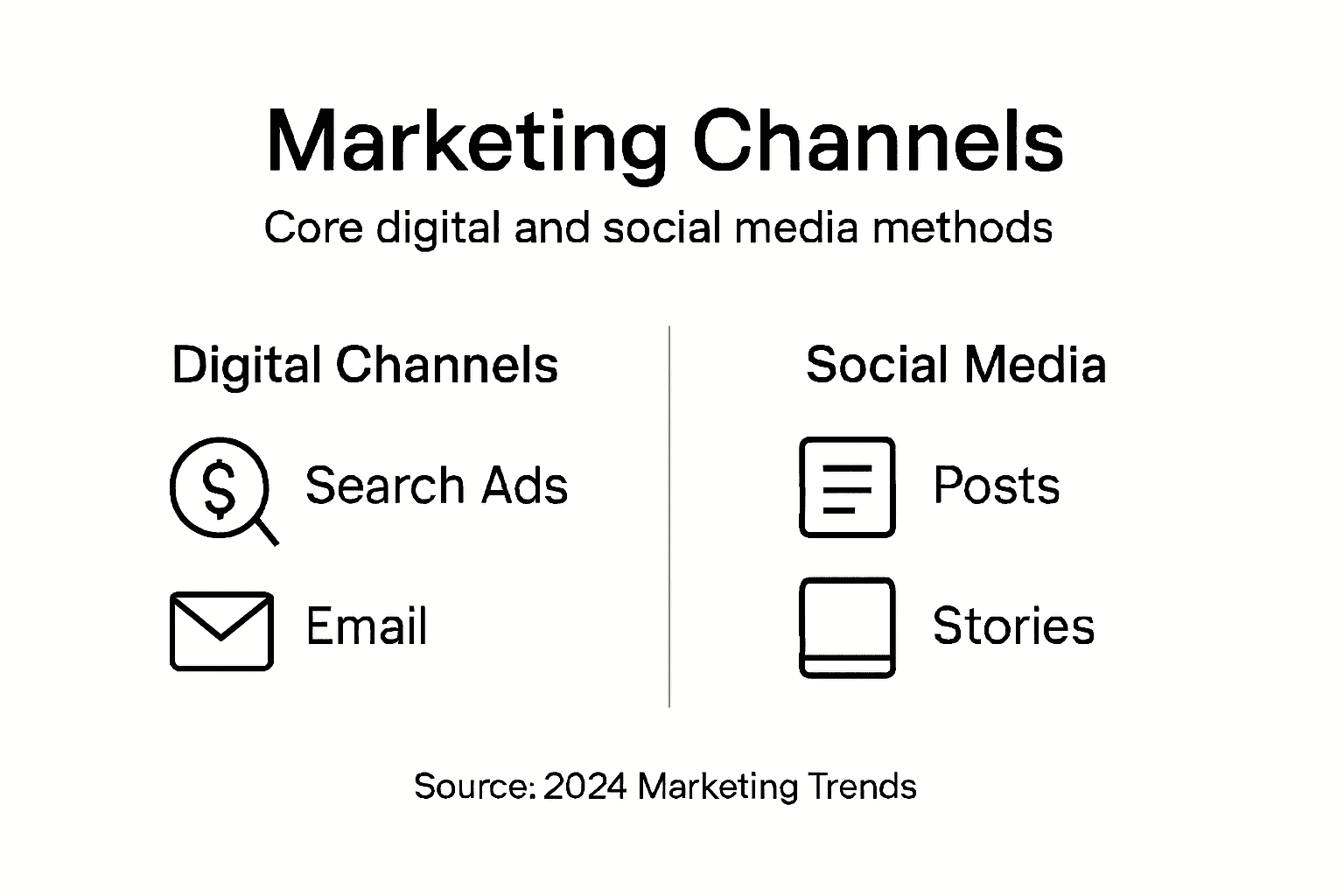
Digital marketing comprises a diverse array of online channels that enable businesses to connect with potential customers through strategic communication platforms. Digital marketing strategies have evolved to include multiple interconnected approaches that support comprehensive brand engagement and targeted outreach.
The primary digital marketing channels can be categorized into several key types:
- Search Engine Marketing (SEM)
- Pay-per-click advertising
- Organic search optimization
- Social Media Marketing
- Organic content creation
- Paid social advertising
- Email Marketing
- Automated email campaigns
- Segmented communication strategies
- Content Marketing
- Blogs and articles
- Video and multimedia content
- Affiliate Marketing
- Performance-based partnerships
- Commission-driven promotions
Each digital channel offers unique advantages for reaching and engaging target audiences. Search engine marketing allows brands to appear directly in consumer search results, while social media platforms provide opportunities for interactive and community-driven communication. Email marketing remains a powerful tool for personalized, direct communication with potential and existing customers.
Successful digital marketing requires strategic integration of multiple channels. Businesses must understand their target audience’s preferences and behaviors to select the most effective platforms. This approach enables precise targeting, real-time performance tracking, and continuous optimization of marketing efforts.
Here’s a summary of major digital marketing channels and their core business benefits:
| Channel Type | Primary Advantage | Best For |
|---|---|---|
| Search Engine Marketing | Immediate search visibility | Lead generation |
| Social Media Marketing | Direct audience interaction | Brand awareness |
| Email Marketing | High personalization potential | Customer retention |
| Content Marketing | Thought leadership building | Long-term engagement |
| Affiliate Marketing | Performance-based reach | Expanding partnerships |
Pro tip: Create a multi-channel digital marketing strategy that allows seamless interaction across different platforms, ensuring consistent brand messaging and maximizing audience engagement.
How Social Media Platforms Drive Engagement
Social media marketing strategies have transformed how brands interact with consumers, creating dynamic, interactive communication channels that go beyond traditional advertising. These platforms enable businesses to build genuine connections through user-generated content, real-time interactions, and participatory marketing approaches.
Key mechanisms of social media engagement include:
- Viral Content Creation
- Shareable multimedia posts
- Interactive storytelling
- Trend-responsive content
- Community Building
- User-generated discussions
- Brand-specific hashtag campaigns
- Interactive Q&A sessions
- Personalized Interactions
- Direct messaging capabilities
- Targeted content recommendations
- Real-time customer support
- Social Proof Generation
- Customer reviews and testimonials
- Influencer collaborations
- User-generated product demonstrations
Modern social platforms have fundamentally redesigned consumer engagement by transforming passive audiences into active participants. Brands can now create immersive experiences that encourage immediate feedback, emotional connection, and collaborative content creation. This two-way communication model allows companies to gather instantaneous insights while building stronger, more authentic relationships with their target audiences.

The power of social media engagement lies in its ability to humanize brands and create meaningful interactions. By leveraging complex customer interactions, businesses can develop loyal communities that extend far beyond traditional marketing approaches. Successful engagement requires understanding platform-specific dynamics, audience preferences, and creating content that resonates on a personal level.
Pro tip: Design social media content that encourages genuine interaction, focusing on storytelling and value creation rather than pure promotional messaging.
Audience Targeting and Personalization Methods
Audience targeting represents a sophisticated approach to digital marketing that transforms generic communication into precision-driven engagement. Personalization strategies enable marketers to deliver highly relevant content that resonates with specific demographic segments and individual preferences.
Key targeting and personalization methods include:
- Demographic Segmentation
- Age-based targeting
- Geographic location filtering
- Income level categorization
- Behavioral Targeting
- Purchase history analysis
- Website interaction tracking
- Browsing pattern evaluation
- Psychographic Segmentation
- Lifestyle preferences
- Personal interests
- Value-based categorization
- Technology-Driven Personalization
- AI-powered recommendation engines
- Machine learning predictive models
- Real-time content adaptation
Advanced digital marketing platforms now offer unprecedented granularity in audience understanding. Marketers can construct intricate user profiles by combining multiple data points, allowing for hyper-targeted messaging that feels individually crafted. This approach dramatically increases engagement rates by ensuring that each communication feels uniquely relevant to the recipient.
The most effective personalization strategies go beyond surface-level demographic information. They dive deep into understanding consumer motivations, anticipating needs, and creating experiences that feel genuinely tailored. By leveraging sophisticated data analytics and machine learning technologies, brands can create marketing messages that feel like personal conversations rather than generic broadcasts.
Pro tip: Continuously refine your audience targeting by collecting and analyzing user interaction data, ensuring your personalization strategies evolve with changing consumer behaviors.
Risks, Compliance, and Common Mistakes
Digital marketing presents complex challenges that require strategic navigation of legal, ethical, and operational risks. Digital marketing research frameworks highlight critical areas where brands must exercise extreme caution to maintain consumer trust and regulatory compliance.
Common digital marketing risks include:
- Data Privacy Violations
- Unauthorized personal information collection
- Inadequate data protection mechanisms
- Non-compliance with global privacy regulations
- Reputation Management Challenges
- Inappropriate content publication
- Misaligned brand messaging
- Negative viral interactions
- Technological Vulnerabilities
- Cybersecurity breaches
- Platform algorithm dependencies
- Automation system failures
- Regulatory Compliance Issues
- Cross-border marketing restrictions
- Age-based content regulations
- Industry-specific advertising limitations
Marketers must develop comprehensive strategies that proactively address potential risks. This involves implementing robust data protection protocols, maintaining transparent communication practices, and continuously monitoring digital marketing activities for potential compliance breaches. Understanding the nuanced legal landscape across different regions becomes critical for brands operating in multiple markets.
The most significant mistakes often stem from overreliance on automation and underestimating the human element in digital marketing. Brands that fail to maintain authentic connections, respect consumer privacy, and adapt to changing regulatory environments risk substantial financial and reputational damage. Successful digital marketing requires a delicate balance between technological innovation and ethical considerations.
Compare key digital and social media marketing risks by their main consequences:
| Risk Area | Example Issue | Potential Consequence |
|---|---|---|
| Data Privacy | Unauthorized collection | Legal penalties |
| Reputation Management | Negative viral interaction | Brand mistrust |
| Technology | Platform algorithm shift | Lost visibility |
| Compliance | Cross-border ad violations | Regulatory fines |
Pro tip: Develop a comprehensive digital marketing compliance checklist that includes regular audits, data protection assessments, and ongoing team training to mitigate potential risks.
Unlock the Full Potential of Your Digital and Social Media Marketing with Precision Email Strategies
The article highlights the crucial challenge of creating personalized audience targeting and maintaining genuine engagement across digital channels. Many brands struggle to transform complex data into meaningful interactions and to automate retention without losing the human touch. If you want to overcome these hurdles and drive measurable growth through strategic automation, segmentation, and value-driven campaigns, it is time to take your digital marketing efforts a step further. Our approach leverages the power of Klaviyo-driven email marketing to complement your social media and content strategies, ensuring every customer receives messages that truly resonate.
Elevate your brand by automating key customer journeys such as welcome emails, abandoned cart recovery, and post-purchase flows with Take Action. Combining data-driven insights with human expertise allows you to boost open and click rates, build lasting customer loyalty, and diversify revenue streams beyond paid advertising. Don’t let your digital marketing be just noise. Visit Take Action now to discover how our tailored email solutions align perfectly with your digital strategies to generate scalable, measurable results.
Frequently Asked Questions
What is the difference between digital marketing and social media marketing?
Digital marketing encompasses all marketing efforts that utilize electronic devices and the internet to reach customers, while social media marketing is a subset focused specifically on engaging audiences through social media platforms.
What are some key types of digital marketing channels?
The primary digital marketing channels include Search Engine Marketing (SEM), Social Media Marketing, Email Marketing, Content Marketing, and Affiliate Marketing, each offering unique advantages for customer engagement and outreach.
How can social media platforms drive engagement for my brand?
Social media platforms enhance engagement through viral content creation, community building, personalized interactions, and generating social proof, transforming audiences from passive consumers to active participants in brand conversations.
What are the common risks associated with digital marketing?
Common risks include data privacy violations, reputation management challenges, technological vulnerabilities, and regulatory compliance issues, all of which require strategic navigation to maintain consumer trust and adhere to legal standards.
Recommended
- Influencer Marketing Explained: 2025 Guide for Business Growth | Take Action Blog | Take Action
- How to Boost Social Shares for Ecommerce Success | Take Action Blog | Take Action
- Understanding Embracing Digital Transformation for Brands | Take Action Blog | Take Action
- Digital Marketing Strategies 2025: Complete Guide | Take Action Blog | Take Action
- Amazon Marketing Strategy Case Study: Boosting Seller Success - Searchoneers
- Digital Marketing in Fashion – Driving Global Trends – Smoked Times
- Real-Time AI Analytics: Measuring Post-Purchase Campaign Performance - WISMOlabs