

How to build an email list for ecommerce success in 2026
Building a quality email list remains one of the most powerful ways to drive repeat purchases and long-term customer loyalty for ecommerce brands. Yet many businesses struggle to attract subscribers who actually engage and convert. The challenge isn’t just collecting email addresses, it’s capturing the right people at the right moments with compelling reasons to join. This guide walks you through proven strategies to prepare, build, and optimize your email list in 2026, from choosing the right tools and crafting irresistible incentives to leveraging automation and social media for sustainable growth that fuels revenue.
Table of Contents
- Preparing To Build Your Email List
- Capturing Emails At Every Touchpoint
- Optimizing And Automating Your Email List Growth
- Leveraging Social Media To Grow Your Email List
- Partner With Take Action For Email List Success
Key takeaways
| Point | Details |
|---|---|
| Quality beats quantity | Focus on engaged subscribers who open emails and purchase rather than chasing large inactive lists. |
| Test everything | A/B testing signup forms, subject lines, and offers reveals what drives best opt-in rates. |
| Automate welcome flows | Welcome email series introduce your brand and prompt first purchases immediately after signup. |
| Capture at all touchpoints | Place signup opportunities on homepage, checkout, product pages, and blog to maximize conversions. |
| Use social strategically | Promote lead magnets through targeted ads and organic posts to attract ideal customers. |
Preparing to build your email list
Before launching signup forms across your site, establish clear goals for what you want your email list to achieve. Are you focused on recovering abandoned carts, driving repeat purchases, or building brand awareness? Your goals shape everything from platform selection to the incentives you offer. Choose an email marketing platform that supports automation, segmentation, and integrates seamlessly with your ecommerce store. Klaviyo, Mailchimp, and similar tools offer workflows that save time and personalize customer experiences at scale.
Develop lead magnets that your target audience actually wants, such as first-purchase discounts, exclusive buying guides, early access to sales, or free shipping codes. Generic offers rarely convert. Instead, align incentives with customer pain points and desires. A skincare brand might offer a personalized routine quiz, while a home goods store could provide seasonal decorating tips. Test different incentives to discover what resonates most with your specific audience.
Avoid purchasing email lists, no matter how tempting the shortcut appears. Bought lists contain unengaged contacts who never opted in, damaging your sender reputation and deliverability rates. Email providers penalize accounts that generate spam complaints, pushing your messages to junk folders even for legitimate subscribers. Organic list building takes longer but creates a foundation of trust and engagement that purchased lists never deliver.
Set standards for subscriber quality from day one. Track metrics like open rates, click rates, and conversion rates rather than just list size. A smaller list of engaged buyers outperforms a massive list of inactive contacts every time. Consider implementing double opt-in to confirm subscriber intent, filtering out fake emails and accidental signups while boosting overall engagement rates.
Pro Tip: Create a simple welcome gift or resource library exclusively for email subscribers to immediately demonstrate value and encourage ongoing engagement. Explore ecommerce newsletter ideas for higher retention to keep subscribers interested long-term.
Capturing emails at every touchpoint
Maximize email capture by placing signup opportunities at every customer touchpoint throughout the buyer journey. Your homepage should feature a clear, benefit-focused signup form above the fold or in a prominent sidebar. Product pages offer another high-intent moment where shoppers already show interest in your offerings. A simple “Get updates on new arrivals” or “Notify me when back in stock” form converts browsers into subscribers.

Checkout pages present a prime opportunity since customers are already providing contact information. Add a checkbox inviting them to join your email list for exclusive deals or product tips. Post-purchase thank you pages work similarly, capturing emails when satisfaction and engagement peak. Blog content attracts visitors searching for information, making contextual signup forms highly effective when positioned within or after valuable articles. Learn how repurposing content for email signups amplifies your reach.
Use pop-ups, slide-ins, and exit-intent prompts strategically to grab attention without frustrating visitors. Time pop-ups to appear after 30 seconds of browsing or when users scroll halfway down a page, allowing them to engage with your content first. Exit-intent technology detects when someone is about to leave your site and triggers a last-chance offer or incentive. Keep these prompts simple, visually appealing, and easy to close for users who aren’t interested.
Leverage customer service interactions and live chat to request email addresses naturally. When resolving issues or answering questions, agents can offer to send follow-up information or exclusive tips via email. This personal touch often converts hesitant visitors into willing subscribers. Consider the table below comparing signup form types and ideal placements:
| Form Type | Best Placement | Pros | Cons |
|---|---|---|---|
| Embedded form | Homepage, footer, sidebar | Always visible, non-intrusive | May be overlooked |
| Pop-up | Homepage, product pages | High visibility, strong conversion | Can annoy some visitors |
| Slide-in | Blog posts, product pages | Less intrusive than pop-ups | Easier to dismiss |
| Exit-intent | All pages | Captures abandoning visitors | Only triggers once per session |
Pro Tip: Tailor lead magnets to specific pages or customer behaviors. Offer a skincare routine guide on moisturizer product pages or a sizing chart on apparel pages to boost relevance and conversion rates.
Optimizing and automating your email list growth
A/B testing is crucial for optimizing signup forms, subject lines, and lead magnet offers to discover what drives the highest opt-in rates. Test one variable at a time, such as form headline, button color, or incentive type, to isolate what influences subscriber behavior. Run tests long enough to gather statistically significant data, typically at least a week or several hundred form views. Small improvements compound over time, turning modest conversion gains into substantial list growth.
Implement a welcome email series immediately after signup to introduce your brand, deliver promised incentives, and encourage first purchases. Welcome flows typically perform better than any other automated sequence, with open rates often exceeding 50%. Your first email should arrive within minutes, confirming subscription and providing the lead magnet. Follow up with 2-4 additional emails over the next week, sharing your brand story, highlighting bestsellers, and offering social proof through customer reviews.
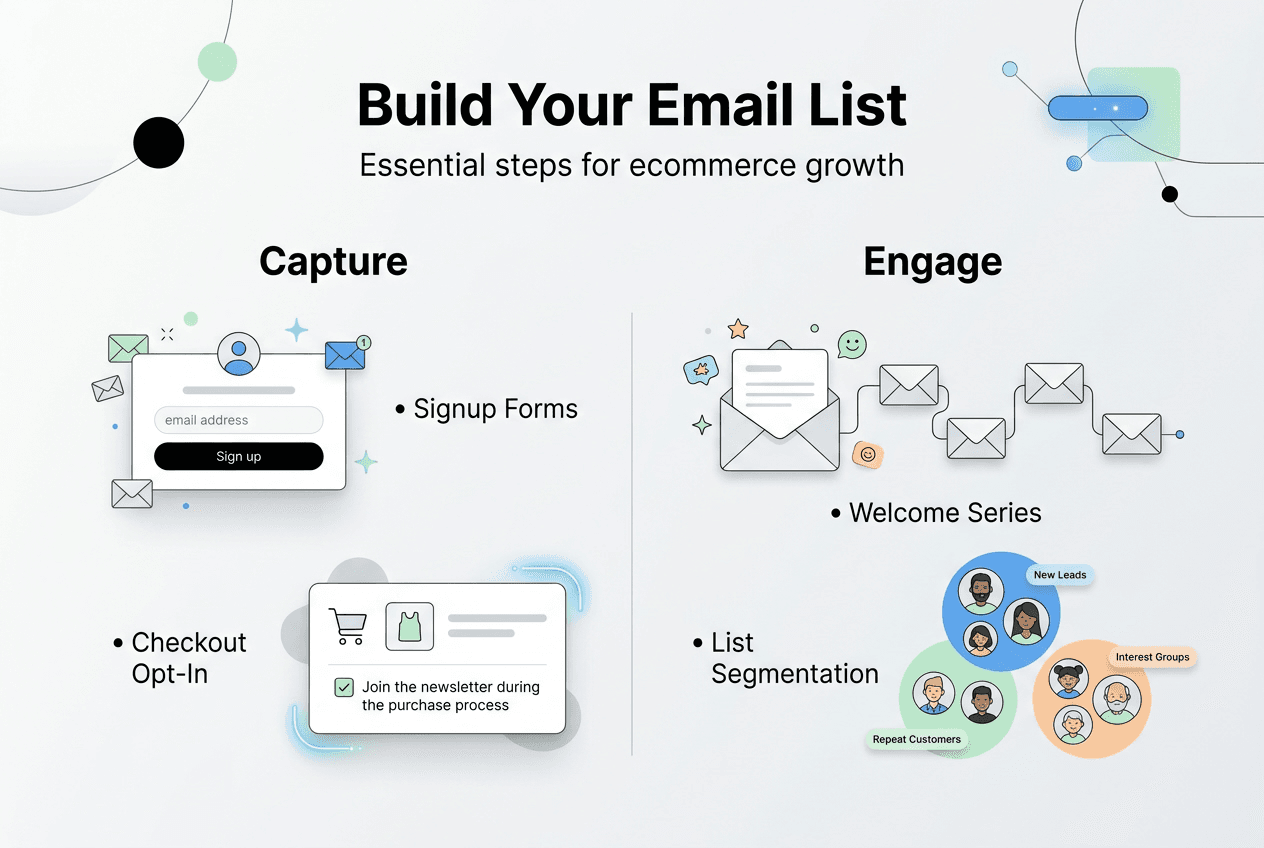
Segment your list early based on signup source, interests, or behavior to tailor messages for maximum relevance. Subscribers who joined via a blog post about sustainable fashion likely have different interests than those who signed up for a discount code at checkout. Send targeted content that matches their demonstrated preferences, boosting engagement and reducing unsubscribes. Explore list segmentation strategies to refine your approach and increase conversion rates.
Use automation to ensure timely communication without manual effort. Set up workflows triggered by specific actions like abandoned carts, product views, or purchase anniversaries. Automation maintains consistent touchpoints that nurture leads and drive repeat purchases while freeing your team to focus on strategy and creative development. Review email frequency best practices to balance staying top-of-mind with avoiding subscriber fatigue.
Consider the comparison below showing manual versus automated approaches:
| Approach | Time Investment | Consistency | Personalization | Scalability |
|---|---|---|---|---|
| Manual emails | High | Inconsistent | Limited | Poor |
| Automated flows | Low after setup | Reliable | Advanced | Excellent |
Pro Tip: Review automation performance monthly, updating content and offers based on engagement metrics to keep flows fresh and effective as your audience evolves.
Leveraging social media to grow your email list
Your social channels offer powerful opportunities to promote email signups by highlighting lead magnets and membership benefits. Create posts that showcase what subscribers receive, whether exclusive discounts, early product access, or valuable content. Use compelling visuals and clear calls to action that direct followers to your signup landing page. Instagram and Facebook stories work particularly well for time-sensitive offers or limited-availability lead magnets that create urgency.
Run targeted social media ad campaigns focused on your ideal customer demographics and interests to boost signup rates efficiently. Platforms like Facebook and Instagram allow precise audience targeting based on behaviors, interests, and lookalike audiences modeled after your best customers. Design ad creative that emphasizes the value exchange, making the benefit of joining your list immediately clear. Test different ad formats, from carousel ads showcasing multiple incentives to video ads demonstrating product value.
Incorporate clear signup invitations in your profile bios, pinned posts, and link-in-bio tools like Linktree or Beacons. Make joining your email list as frictionless as possible by minimizing clicks between discovery and signup. Pin a post announcing your best lead magnet or current promotion to ensure it stays visible to new profile visitors. Update these regularly to maintain freshness and test what resonates most with your audience.
Experiment with interactive content like polls, quizzes, or giveaways that collect emails as part of participation. Instagram and Facebook contests can require email entry for prize eligibility, rapidly growing your list while boosting engagement. Ensure contest mechanics comply with platform rules and clearly communicate how you’ll use collected emails. Quizzes that provide personalized recommendations in exchange for an email address work exceptionally well for product discovery and segmentation. Apply email copywriting techniques to craft compelling social posts that drive action.
Pro Tip: Cross-promote your email list across all social platforms consistently, but tailor messaging to each platform’s unique audience and content style for maximum impact.
Partner with Take Action for email list success
Building and optimizing an email list requires ongoing strategy, testing, and refinement that many ecommerce teams struggle to manage alongside daily operations. Take Action specializes in crafting automated email strategies that grow engaged lists and transform subscribers into loyal customers. Their tailored approach focuses on quality acquisition through proven tactics and meaningful retention through personalized flows.
Partnering with an email marketing and retention agency saves time while improving your ROI through expert segmentation, automation setup, and continuous optimization. Take Action combines human expertise with data-driven insights to align email marketing with your brand voice and business goals. Whether you’re just starting to build your list or looking to revitalize an existing subscriber base, their team can accelerate results and unlock email’s full revenue potential. Contact Take Action to transform your email list into your strongest growth asset.
FAQ
What is the best lead magnet for ecommerce email signups?
Effective lead magnets match your audience’s specific interests and pain points rather than offering generic discounts. Test options like exclusive buying guides, early sale access, free shipping codes, or personalized product recommendations to discover what drives highest opt-ins. Monitor conversion rates and subscriber engagement to refine your offers over time.
How often should I send emails to my list without causing unsubscribes?
Optimal frequency varies by audience and content value, but most ecommerce brands succeed with one to three emails weekly. Consistent scheduling maintains top-of-mind awareness without overwhelming subscribers. Monitor unsubscribe rates and engagement metrics, adjusting frequency based on audience response rather than arbitrary schedules.
Why should I avoid buying email lists for my ecommerce brand?
Purchased lists contain low-quality leads who never opted in, damaging your sender reputation and deliverability rates. Email providers penalize accounts generating spam complaints, pushing legitimate messages to junk folders. Organic list building creates engaged subscribers who trust your brand and convert at significantly higher rates.
How long does it take to build a quality email list?
List growth speed depends on traffic volume, conversion optimization, and promotional efforts, but expect several months to build a foundation of engaged subscribers. Focus on conversion rate optimization and consistent value delivery rather than rushing growth. A smaller list of active buyers delivers better results than a large inactive database.
Recommended
- 7 Service Business Marketing Ideas for Ecommerce Growth | Take Action Blog | Take Action
- How to Repurpose Content for Ecommerce Email Success | Take Action Blog | Take Action
- Email Segmentation Strategies for Ecommerce Growth | Take Action Blog | Take Action
- 7 Habits of Successful Entrepreneurs for Ecommerce Growth | Take Action Blog | Take Action