

How to Measure Engagement for Email Campaign Success
Every DTC brand manager knows the difference between a thriving email list and wasted potential comes down to understanding the numbers behind every send. The real challenge is not just collecting data, but translating those numbers into meaningful strategies that boost customer retention across markets from North America to Europe. With Klaviyo and a clear focus on key engagement metrics, your next campaign can deliver results your brand actually feels.
Table of Contents
- Step 1: Define Key Engagement Metrics for Your Campaign
- Step 2: Configure Tracking in Klaviyo to Capture Data
- Step 3: Segment Your Audience Based on Behavioral Indicators
- Step 4: Analyze Engagement Reports to Identify Trends
- Step 5: Validate Results and Refine Campaign Strategies
Quick Summary
| Key Insight | Explanation |
|---|---|
| 1. Define Key Engagement Metrics | Identify metrics like open rate and conversion rate to measure and enhance email campaign success. |
| 2. Configure Klaviyo Tracking | Set up accurate tracking in Klaviyo to link email interactions with user behavior and revenue. |
| 3. Segment Based on Behavior | Use behavioral indicators to create personalized email segments that resonate with subscriber journeys. |
| 4. Analyze Engagement Reports | Look for trends in performance data to make informed adjustments and improve campaign effectiveness. |
| 5. Validate and Refine Strategies | Regularly review and analyze metrics to identify weaknesses and develop actionable improvements for future campaigns. |
Step 1: Define Key Engagement Metrics for Your Campaign
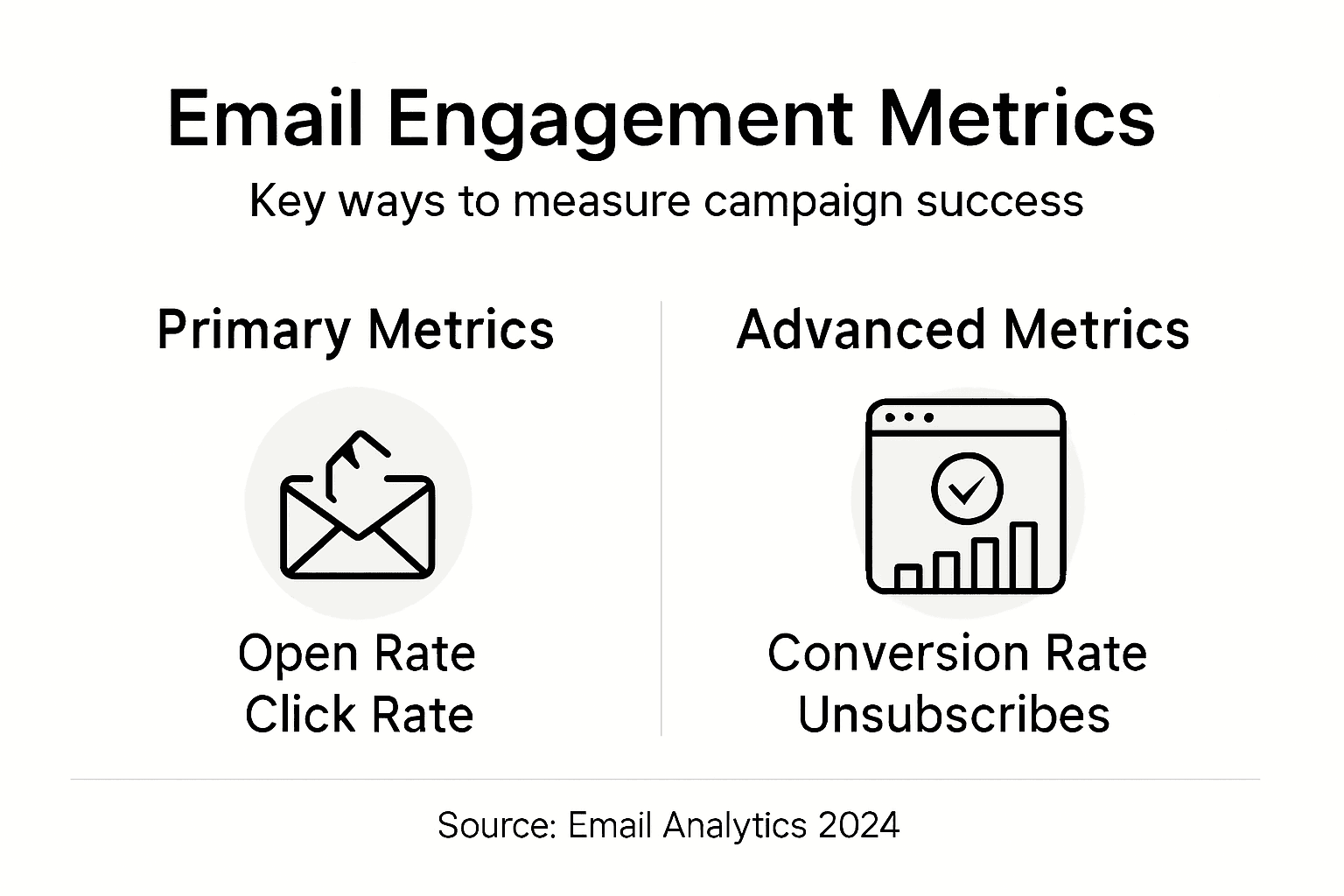
Measuring email campaign success starts with identifying the right engagement metrics that reveal how your audience interacts with your content. Email marketing metrics are quantitative data points that transform raw subscriber interactions into actionable insights.
To effectively track your campaign’s performance, focus on these critical engagement metrics:
- Open Rate: Measures the percentage of subscribers who opened your email
- Click-Through Rate (CTR): Tracks how many people clicked on links within your email
- Conversion Rate: Shows the number of recipients who completed a desired action
- Bounce Rate: Indicates the percentage of emails that could not be delivered
- Unsubscribe Rate: Reveals how many subscribers opted out of future communications
These metrics go beyond simple numerical tracking. Measuring engagement helps marketers build relationships and personalize outreach effectively. By understanding these indicators, you can refine your email strategy, improve content relevance, and ultimately drive higher revenue.
Here’s a summary of how key email engagement metrics influence business outcomes:
| Metric | What It Measures | Business Impact |
|---|---|---|
| Open Rate | Email visibility | Drives brand awareness |
| Click-Through Rate | Content interaction | Boosts website traffic |
| Conversion Rate | Goal achievement | Increases revenue |
| Bounce Rate | Delivery failures | Affects sender reputation |
| Unsubscribe Rate | Subscriber exit | Guides list quality management |
Pro tip: Start by establishing baseline metrics for each category before launching new campaigns, which will help you accurately measure future improvements.
Step 2: Configure Tracking in Klaviyo to Capture Data
Configuring robust tracking in Klaviyo is essential for understanding how your email campaigns drive customer interactions and revenue. Email-to-website tracking allows you to capture detailed insights about subscriber behavior and campaign performance.
To set up comprehensive tracking, follow these key steps:
- Enable Email-to-Website Tracking: Navigate to your Klaviyo account settings and activate this feature
- Add UTM Parameters: Configure global tracking parameters for campaigns and individual flow messages
- Choose Integration Method: Select between manual JavaScript implementation or native platform integrations
- Set Conversion Goals: Define specific actions you want to track (purchases, page views, sign-ups)
Accurate tracking transforms raw data into actionable marketing intelligence.
Conversion tracking in Klaviyo enables you to bridge email interactions with website actions, creating sophisticated segments and revenue attribution models. This approach helps you understand precisely how each email campaign contributes to your overall marketing performance.

Compare manual and native Klaviyo tracking approaches for email campaigns:
| Tracking Method | Setup Complexity | Data Accuracy | Best Use Case |
|---|---|---|---|
| Manual JavaScript | Requires coding skill | Highly customizable | Advanced custom tracking |
| Native Integration | Easy to enable | Standard reports | Quick campaign launches |
Pro tip: Always test your tracking configuration by sending a test email to yourself and verifying that conversion events are correctly captured in your Klaviyo dashboard.
Step 3: Segment Your Audience Based on Behavioral Indicators
Behavioral segmentation transforms your email marketing by grouping subscribers based on their specific interactions and preferences, moving beyond traditional demographic targeting. This approach allows you to craft highly personalized messages that resonate with each subscriber’s unique journey.
To effectively segment your audience, consider these key behavioral indicators:
- Purchase History: Track frequency, value, and types of products bought
- Email Engagement: Analyze open rates, click-through rates, and interaction patterns
- Website Behavior: Monitor page views, time spent, and specific content interactions
- Lifecycle Stage: Categorize subscribers as new, active, at-risk, or lapsed customers
Personalized marketing is not about sending more emails, but sending the right emails to the right people.
Email marketing segmentation enables you to automatically group subscribers and deliver targeted content that matches their specific interests and customer journey stage. By understanding and responding to individual behaviors, you can dramatically increase email engagement and drive meaningful conversions.
Pro tip: Create dynamic segments that automatically update as subscriber behaviors change, ensuring your targeting remains current and relevant.
Step 4: Analyze Engagement Reports to Identify Trends
Understanding the nuanced story behind your email campaign performance requires more than just surface-level metrics. Marketing analytics transform raw data into strategic insights that guide your email marketing decisions and reveal hidden patterns in subscriber behavior.
When analyzing your engagement reports, focus on these critical areas:
- Comparative Performance: Track metrics across different campaigns
- Time-Based Trends: Identify seasonal or cyclical engagement patterns
- Segment-Level Insights: Compare performance between different subscriber groups
- Conversion Path Analysis: Understand how emails influence customer journeys
Data without interpretation is just noise. Meaningful insights drive strategic action.
To extract maximum value from your reports, look beyond basic numbers and seek the underlying narrative. What do fluctuations in open rates suggest about your subject lines? How do click-through rates correlate with specific content types? By asking these questions, you transform raw data into a comprehensive understanding of your audience’s evolving preferences.
Pro tip: Create a monthly dashboard that visualizes key engagement metrics, allowing you to quickly spot trends and make data-driven adjustments to your email strategy.
Step 5: Validate Results and Refine Campaign Strategies
Email marketing audits provide a systematic approach to evaluating and improving your campaign performance. By critically examining your email metrics, you can uncover opportunities for strategic refinement and ensure your marketing efforts remain dynamic and effective.
To validate and refine your campaign strategies, implement these key steps:
- Comprehensive Metric Analysis: Review open rates, click-through rates, and conversion metrics
- Comparative Performance Evaluation: Benchmark current results against previous campaigns
- Identify Underperforming Elements: Pinpoint weak points in subject lines, content, or design
- Develop Actionable Improvements: Create targeted strategies based on data insights
Success in email marketing is a continuous process of measurement, learning, and adaptation.
Campaign performance analysis helps you understand the deeper narrative behind your metrics. By tracking essential indicators like bounce rates and spam complaints, you can optimize deliverability and engagement, transforming raw data into strategic marketing intelligence.
Pro tip: Implement a quarterly comprehensive review process where you not only analyze metrics but also conduct A/B testing to validate and refine your strategic hypotheses.
Unlock the Full Potential of Your Email Campaigns with Expert Guidance
Measuring engagement is the foundation of email campaign success yet many brands struggle to turn raw data into actionable growth. If you find yourself overwhelmed by open rates, click-through challenges, or uncertain how to translate metrics like conversion rate and unsubscribe rate into meaningful strategies then you are not alone. This article highlights the critical role of tracking, segmentation, and ongoing analysis — all essential pillars to transform email marketing from guesswork into a proven revenue driver.
Take the next step by partnering with a team that specializes in turning Klaviyo data into targeted actions. At Take Action, we combine human expertise with AI insights to automate customer retention, optimize email flows like abandoned cart and post-purchase sequences, and scale your brand’s growth through precise segmentation and conversion focused campaigns. Start turning your email engagement metrics into measurable success today. Visit Take Action to learn how our strategic email marketing solutions can help you recover lost revenue, increase open and click rates, and build long-term customer loyalty.
Frequently Asked Questions
What are the key engagement metrics to measure for email campaign success?
To measure email campaign success, focus on key engagement metrics such as Open Rate, Click-Through Rate (CTR), Conversion Rate, Bounce Rate, and Unsubscribe Rate. Each metric provides insights into how subscribers interact with your emails, allowing you to optimize your campaigns effectively.
How can I configure tracking in Klaviyo for my email campaigns?
To configure tracking in Klaviyo, enable Email-to-Website Tracking, add UTM parameters, choose an integration method, and set specific conversion goals. Start by accessing your Klaviyo account settings and activating the tracking features to capture detailed insights about subscriber behavior.
How do I segment my audience based on behavioral indicators?
Segment your audience by analyzing behavioral indicators such as Purchase History, Email Engagement, Website Behavior, and Lifecycle Stage. Use this data to group subscribers meaningfully, allowing you to send highly personalized and relevant emails that drive engagement.
What steps should I take to analyze engagement reports effectively?
To analyze engagement reports effectively, focus on comparative performance, time-based trends, segment-level insights, and conversion path analysis. Collect data monthly, and create a visual dashboard to quickly spot trends and make informed adjustments to your email strategy.
How can I validate results and refine my email campaign strategies?
To validate results, conduct a comprehensive metric analysis, evaluate current performance against previous campaigns, and identify underperforming elements. Implement a quarterly review process to formulate actionable improvements based on your findings, aiming to enhance overall campaign effectiveness.
Recommended
- Email Frequency Best Practices for Maximum Engagement | Take Action Blog | Take Action
- Email Campaign Best Practices for 2025 Success | Take Action Blog | Take Action
- Social Content Strategy: Driving Email Engagement Growth | Take Action Blog | Take Action
- Avoid Common Email Marketing Mistakes for Higher ROI | Take Action Blog | Take Action
- Customer Engagement Analytics to Prove Post-Purchase ROI | WISMOlabs