
Top ecommerce marketing ideas to boost retention with Klaviyo
TL;DR:
- Retention driven by personalized, automated email flows is essential for long-term ecommerce growth.
- Segmenting audiences and timing emails based on behavior significantly boosts revenue and repeat purchases.
- Continuous testing and updating flows are crucial to maintain performance and maximize customer lifetime value.
Paid acquisition costs keep climbing, and the brands that survive long-term aren’t the ones spending the most on ads — they’re the ones that keep customers coming back. Retention is now the primary battleground for sustainable ecommerce growth, and the brands winning it are using email as a precision tool, not an afterthought. Klaviyo gives you the data, automation, and segmentation power to build that kind of engine. This article breaks down the most effective flows, segmentation tactics, timing strategies, and advanced retention ideas that turn one-time buyers into loyal customers who spend more and stay longer.
Table of Contents
- Start with the must-have Klaviyo flows
- Personalize with segmentation and behavioral triggers
- Optimize timing, frequency, and exclusions
- Level up with advanced flows and retention tactics
- The real driver of retention: Consistent experimentation
- Ready to maximize your ecommerce retention?
- Frequently asked questions
Key Takeaways
| Point | Details |
|---|---|
| Automated flows drive revenue | Email flows like Abandoned Cart and Welcome Series generate up to 41% of ecommerce email revenue. |
| Personalization boosts retention | Segmented, behavior-triggered campaigns can increase repeat purchases by 15–25% over generic emails. |
| Ongoing optimization crucial | Monthly reviews and continuous testing ensure your Klaviyo strategy adapts and maximizes results. |
| Advanced tactics build loyalty | VIP, post-holiday, subscription, and sunset flows set top brands apart and protect deliverability. |
Start with the must-have Klaviyo flows
Automated email flows are the backbone of any serious ecommerce retention strategy. Unlike one-off campaigns that require constant manual effort, flows run in the background, triggered by customer behavior. They respond to what a customer actually does — browses without buying, adds to cart and leaves, makes a first purchase — and deliver the right message at exactly the right moment.
The performance gap between flows and campaigns is dramatic. Klaviyo flows generate up to 41% of email revenue from just 5.3% of total sends, with an 18x higher revenue per recipient (RPR) than broadcast campaigns. That means flows do the heavy lifting while you focus on strategy.
Here are the five core flows every ecommerce brand needs:
- Welcome Series: Introduced when someone joins your list, this flow sets expectations, tells your brand story, and drives that critical first purchase.
- Abandoned Cart: Triggered when a shopper adds items to their cart but leaves without buying. This is your highest-RPR flow if optimized correctly.
- Post-Purchase: Sent after a completed order to build loyalty, cross-sell, and encourage a second purchase — the moment that defines lifetime value.
- Browse Abandonment: Triggered when a visitor views a product page without adding to cart. Softer than abandoned cart, it re-engages curious shoppers.
- Winback: Sent to lapsed customers who haven’t purchased in a set window, designed to re-spark interest before they’re gone for good.
According to email marketing benchmarks, the average RPR for flows is $1.04 compared to just $0.06 for campaigns — 18x more efficient. Top-performing Abandoned Cart flows reach $27.12 RPR, while the Welcome Series averages $2.35 with leaders hitting $20.92.
These numbers explain why top email marketing tips consistently point to flow-first strategies. You can also explore ecommerce automated workflows to see how these flows connect across your entire customer journey.
| Flow type | Trigger | Optimal timing | Average RPR |
|---|---|---|---|
| Welcome Series | List signup | Immediately, then +1, +3, +7 days | $2.35 |
| Abandoned Cart | Cart add, no purchase | 1 hour, 24 hours, 72 hours | $3.07 |
| Post-Purchase | Order confirmed | Day 1, Day 7, Day 14 | Varies by AOV |
| Browse Abandonment | Product view, no add to cart | 1 hour, 24 hours | Lower, high volume |
| Winback | No purchase in 60-180 days | Based on reorder interval | Varies |
Pairing the right trigger with the right timing is where most brands leave money on the table. Getting this framework correct before adding complexity is the smartest move any ecommerce brand can make. For context, you can see how ecommerce tools for 2026 support these automation setups end to end.
Personalize with segmentation and behavioral triggers
Building out these essential flows is just step one. Next, personalization and segmentation can multiply the effectiveness of your emails.
Generic messaging treats a first-time buyer exactly the same as someone who has purchased six times. That’s a missed opportunity every single time. Your highest-value customers expect relevance, and when they don’t get it, they stop opening. Worse, they unsubscribe.
Klaviyo’s segmentation engine lets you build audiences based on real behavior, purchase history, and engagement level. Here are five impactful ways to segment your list:
- First-time vs. repeat buyers: These two groups have fundamentally different needs. First-timers need reassurance and education. Repeat buyers need novelty, exclusivity, and loyalty recognition.
- Purchase history and category: Someone who bought skincare products is not the same prospect as someone who bought supplements. Tailor recommendations to what they’ve already shown interest in.
- Engagement level (active vs. cold): High-engagement subscribers can handle higher frequency. Cold subscribers need a lighter touch before they disengage entirely.
- Recency, Frequency, Monetary (RFM) analysis: RFM scores each customer on when they last bought, how often they buy, and how much they spend. This data directly informs who gets VIP treatment and who enters a winback flow.
- Geographic and demographic data: Seasonal products, local events, and regional preferences all add personalization depth that lifts conversions.
Behavioral triggers take personalization even further. Instead of scheduling emails by date, you schedule them by action. A customer views a product three times in one week? That’s a trigger. They’ve bought twice in 30 days? That’s a trigger for a loyalty reward email. Klaviyo makes these conditional splits easy to build inside flows, so your emails respond to customers as individuals rather than batch-and-blast recipients.
| Flow type | Personalized RPR | Non-personalized RPR | Lift |
|---|---|---|---|
| Welcome Series | $4.10+ | $2.35 | ~75% |
| Abandoned Cart | $6.50+ | $3.07 | ~112% |
| Winback | $2.80+ | $1.20 | ~133% |
| Post-Purchase | High | Moderate | 15-25% |
Research shows personalized flows boost repeat purchases by 15 to 25%, and even a 2% increase in repeat purchase rate can generate $20,000 in additional annual revenue for a mid-sized brand. That’s not incremental — that’s transformative. You can also use behavioral triggers and RFM cohort analysis to time your flows perfectly and improve relevance at every stage.
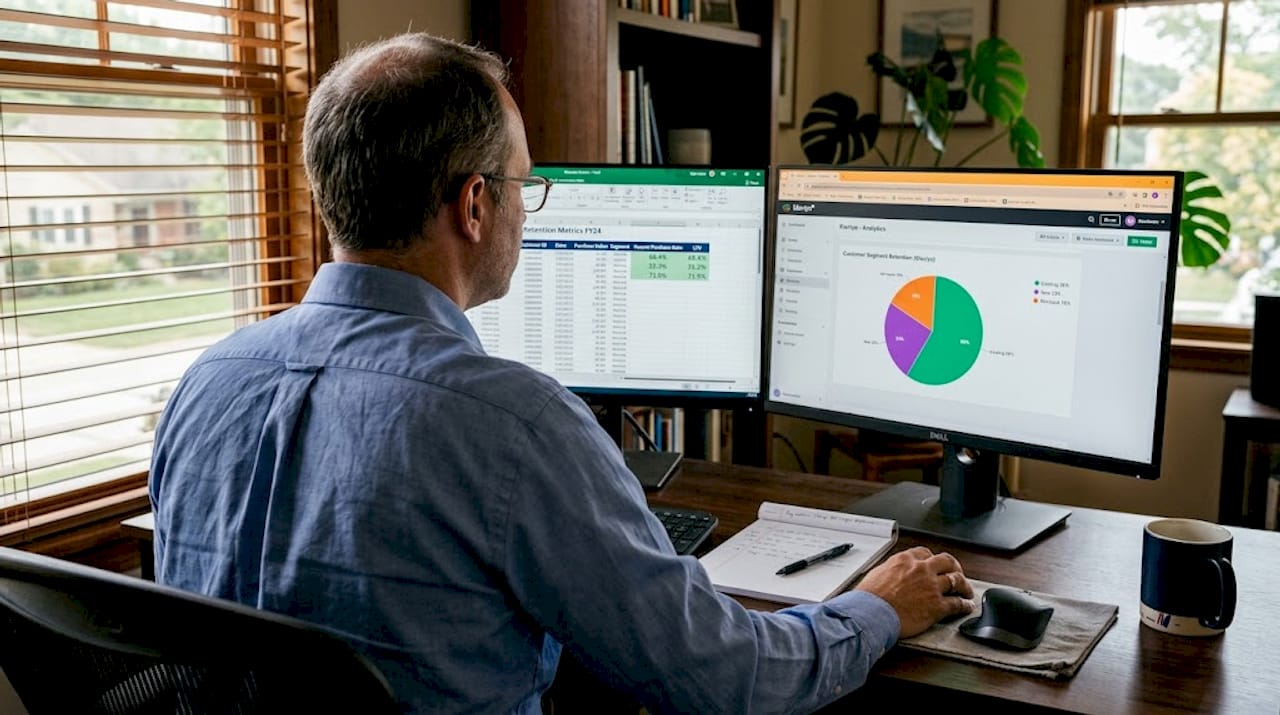
Pro Tip: Add a short quiz or survey to your Welcome flow asking about product preferences or goals. This zero-party data (information customers willingly share) powers hyper-relevant recommendations across every future flow. Check out these segmentation strategies and newsletter ideas for retention to see how the best brands apply this in practice.
Optimize timing, frequency, and exclusions
Personalized messages only succeed if they’re timely and relevant. Let’s look at how to fine-tune when and who receives your flows.
One of the most common mistakes brands make is setting up a flow, turning it on, and never touching it again. Flows can actually hurt your performance if they’re misconfigured. Sending an Abandoned Cart email to someone who already purchased is embarrassing at best and list-damaging at worst. Over-sending Browse Abandonment emails to the same person across multiple sessions in a single day creates friction, not conversion.
Here are the best practices for getting timing and exclusions right:
- Exclude recent purchasers from cart and browse flows. If someone bought in the last 7 days, they don’t need another nudge. Removing them from abandonment flows prevents awkward messaging and protects brand trust.
- Time your Winback flow at 1.5x the average reorder interval. If your customers typically rebuy every 45 days, send Winback emails around day 67, not day 180 when they’ve already moved to a competitor.
- Cap Browse Abandonment frequency. Limit each subscriber to one Browse Abandonment email per 24 to 48-hour window. More than that trains customers to ignore you.
- Use smart sending windows. Analyze your open rate data by day and hour. For most ecommerce brands, Tuesday through Thursday mornings perform best, though this varies by niche.
- Build recency exclusion lists for campaigns. If someone just entered an active flow, exclude them from your next broadcast campaign to avoid message overlap and inbox fatigue.
According to Klaviyo flow best practices, timing your Winback at the correct reorder interval (50 to 80 days for many categories) dramatically outperforms the generic 180-day delay most brands use by default.
Top-performing brands also run monthly flow audits. They check for overlap, review unsubscribe spikes tied to specific flows, and update creative to prevent engagement fatigue. Creative fatigue is real — even a perfectly timed email fails when the design or copy has gone stale. Rotating subject lines and testing new hooks every 60 to 90 days is a minimum standard.
Pro Tip: Set a recurring monthly calendar reminder to audit your flows for timing conflicts, stale creative, and deliverability issues. This one habit separates brands that plateau from those that keep growing. The most common email marketing mistakes in ecommerce are timing-related, and a solid ecommerce marketing checklist helps you stay on top of every variable.
Level up with advanced flows and retention tactics
Once your basic flows are humming, scaling to advanced flows and creative retention tactics can set your brand apart.
Most brands build three flows and call it done. Top performers run seven or more, and each additional flow is designed to address a specific customer state or lifecycle stage. Here’s where to go after the fundamentals:
- Post-holiday retention flows: Seasonal buyers acquired during peak periods like Black Friday or the holiday season are notoriously hard to retain. A dedicated post-holiday flow nurtures these first-time buyers into loyal customers with exclusive offers, brand storytelling, and product education specific to their first purchase.
- VIP flows: Once you identify your top 10 to 20% of customers by spend or purchase frequency, give them their own track. VIP tagging in Klaviyo lets you offer early access, exclusive products, and personalized communication that makes your best customers feel seen — which increases spend and reduces churn dramatically.
- Subscription optimization flows: If you sell subscriptions or auto-replenishment products, a pause/skip option flow can save subscribers who are about to cancel. Offering flexibility is far more profitable than losing the customer entirely.
- Sunset flows: These are designed for subscribers who haven’t opened an email in 90 to 180 days. Rather than continuing to email an unengaged audience (which damages deliverability), a sunset flow gives them a final reason to re-engage. Those who don’t respond get removed from active sends, protecting your sender reputation.
What each of these advanced tactics achieves:
- Post-holiday flows reduce seasonal buyer churn by 20 to 30% in many categories
- VIP flows increase average order value and reduce brand switching among high-value customers
- Subscription optimization flows recover 15 to 25% of at-risk subscribers before cancellation
- Sunset flows protect deliverability, which directly affects open rates for your entire list
Top email programs drive 33 to 50% or more of total brand revenue from email, and they achieve this by running flows that the average brand hasn’t even set up yet. The gap between 3 flows and 7+ flows is not just more automation — it’s a fundamentally different revenue ceiling.
For brands looking to extract more from their existing content library, repurposing content for emails is a practical way to fuel advanced flows without starting from scratch. And if you’re in the health and beauty space, the growth checklist for beauty brands covers how email integrates into broader acquisition and retention strategies.
The real driver of retention: Consistent experimentation
Here’s something most email marketing content won’t tell you: setting up flows is the easy part. The brands that consistently dominate in retention aren’t running the most flows — they’re the ones that treat their email program as a living system that requires ongoing testing, auditing, and adaptation.
The uncomfortable truth is that a flow set up 12 months ago and never touched is not an asset. It’s a liability. Subscriber behavior changes. Competitive noise increases. Creative goes stale. Deliverability shifts. And all of these factors erode performance silently, while you assume the automation is still doing its job.
We’ve seen brands with seven well-configured flows outperform brands with twelve neglected ones — every time. The reason is simple: quality of optimization beats quantity of setup. Monthly reviews are not optional for serious email programs — brands driving 33 to 50% of revenue from email do them without fail.
What separates the best from the rest is a commitment to A/B testing subject lines, preview text, send times, and offer structure across flows. It’s treating every drop in open rate or RPR as a signal to investigate, not ignore. It’s auditing RFM segments quarterly to make sure your VIP, active, and lapsed buckets still reflect your actual customer data.
The brands that win long-term are the ones exploring email marketing insights consistently, applying what they learn, and iterating fast. Flows are not a checklist item you cross off and move on from. They’re the engine of your retention system, and engines require maintenance.
Ready to maximize your ecommerce retention?
If this article has shown you anything, it’s that effective retention through Klaviyo is not a one-time setup — it’s an ongoing practice that rewards brands who invest in strategy, personalization, and continuous improvement.
At Take Action, we specialize in building and optimizing exactly these kinds of retention systems. From foundational flow setup to advanced VIP and sunset strategies, our team combines deep Klaviyo expertise with data-driven creative to drive measurable revenue growth for ecommerce brands. Whether you’re starting from scratch or looking to fix a stagnant program, the email marketing experts at Take Action are ready to help. Explore our retention agency services and see how we turn email into your most reliable revenue channel.
Frequently asked questions
What are the most profitable Klaviyo flows for ecommerce?
Abandoned Cart, Welcome Series, and Post-Purchase flows drive the highest revenue, with Abandoned Cart reaching $3.07 to $27.12 RPR in top-performing stores. These three flows alone can account for the majority of your email-driven revenue.
How often should I review and update my Klaviyo flows?
Monthly reviews are recommended to catch stale creative, timing issues, and engagement drops before they compound. Top email programs that drive 33 to 50% of total revenue from email treat flow audits as a non-negotiable routine.
Why are behavioral triggers important in ecommerce emails?
Behavioral triggers ensure your messages are sent at the exact moment a customer is most likely to act, which is why personalized flows boost repeat purchases by 15 to 25% compared to generic, time-based sends.
How many flows should I set up in Klaviyo for best results?
The average brand runs only 3 flows, but top performers use 7+ and generate up to 50% of their email revenue from flows alone. More targeted flows mean fewer missed revenue opportunities across the customer lifecycle.
What is an example of zero-party data in a retention flow?
A quiz inside your Welcome flow asking subscribers about their skin type, fitness goals, or product preferences is a classic example of zero-party data collection. This voluntary information powers more relevant product recommendations in every future automated email.
Recommended
- Online Marketing Strategy: Driving Ecommerce Retention | Take Action Blog | Take Action
- Top marketing funnels for Klaviyo in 2026: Boost retention | Take Action Blog | Take Action
- How Klaviyo content marketing agencies boost retention 321% | Take Action Blog | Take Action
- 7 Innovative Ecommerce Newsletter Ideas for Higher Retention | Take Action Blog | Take Action