

UGC Affiliate Marketing: Boost Retention and Revenue
Finding ways to keep customers coming back while growing sales can feel demanding for Ecommerce brands using platforms like Klaviyo. UGC affiliate marketing offers a fresh solution by turning real buyers into advocates who share their stories and earn rewards. This approach blends authenticity with results-driven tactics that build trust and create lasting engagement, helping brands worldwide reach new revenue heights through genuine connection.
Table of Contents
- Ugc Affiliate Marketing Defined For Ecommerce
- Types Of Ugc And Affiliate Models Explained
- Integrating Ugc With Email Campaigns
- Legal And Compliance Essentials For Ugc Affiliates
- Maximizing Roi And Avoiding Common Mistakes
Key Takeaways
| Point | Details |
|---|---|
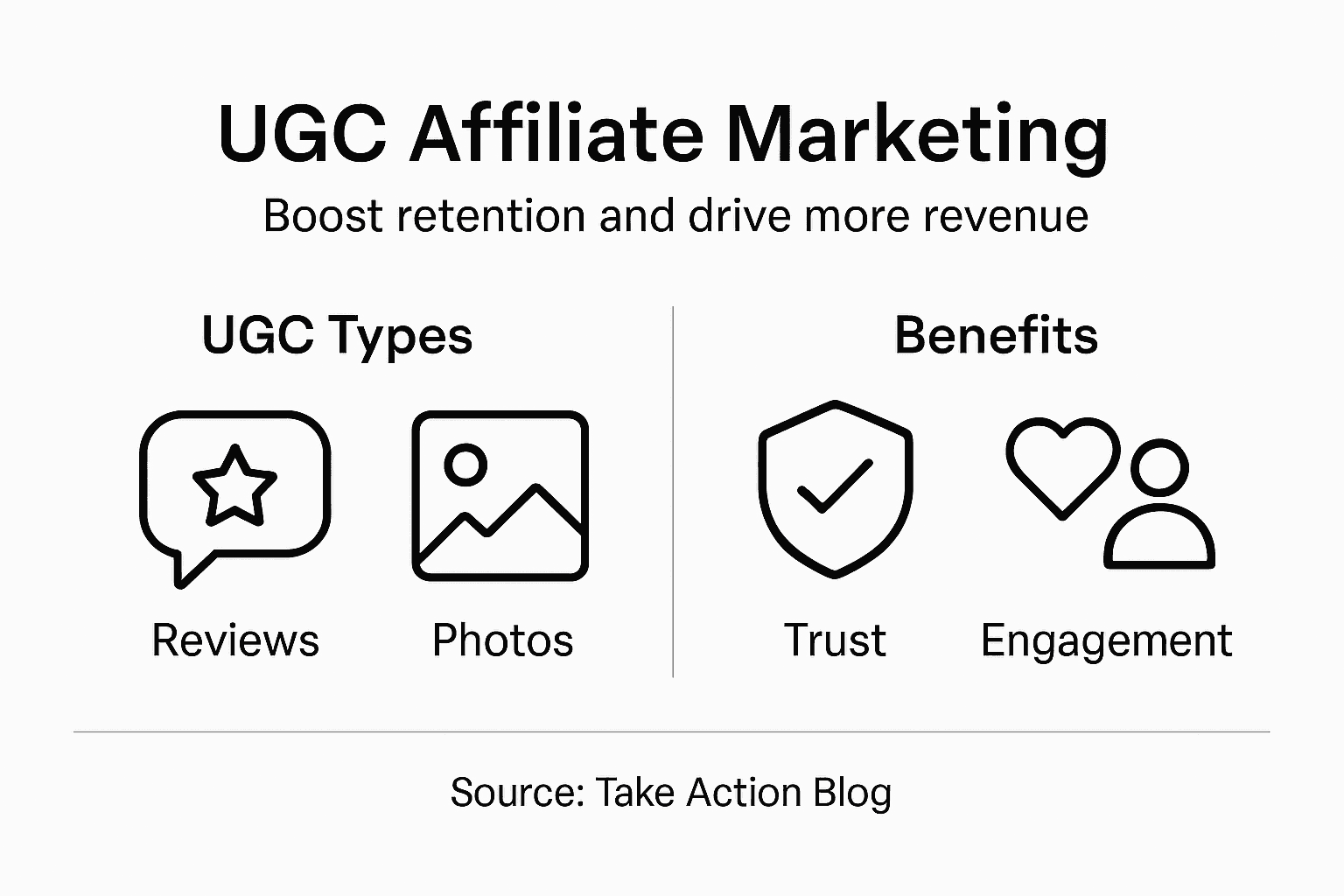
| UGC Affiliate Marketing Benefits | This strategy increases consumer trust and engagement by leveraging authentic customer experiences to generate sales. |
| Types of UGC | Utilizing various UGC formats, such as product reviews and video testimonials, enhances consumer decision-making at different buying stages. |
| Legal Compliance | Brands must prioritize obtaining explicit consent and ensure transparency in affiliate relationships to navigate legal challenges effectively. |
| Maximizing ROI | Implementing comprehensive tracking and diversified strategies is crucial to enhance the effectiveness and returns of UGC affiliate marketing campaigns. |
UGC Affiliate Marketing Defined for Ecommerce
User Generated Content (UGC) Affiliate Marketing represents a powerful strategy where brands leverage authentic customer experiences to drive sales and retention through collaborative marketing efforts. Influencer affiliate marketing research demonstrates this approach combines social proof with performance-based incentives, creating a dynamic marketing ecosystem.
At its core, UGC Affiliate Marketing transforms everyday customers into brand advocates who earn commissions by sharing genuine product experiences. This strategy differs from traditional affiliate models by emphasizing authenticity and personal recommendation over pure transactional promotion. Key characteristics include:
- Real customer testimonials and content creation
- Performance-based compensation structures
- Direct engagement with brand’s target audience
- Trust-building through peer-to-peer recommendations
The mechanism works by empowering customers to create content showcasing product experiences, then rewarding them with commissions for driving verifiable sales. E-commerce marketing research confirms this approach significantly increases consumer trust and purchase likelihood by presenting relatable, unfiltered product narratives.
Successful UGC Affiliate Marketing requires strategic implementation, focusing on selecting passionate brand supporters who genuinely connect with your product. Brands must develop clear guidelines, fair compensation models, and robust tracking mechanisms to ensure quality content and transparent performance measurement.
Here’s a side-by-side look at traditional vs. UGC affiliate marketing effectiveness:
| Criteria | Traditional Affiliate Marketing | UGC Affiliate Marketing |
|---|---|---|
| Trust Level | Moderate, depends on promoter | High, leverages real customer voices |
| Content Authenticity | Often scripted or templated | Genuinely user-created |
| Conversion Impact | Variable, may rely on incentives | Strong boost from relatable stories |
| Cost to Brand | Often requires upfront fees | Usually commission-based only |
| Community Building | Limited engagement | Fosters lasting brand advocates |
Pro tip: Design a tiered commission structure that rewards both content quality and sales performance to motivate your most effective affiliate advocates.
Types of UGC and Affiliate Models Explained
User Generated Content (UGC) encompasses a diverse range of marketing assets that enable brands to showcase authentic customer experiences. Comprehensive UGC research reveals multiple content types that strategically influence consumer purchasing decisions across different stages of the customer journey.
The primary types of UGC for affiliate marketing include:
- Product Reviews: Detailed customer evaluations highlighting product strengths and weaknesses
- Social Media Posts: Visual content showcasing product usage and personal experiences
- Video Testimonials: In-depth narratives demonstrating product value
- Unboxing Content: First-impression videos revealing product packaging and initial interactions
- Customer Photos: Real-world images of products in practical settings
Affiliate marketing strategies typically employ different compensation models to motivate content creators. These models include:
- Pay-per-sale: Commissions earned only when a sale is directly attributed to affiliate content
- Pay-per-click: Compensation based on traffic generated to the brand’s website
- Hybrid models: Combining fixed payments with performance-based incentives
- Revenue sharing: Percentage-based commissions on total sales generated
Successful UGC affiliate programs require careful selection of content creators who authentically represent the brand’s values and can generate genuine, engaging content that resonates with target audiences. Brands must develop clear guidelines, provide creative support, and establish transparent tracking mechanisms to ensure effective collaboration.
This summary clarifies which UGC content types best support each customer journey phase:
| UGC Type | Best Used In | Key Benefit |
|---|---|---|
| Product Reviews | Consideration Stage | Increases credibility and transparency |
| Social Media Posts | Awareness Stage | Broadens reach, enhances brand discovery |
| Video Testimonials | Decision Stage | Builds emotional connection, trust |
| Unboxing Content | Purchase Stage | Sparks excitement, reduces buyer anxiety |
Pro tip: Develop a comprehensive content brief that provides creators clear guidelines while allowing enough creative flexibility to maintain authentic storytelling.
Integrating UGC with Email Campaigns
User-generated content transforms email marketing from a transactional communication channel into an authentic, engagement-driven platform. Strategic UGC email integration enables brands to leverage real customer experiences, dramatically increasing subscriber trust and interaction rates.
Effective UGC email integration requires multiple strategic approaches:
- Embedding customer photo reviews within product announcement emails
- Showcasing video testimonials in welcome series
- Highlighting social media posts demonstrating product usage
- Creating dynamic content galleries featuring authentic customer experiences
- Personalizing email content based on customer-generated visual assets
The integration process involves several critical steps for maximum impact:
- Develop clear content permission protocols
- Create a systematic method for collecting high-quality UGC
- Segment email lists to match relevant user-generated content
- Design email templates that seamlessly incorporate visual UGC
- Implement tracking mechanisms to measure UGC email performance
Successful UGC email campaigns require a delicate balance between authenticity and brand messaging. Brands must curate content that feels genuine while maintaining consistent visual and tonal alignment with their marketing objectives. This approach transforms traditional email communications into interactive, trust-building experiences that resonate deeply with target audiences.

Pro tip: Create a centralized UGC content repository with pre-approved customer submissions to streamline email campaign content selection and reduce approval time.
Legal and Compliance Essentials for UGC Affiliates
Navigating the complex landscape of legal requirements is critical for brands leveraging user-generated content (UGC) in affiliate marketing. UGC compliance guidelines highlight the critical need for understanding intellectual property rights, user consent, and transparent marketing practices.
Key legal considerations for UGC affiliate marketing include:
- Obtaining explicit written consent for content usage
- Implementing clear attribution and credit mechanisms
- Developing comprehensive content usage agreements
- Ensuring transparency about affiliate relationships
- Protecting user privacy and personal information
Compliance with data protection regulations requires a multifaceted approach:
- Secure explicit user permissions for content repurposing
- Create comprehensive consent documentation
- Implement robust data protection protocols
- Establish clear affiliate disclosure standards
- Regularly audit content usage and consent records
Brands must proactively manage potential legal risks by understanding ethical marketing guidelines that govern user-generated content. This involves maintaining transparency, respecting intellectual property rights, and ensuring that affiliate relationships are clearly communicated to audiences. Failure to comply can result in significant financial penalties, reputational damage, and loss of consumer trust.
Pro tip: Develop a standardized consent form template that comprehensively covers content usage rights, affiliate relationships, and data protection agreements.
Maximizing ROI and Avoiding Common Mistakes
Successful UGC affiliate marketing demands strategic planning and continuous optimization to drive meaningful results. Affiliate marketing performance research reveals critical insights into avoiding common pitfalls that can significantly undermine campaign effectiveness.
Common mistakes that diminish UGC affiliate marketing ROI include:
- Relying on a single traffic source
- Neglecting affiliate performance tracking
- Failing to diversify content strategies
- Overlooking compliance and legal requirements
- Ignoring audience engagement metrics
Key strategies for maximizing return on investment involve:
- Implement comprehensive performance tracking systems
- Develop multi-channel affiliate recruitment approaches
- Create tiered commission structures
- Regularly analyze and segment affiliate performance
- Continuously refine content and engagement strategies
ROI optimization techniques emphasize the importance of detailed analytics, focusing on critical metrics like conversion rates, average order value, and traffic quality. Successful brands treat affiliate marketing as a dynamic ecosystem requiring constant monitoring, testing, and strategic adjustments to maintain competitive advantage and sustainable growth.
Pro tip: Develop a quarterly performance review process that systematically evaluates affiliate performance, content effectiveness, and revenue generation to enable data-driven strategic refinements.
Elevate Your UGC Affiliate Marketing with Strategic Email Automation
The challenge highlighted in “UGC Affiliate Marketing: Boost Retention and Revenue” is turning authentic user-generated content into a powerful, scalable revenue stream while maintaining trust and engagement. Many ecommerce brands struggle to effectively integrate UGC with their email marketing to increase retention, recover abandoned carts, and consistently nurture loyal customers. This article underscores key concepts like tiered commission structures, authentic storytelling, and seamless UGC integration into email campaigns — all essential for boosting lifetime customer value.
At Take Action, we specialize in bridging these exact gaps by helping brands automate and personalize email marketing flows tailored to amplify the impact of UGC affiliate efforts. Our expert team combines human creativity and AI-driven insights to design Klaviyo-powered automations that increase open and click rates while delivering authentic, trust-building content. We enable you to convert UGC into engaging welcome series, post-purchase follow-ups, and dynamic abandoned cart emails that drive measurable growth beyond paid ads.
Unlock the full potential of UGC affiliate marketing with our proven email strategies and hands-on support through long-term partnerships. Experience increased revenue and customer retention by aligning your brand voice with data-driven, conversion-focused automations crafted specifically for ecommerce success at Take Action. Explore how strategic campaign setup and segmentation can transform your affiliate-driven content into ongoing profit.
Looking to turn your user-generated content into a primary growth engine for your ecommerce brand?

Start optimizing your email marketing today with Take Action. Discover our expert services in campaign strategy and email flow setup designed to drive sustained revenue growth through automated, personalized email journeys. Don’t let valuable content go unused. Partner with us now to accelerate your UGC affiliate marketing success.
Frequently Asked Questions
What is UGC Affiliate Marketing?
UGC Affiliate Marketing leverages authentic customer experiences to drive sales and retention, transforming everyday customers into brand advocates who earn commissions for sharing genuine product experiences.
How does UGC Affiliate Marketing differ from traditional affiliate marketing?
UGC Affiliate Marketing emphasizes authenticity and personal recommendations, relying on real customer-generated content, whereas traditional affiliate marketing often focuses on scripted promotions or incentivized referrals.
What types of UGC are most effective for affiliate marketing?
The most effective types of UGC for affiliate marketing include product reviews, social media posts, video testimonials, unboxing content, and customer photos, each serving different stages of the customer journey.
What are the key legal considerations for brands using UGC in affiliate marketing?
Key legal considerations include obtaining explicit written consent for content usage, implementing clear attribution mechanisms, ensuring transparency about affiliate relationships, and protecting user privacy and personal information.
Recommended
- UGC Influencer Marketing: Driving Email Retention | Take Action Blog | Take Action
- UGC Digital Marketing: Driving Retention in Ecommerce | Take Action Blog | Take Action
- UGC Benefits: Boosting Ecommerce Engagement & Retention | Take Action Blog | Take Action
- What is Retargeting? Understanding Its Impact on Sales | Take Action Blog | Take Action
- 7 Secret Websites to Make Money for Print-On-Demand Pros – Bettermockups