

UGC Market: Boosting Retention With Authentic Content
Many ecommerce teams believe User-Generated Content is just quick social media snapshots with limited value. In reality, User-Generated Content shapes modern marketing by empowering customers as creators and storytellers. Understanding this evolving market is crucial for American, Canadian, and European ecommerce brands aiming to build trust and drive deeper audience engagement. Clarifying what truly makes content user-generated helps brands move past outdated assumptions and embrace strategies that generate authentic connections and customer loyalty.
Table of Contents
- Defining UGC Market And Common Misconceptions
- Types Of UGC In Ecommerce Marketing
- How UGC Works To Boost Retention
- Legal And Ethical Considerations For Brands
- Pitfalls To Avoid When Using UGC
Key Takeaways
| Point | Details |
|---|---|
| Understanding UGC | User-Generated Content is more than just social media posts; it includes various forms of digital content created independently by users. |
| Types of UGC in Ecommerce | Different types of UGC, such as reviews and unboxing videos, can enhance brand engagement and consumer trust. |
| Retention Boost | UGC fosters emotional connections through social proof and personalized storytelling, significantly improving customer loyalty. |
| Legal Considerations | Brands must navigate creator consent, data privacy, and copyright issues to effectively manage user-generated content and protect their reputation. |
Defining UGC Market And Common Misconceptions
User-Generated Content (UGC) represents a dynamic digital ecosystem where consumers transform from passive recipients to active creators of media and marketing content. Academic research on UGC definition reveals a complex landscape far beyond simplistic perceptions.
At its core, UGC encompasses digital content created and shared independently by online users across various platforms. This definition challenges several prevalent misconceptions:
- Not Just Social Media Posts: UGC extends beyond Instagram or Twitter updates
- Beyond Amateur Quality: Professional-grade content can also be user-generated
- More Than Text: Includes images, videos, reviews, podcasts, and interactive media
- Intrinsic Motivations: Often created without direct financial compensation
The evolution of UGC represents a fundamental shift in how brands interact with consumers. User content transformation in media has dramatically reshaped journalism, advertising, and commerce, making traditional top-down communication models increasingly obsolete.
Understanding UGC requires recognizing its multifaceted nature. It’s not just about content creation, but about building communities, fostering engagement, and democratizing digital expression. Brands that genuinely embrace UGC move from monologue to dialogue, creating more authentic and meaningful connections.
Pro tip: Develop clear guidelines and incentive structures that encourage high-quality, brand-aligned user contributions without stifling creativity.
Types Of UGC In Ecommerce Marketing
User-Generated Content (UGC) in ecommerce marketing represents a rich tapestry of authentic consumer experiences and brand interactions. Diverse UGC content strategies enable brands to transform traditional marketing approaches by leveraging real customer voices and perspectives.
The primary types of UGC in ecommerce marketing include:
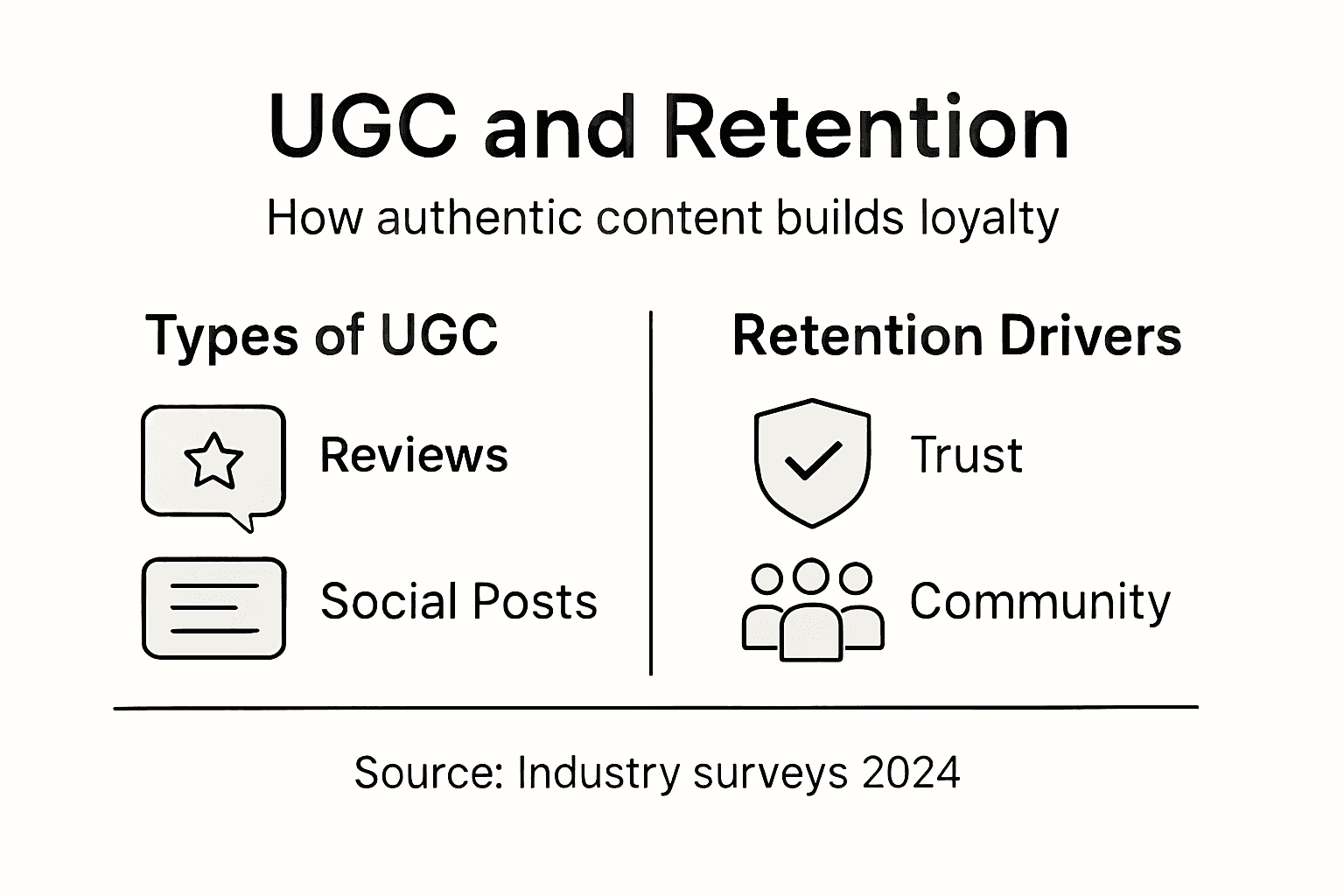
- Customer Reviews: Detailed product feedback and ratings
- Social Media Posts: Brand-related content shared by consumers
- Unboxing Videos: Visual demonstrations of product experiences
- Testimonials: Personal stories and endorsements
- Influencer Content: Curated product recommendations
- Images and Visual Media: User-submitted photos showcasing products
Each UGC type serves a unique marketing purpose. Social media content categories demonstrate how consumers have transitioned from passive audiences to active brand storytellers, creating multi-dimensional marketing narratives that resonate far more authentically than traditional advertising.
Strategic UGC deployment allows ecommerce brands to build trust, increase engagement, and create community-driven marketing ecosystems. By empowering customers to become content creators, brands can develop more meaningful and transparent relationships that drive both emotional connection and commercial success.
Pro tip: Develop a comprehensive UGC strategy that incentivizes high-quality content creation while maintaining clear guidelines for brand alignment and authenticity.
Here’s how different types of UGC contribute to ecommerce marketing goals:
| UGC Type | Main Benefit | Business Impact |
|---|---|---|
| Customer Reviews | Builds trust | Drives conversions |
| Social Media Posts | Increases visibility | Expands brand awareness |
| Unboxing Videos | Showcases products | Enhances customer education |
| Testimonials | Adds credibility | Influences buying choices |
| Influencer Content | Reaches new audiences | Accelerates brand growth |
| Visual Media | Engages customers | Strengthens community ties |
How UGC Works To Boost Retention
User-Generated Content (UGC) serves as a powerful retention mechanism that transforms passive consumers into active brand advocates. Customer engagement strategies reveal how authentic user experiences create deep emotional connections that significantly enhance long-term customer loyalty.
UGC boosts retention through several key mechanisms:
- Social Proof: Builds trust through real customer experiences
- Emotional Connection: Creates community around brand identity
- Personalized Storytelling: Allows customers to share genuine narratives
- Interactive Engagement: Encourages ongoing brand interaction
- Transparent Communication: Demonstrates brand authenticity
Brand loyalty development demonstrates that UGC reduces marketing costs while simultaneously deepening customer relationships. By empowering customers to become content creators, brands transform traditional one-way communication into dynamic, multi-dimensional interactions.
The psychological impact of UGC cannot be overstated. When customers see themselves represented in brand narratives, they feel valued, understood, and more likely to maintain long-term relationships. This sense of belonging transcends traditional marketing approaches, creating sustainable engagement that goes beyond transactional interactions.

Pro tip: Create a structured UGC program that rewards and showcases customer contributions, making them feel genuinely appreciated and integral to your brand’s story.
Legal And Ethical Considerations For Brands
Navigating the complex landscape of User-Generated Content (UGC) requires brands to implement robust legal and ethical frameworks that protect both creators and consumers. Copyright and intellectual property challenges demand meticulous attention to ensure responsible content management and legal compliance.
Key legal and ethical considerations include:
- Creator Consent: Obtain explicit permission before using customer content
- Attribution Rights: Properly credit original content creators
- Data Privacy: Protect user information and comply with data protection regulations
- Transparency: Maintain clear policies about content usage
- Fair Use: Understand and respect copyright limitations
Ethical content management frameworks emphasize the importance of developing comprehensive guidelines that balance brand interests with user rights. Brands must create transparent mechanisms that allow users to understand how their content might be used, providing opt-in and opt-out options for content sharing.
Successful UGC strategies require a proactive approach to legal compliance. This means developing clear terms of service, implementing robust consent mechanisms, and creating user-friendly processes that respect individual rights while enabling meaningful brand interactions.
Pro tip: Develop a comprehensive UGC policy document that clearly outlines content usage rights, creator permissions, and user protections to mitigate potential legal risks.
Pitfalls To Avoid When Using UGC
Brands must navigate User-Generated Content (UGC) with strategic caution to maintain credibility and legal integrity. Content authenticity challenges reveal numerous potential risks that can undermine marketing efforts and brand reputation.
Critical pitfalls to be aware of include:
- Poor Content Quality: Unfiltered submissions can damage brand perception
- Legal Vulnerabilities: Potential copyright and intellectual property violations
- Privacy Concerns: Mishandling personal data and user information
- Inconsistent Brand Messaging: Off-brand or inappropriate content
- Lack of Moderation: Uncontrolled user contributions
User content management strategies emphasize the importance of developing comprehensive guidelines and robust moderation processes. Brands must create clear frameworks that balance authenticity with quality control, ensuring that user contributions align with brand values and legal requirements.
Effective UGC management requires proactive monitoring, transparent policies, and sophisticated filtering mechanisms. By implementing stringent review processes and establishing clear content guidelines, brands can harness the power of user-generated content while mitigating potential risks and maintaining a positive brand image.
Pro tip: Develop an automated and human-reviewed content moderation system that flags potentially problematic submissions before they reach your primary marketing channels.
Compare these common UGC pitfalls with their recommended prevention strategies:
| Pitfall | Potential Risk | Prevention Strategy |
|---|---|---|
| Poor Content Quality | Damaged brand image | Set clear content standards |
| Legal Vulnerabilities | Lawsuits and penalties | Use formal consent documentation |
| Privacy Concerns | Loss of consumer trust | Ensure strong data protection practices |
| Inconsistent Messaging | Mixed brand identity | Use editorial guidelines for submissions |
| Lack of Moderation | Offensive or harmful content | Employ automated and manual review systems |
Unlock the Power of UGC to Boost Customer Retention Today
The article highlights the challenge ecommerce brands face when trying to turn authentic user-generated content into a sustainable retention strategy. It reveals how emotional connection and social proof built through UGC can transform casual shoppers into loyal advocates. Yet, without a structured approach, brands risk inconsistent messaging and missed opportunities to fully leverage UGC in their marketing mix.
At Take Action, we specialize in helping ecommerce brands harness this potential by integrating UGC-driven insights into automated email marketing flows. By combining human expertise with AI-driven data, we make it easy to create segmented and personalized campaigns that increase open rates, recover abandoned carts, and deepen customer loyalty. Our proven strategies ensure your retention efforts are not only authentic but also scalable and conversion-focused.
Elevate your retention game by partnering with experts who turn authentic customer stories into measurable growth. Explore how our innovative solutions can complement your UGC strategy at Take Action.

Ready to transform your ecommerce retention with automation that respects and amplifies genuine customer voices Visit Take Action now to start building campaigns that truly connect and convert.
Frequently Asked Questions
What is User-Generated Content (UGC)?
User-Generated Content (UGC) refers to any digital content created and shared by consumers independently on various platforms, including reviews, images, videos, and social media posts.
How does UGC contribute to customer retention?
UGC boosts customer retention by building trust through social proof, creating emotional connections, and encouraging ongoing engagement with the brand through personalized storytelling and shared community experiences.
What are the different types of UGC commonly used in ecommerce marketing?
Common types of UGC in ecommerce marketing include customer reviews, social media posts, unboxing videos, testimonials, influencer content, and user-submitted images showcasing products.
What legal and ethical considerations should brands keep in mind when using UGC?
Brands should ensure they obtain creator consent for using content, properly attribute original creators, protect user privacy, maintain transparency about content usage, and respect copyright limitations to avoid legal issues.
Recommended
- UGC Influencer Marketing: Driving Email Retention | Take Action Blog | Take Action
- UGC Digital Marketing: Driving Retention in Ecommerce | Take Action Blog | Take Action
- Understanding User Generated Content Benefits for Brands | Take Action Blog | Take Action
- Understanding UGC in Marketing: A Deep Dive | Take Action Blog | Take Action
- Video Marketing - Set to Boom! | Big Eye Deers | Digital Agency