

Brand Storytelling Explained: Driving Ecommerce Growth
Did you know that consumers are up to 22 times more likely to remember a brand story than a plain fact? Storytelling now plays a central role in shaping how people connect with brands, turning everyday transactions into lasting emotional experiences. When brands share authentic stories that resonate with personal values, they build stronger relationships and inspire real loyalty in a crowded digital world.
Table of Contents
- Defining Brand Storytelling In Marketing
- How Storytelling Shapes Customer Perception
- Emotional Drivers Behind Purchase Decisions
- Brand Storytelling In Email Marketing Strategies
- Common Pitfalls And How To Avoid Them
Key Takeaways
| Point | Details |
|---|---|
| Brand Storytelling Enhances Connection | Effective storytelling shifts marketing from transactions to deep emotional engagement, fostering memorable brand experiences. |
| Emotional Drivers Influence Purchases | Modern consumers prioritize brands that reflect their values and emotions, turning purchases into meaningful interactions. |
| Consistency and Authenticity are Crucial | Successful narratives require authenticity and consistent messaging to build trust and enhance brand identity. |
| Personalization in Email Marketing | Personalized storytelling in email campaigns transforms communications into engaging narratives that delight and retain customers. |
Defining Brand Storytelling in Marketing
Brand storytelling transforms marketing from transactional communication into a powerful narrative experience that connects with consumers on a deeper emotional level. According to Bloomsbury, this approach involves crafting narratives that resonate beyond product features, creating an emotional bond that makes brands truly memorable.
At its core, brand storytelling is about sharing authentic qualities and beliefs that invite audience connection. Online UWA emphasizes that the objective isn’t promoting products, but involving consumers in the brand’s larger narrative. This means moving past traditional advertising to create genuine human connections.
Successful brand storytelling typically includes several key elements:
- A compelling central narrative
- Relatable characters or perspectives
- Authentic representation of brand values
- Emotional resonance with target audiences
- Clear communication of brand purpose
The most effective brand stories don’t just describe what a company sells - they illustrate why the company exists. They transform abstract business goals into meaningful human experiences that customers can connect with, understand, and ultimately support. By prioritizing narrative over pure promotion, brands can create lasting relationships that extend far beyond single transactions.
For ecommerce brands seeking to implement powerful storytelling, understanding how to tell brand stories naturally becomes a critical strategic skill. The goal is crafting narratives that feel genuine, engaging, and true to your brand’s unique identity.
How Storytelling Shapes Customer Perception
Customer perception is fundamentally transformed through powerful brand narratives that go beyond traditional marketing approaches. According to BC Publication, brand storytelling has emerged as a strategic tool for connecting with consumers by leveraging emotions, shared values, and meaningful ideas that build deep brand identity.
Research from IRE Journals reveals that effective storytelling does more than communicate product features - it enhances emotional connections and significantly influences consumer behavior. Key impacts include increased trust, higher likelihood of repeat purchases, and stronger brand advocacy. The most successful narratives achieve this by maintaining three critical elements: authenticity, relatability, and consistency.
The psychological mechanism behind storytelling’s power lies in its ability to trigger emotional responses. When brands craft narratives that resonate with personal experiences, they create meaningful connections that transcend transactional relationships. These stories help consumers see themselves within the brand’s journey, transforming passive observers into engaged participants.
Key psychological triggers in effective brand storytelling include:
- Emotional resonance
- Shared values and beliefs
- Personal identification
- Narrative transportation
- Trust-building elements
For ecommerce brands looking to master this approach, understanding storytelling in marketing becomes crucial. The most compelling brand stories don’t just sell products - they invite customers into a larger, more meaningful conversation about who they are and what they believe.
Emotional Drivers Behind Purchase Decisions
Purchase decisions are far more complex than simple product comparisons. According to IRE Journals, emotional factors now play a critical role in consumer behavior, with trust, relatability, and shared values becoming primary drivers of brand loyalty and purchasing decisions.
Consumers increasingly seek brands that align with their personal values and emotional narratives. This means that beyond product features, customers are evaluating brands through an emotional lens - asking themselves not just “What does this product do?” but “What does this brand represent?”. The emotional connection transforms purchasing from a transactional experience to a meaningful interaction that reflects personal identity and beliefs.
The emotional decision-making process typically involves several psychological triggers:
- Sense of belonging
- Perceived personal alignment
- Emotional safety
- Aspiration and self-improvement
- Validation of personal values
While traditional marketing focused on rational benefits, modern consumers demand deeper connections. They want brands that understand their complex emotional landscapes, brands that can articulate shared dreams, challenges, and potential transformations.
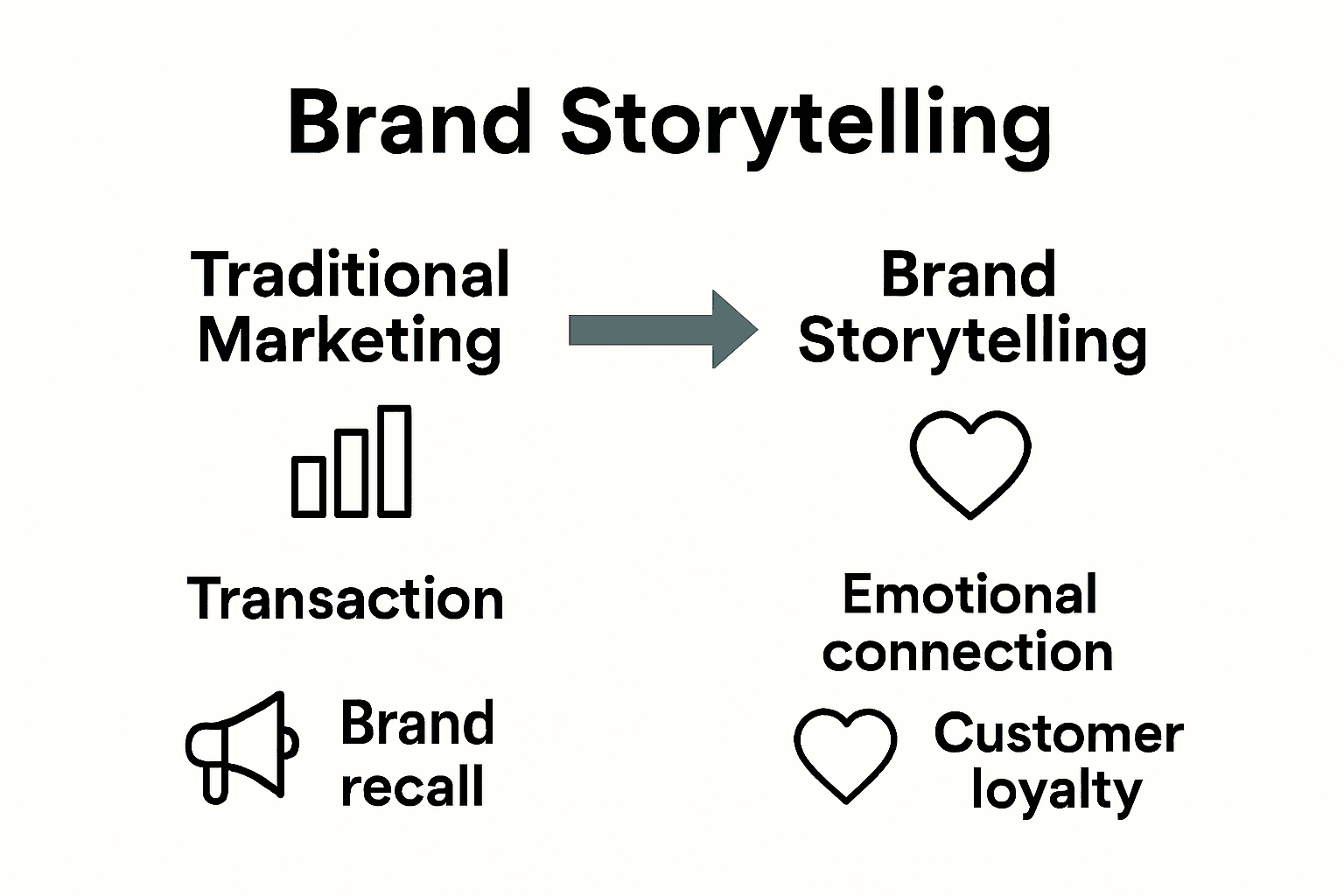 This emotional intelligence becomes a powerful differentiator in crowded marketplaces.
For ecommerce brands seeking to understand these nuanced emotional dynamics, how to tell brand stories for growth provides crucial insights into creating compelling emotional narratives that resonate beyond simple product descriptions.
Brand Storytelling in Email Marketing Strategies
Email marketing has transformed from generic mass communication to a personalized storytelling platform. According to arXiv Research, generative AI-driven storytelling now offers unprecedented capabilities to craft narratives that resonate deeply with individual consumers, enabling marketers to create highly personalized experiences.
Successful email storytelling goes beyond traditional product promotion by creating emotional connections that transform mundane communications into compelling narratives. Each email becomes an opportunity to continue the brand’s overarching story, inviting subscribers into a continuous dialogue that feels intimate and meaningful. This approach requires understanding your audience’s emotional landscape and crafting messages that speak directly to their aspirations, challenges, and values.
Key elements of effective email storytelling include:
- Personalized narrative arcs
- Consistent brand voice
- Emotional resonance
- Strategic segmentation
- Authentic vulnerability
- Progressive story development
The most powerful email stories aren’t linear sales pitches but dynamic conversations that evolve with the customer’s journey. They leverage data, emotional intelligence, and strategic storytelling to create meaningful touchpoints that go beyond transactional interactions. 10 creative newsletter content ideas can help brands develop engaging narratives that keep subscribers eagerly anticipating each communication.
By treating emails as chapters in an ongoing brand narrative, businesses can transform routine communications into anticipated, welcomed interactions that build long-term customer relationships.

Here’s a comparison of essential elements of brand storytelling across marketing, customer perception, purchase decisions, and email strategies:
| Section | Key Elements | Primary Goals |
|---|---|---|
| Brand Storytelling in Marketing | Central narrative Relatable characters Brand values Emotional resonance Clear purpose |
Create emotional bond Show brand “why” Build connection |
| Shaping Customer Perception | Authenticity Relatability Consistency Personal identification Trust-building |
Deepen trust Foster advocacy Shape brand identity |
| Emotional Drivers Behind Purchase | Belonging Alignment Emotional safety Self-improvement Value validation |
Inspire loyalty Reflect personal beliefs |
| Email Storytelling Strategies | Personalization Consistent voice Emotional resonance Segmentation Vulnerability |
Personalize experiences Build ongoing engagement |
Common Pitfalls and How to Avoid Them
Brand storytelling is a nuanced art that can quickly derail if not carefully executed. According to arXiv Research, generative AI-driven storytelling presents both incredible opportunities and significant challenges in crafting authentic narratives that truly resonate with consumers.
The most common storytelling mistakes typically stem from a fundamental misunderstanding of audience connection. Brands often fall into predictable traps: over-selling instead of storytelling, lacking authenticity, creating disconnected narratives, or failing to understand their audience’s emotional landscape. These missteps transform potentially powerful stories into forgettable marketing noise that customers instinctively tune out.
Critical pitfalls to avoid in brand storytelling include:
- Forcing artificial narratives
- Losing brand authenticity
- Neglecting audience insights
- Inconsistent messaging
- Over-complicating the narrative
- Ignoring emotional intelligence
- Treating stories as pure sales mechanisms
Successful storytelling requires a delicate balance between strategic communication and genuine emotional resonance. Brands must learn to craft narratives that feel both intentional and organic, creating stories that invite customers into a shared experience rather than pushing them toward a transaction. Email campaign best practices can provide additional guidance in developing more compelling, authentic brand communications that truly connect with audiences.
Unlock the Power of Brand Storytelling to Grow Your Ecommerce Email Strategy
The article highlights how emotional connection, authenticity, and consistent narratives are essential to brand storytelling success. If you find it challenging to translate your brand’s “why” into compelling email campaigns that truly engage your audience and drive loyalty, you are not alone. Many ecommerce brands struggle with creating personalized, emotionally resonant emails that go beyond transactions to foster lasting customer relationships.
At Take Action, we specialize in turning your brand story into a data-driven email marketing engine using Klaviyo automation. Our expertise helps you craft authentic, segmented campaigns that reflect your brand identity and motivate repeat purchases. From welcome flows to post-purchase sequences, we automate retention processes that increase open rates, recover abandoned carts, and diversify your revenue streams.
Elevate your brand storytelling in emails and experience tangible growth by partnering with experts who understand how to connect narrative with conversion.
Start transforming your email marketing today

Discover how our strategic email campaigns and automation can bring your unique brand story to life. Visit Take Action now to learn more and take the next step toward sustainable ecommerce growth through storytelling.
Frequently Asked Questions
What is brand storytelling in marketing?
Brand storytelling in marketing is the process of creating a narrative that conveys a brand’s values and beliefs rather than just promoting products. It aims to forge an emotional connection with consumers, making the brand more memorable and relatable.
How does brand storytelling influence customer perception?
Brand storytelling influences customer perception by creating authentic narratives that resonate with emotions and shared values. This enhances trust, fosters brand loyalty, and shapes a strong brand identity, turning consumers into engaged advocates.
What emotional factors impact purchase decisions?
Emotional factors impacting purchase decisions include a sense of belonging, personal alignment with brand values, emotional safety, aspirations for self-improvement, and validation of personal beliefs. These elements transform purchase decisions into meaningful interactions.
How can email marketing utilize brand storytelling effectively?
Email marketing can utilize brand storytelling by crafting personalized narratives that connect with subscribers emotionally. This includes consistent brand voice, strategic segmentation, and authentic storytelling that evolves with the customer’s journey, creating anticipated and welcome communications.
Recommended
- How to Tell Brand Stories for Ecommerce Growth Success | Take Action Blog | Take Action
- Understanding Storytelling in Marketing for Brands | Take Action Blog | Take Action
- How to Tell Your Brand Story to Engage Customers Effectively | Take Action Blog | Take Action
- 7 Must-Read Business Book Recommendations for Ecommerce Growth | Take Action Blog | Take Action