

Blog Post Promotion Strategies for Ecommerce Growth
Over 80 percent of American ecommerce brands admit that inconsistent blog promotion holds back their growth. For digital marketers aiming to turn casual readers into loyal customers, automated strategies through platforms like Klaviyo have become non-negotiable. This guide gives you a blueprint for preparing high-impact content, orchestrating targeted announcements, and using smart automation to drive measurable retention and lift the lifetime value of every engaged subscriber.
Table of Contents
- Step 1: Prepare Your Blog Content For Promotion
- Step 2: Integrate Optimized Email Campaigns For Announcement
- Step 3: Leverage Social Channels For Wider Reach
- Step 4: Automate Blog Post Distribution Using Klaviyo Flows
- Step 5: Track Performance And Refine Promotional Tactics
Quick Summary
| Key Insight | Explanation |
|---|---|
| 1. Prepare content for engagement | Create clear, scannable blog posts with meaningful headings and visuals to enhance reader interaction. |
| 2. Optimize email campaigns for announcements | Tailor emails to specific audience segments with compelling subject lines and content previews to boost engagement. |
| 3. Leverage social media strategies | Use tailored content on suitable platforms to pique interest and encourage sharing of your blog posts. |
| 4. Automate distribution with Klaviyo | Set up intelligent email flows in Klaviyo to send targeted blog announcements based on user behavior. |
| 5. Continuously track and refine tactics | Use performance metrics to identify successful strategies and adjust your marketing approach for better results. |
Step 1: Prepare your blog content for promotion
Successful blog promotion starts with strategic content preparation that captures attention and drives engagement. Your goal is to craft a compelling piece that not only informs but also motivates readers to share and interact with your content.
To effectively prepare your blog for promotion, begin by developing clear and scannable content that addresses your target audience’s specific needs. This means structuring your post with meaningful headings, breaking text into digestible paragraphs, and incorporating visual elements that enhance understanding. Choose a title that accurately communicates your blog’s value proposition without resorting to clickbait tactics. Your content should provide genuine insights that solve problems or answer questions within your ecommerce niche.
Include multimedia elements like images, infographics, or embedded videos to increase visual appeal and engagement. These assets not only break up text but also help illustrate complex concepts more effectively. When selecting visuals, ensure they are high quality, relevant, and directly support your written content. Consider creating custom graphics that align with your brand aesthetic and provide additional context to your blog post.
Here’s a summary of essential multimedia assets and their impact on blog engagement:
| Multimedia Asset | Benefits | Best Practices |
|---|---|---|
| Custom Graphics | Boosts brand recall | Use consistent brand colors |
| Embedded Videos | Improves explanation | Keep videos under 2 minutes |
| Infographics | Simplifies complex data | Focus on one main concept |
| High-Quality Images | Enhances visual appeal | Ensure correct sizing |
Pro tip: Create a content checklist that includes key promotion elements like shareable quotes, compelling featured images, and clear calls to action before publishing your blog post.
Step 2: Integrate optimized email campaigns for announcement
Successfully announcing your blog posts through email requires a strategic approach that maximizes reader engagement and drives traffic. Your email campaign should transform blog content from a passive resource into an active marketing tool that connects directly with your audience.
Start by crafting targeted email campaigns that segment your audience based on their interests and previous interactions. This means developing personalized newsletter blasts that speak directly to specific customer segments within your ecommerce ecosystem. Focus on creating compelling subject lines that intrigue readers and clearly communicate the value of your blog content. Include a concise preview of the blog post that entices recipients to click through and read the full article. Ensure your email design is clean, mobile responsive, and features a prominent call to action that guides subscribers directly to your blog post.
Automation platforms can significantly streamline this process by allowing you to schedule and personalize email announcements based on user behavior and preferences. Implement workflows that trigger blog announcement emails at optimal times when your audience is most likely to engage. Consider creating different email templates for various audience segments to increase relevance and click through rates. Track key metrics like open rates, click rates, and conversion rates to continuously refine your email announcement strategy.
Pro tip: Create a reusable email template for blog announcements that includes placeholder sections for dynamic content, making future blog post promotions faster and more consistent.
Step 3: Leverage social channels for wider reach
Expanding your blog post’s visibility requires a strategic approach to social media that goes beyond simple sharing. Your goal is to transform your blog content into an engaging narrative that resonates across multiple digital platforms and attracts potential customers.
Social media strategies for ecommerce demand a nuanced approach that balances authenticity with strategic promotion. Select platforms where your target audience is most active and develop platform specific content that teases your blog post without giving away everything. On Instagram, create visually appealing graphics that highlight key insights. For LinkedIn, craft professional summaries that demonstrate thought leadership. Twitter allows for quick punchy excerpts that spark curiosity. Consider creating short video clips or infographics that capture the essence of your blog post and encourage followers to click through and read the full content.

Compare the strengths of key social media platforms for blog promotion:
| Platform | Audience Type | Ideal Content Format |
|---|---|---|
| Visual shoppers | Graphics, short videos | |
| Professionals | Thought leadership summaries | |
| Fast-moving news | Short excerpts, quick updates | |
| Broad user base | Engaging posts, group discussions |
Maximize your reach by integrating user engagement techniques that transform passive content consumption into active interaction. Encourage followers to share their thoughts, ask questions related to your blog post, and create polls that invite participation. Utilize platform specific features like Instagram Stories, LinkedIn polls, or Twitter threads to extend the conversation around your blog content. Tag relevant industry experts or brands when appropriate to increase visibility and potentially trigger broader network sharing. Track your social media performance using analytics tools to understand which types of content and promotion strategies generate the most traffic and engagement.
Pro tip: Create a content repurposing workflow that automatically adapts your blog post into bite sized social media content across different platforms, saving time and maintaining consistent messaging.
Step 4: Automate blog post distribution using Klaviyo flows
Transforming your blog post distribution from manual effort to strategic automation requires understanding how Klaviyo flows can intelligently share your content. Your objective is to create a seamless system that delivers the right blog content to the right audience at precisely the right moment.
Begin by designing targeted Klaviyo email flows that match different subscriber segments and behaviors. Create distinct workflows for new subscribers, recent purchasers, and long term followers. For new subscribers, develop a welcome series that introduces your blog content gradually. For engaged customers, build flows that highlight advanced or niche blog posts related to their previous interactions. Segment your audience based on purchase history, browsing behavior, and engagement levels to ensure each recipient receives uniquely relevant content.
Implement advanced trigger mechanisms within your Klaviyo flows that respond dynamically to user interactions. Set up conditional splits that determine content distribution based on specific customer attributes like past purchase frequency, product categories viewed, or engagement history. Utilize A/B testing capabilities to experiment with different subject lines, send times, and content previews. Monitor key performance metrics such as open rates, click through rates, and conversion rates to continuously refine your automated blog distribution strategy. Integrate tracking parameters that help you understand exactly how automated flows contribute to your overall blog post visibility and audience engagement.
Pro tip: Create a master spreadsheet tracking each Klaviyo flow’s performance metrics, enabling you to quickly identify and optimize the most effective blog distribution pathways.
Step 5: Track performance and refine promotional tactics
Understanding the true impact of your blog post promotion requires a systematic approach to performance measurement and strategic refinement. Your mission is to transform raw data into actionable insights that continuously improve your marketing effectiveness.
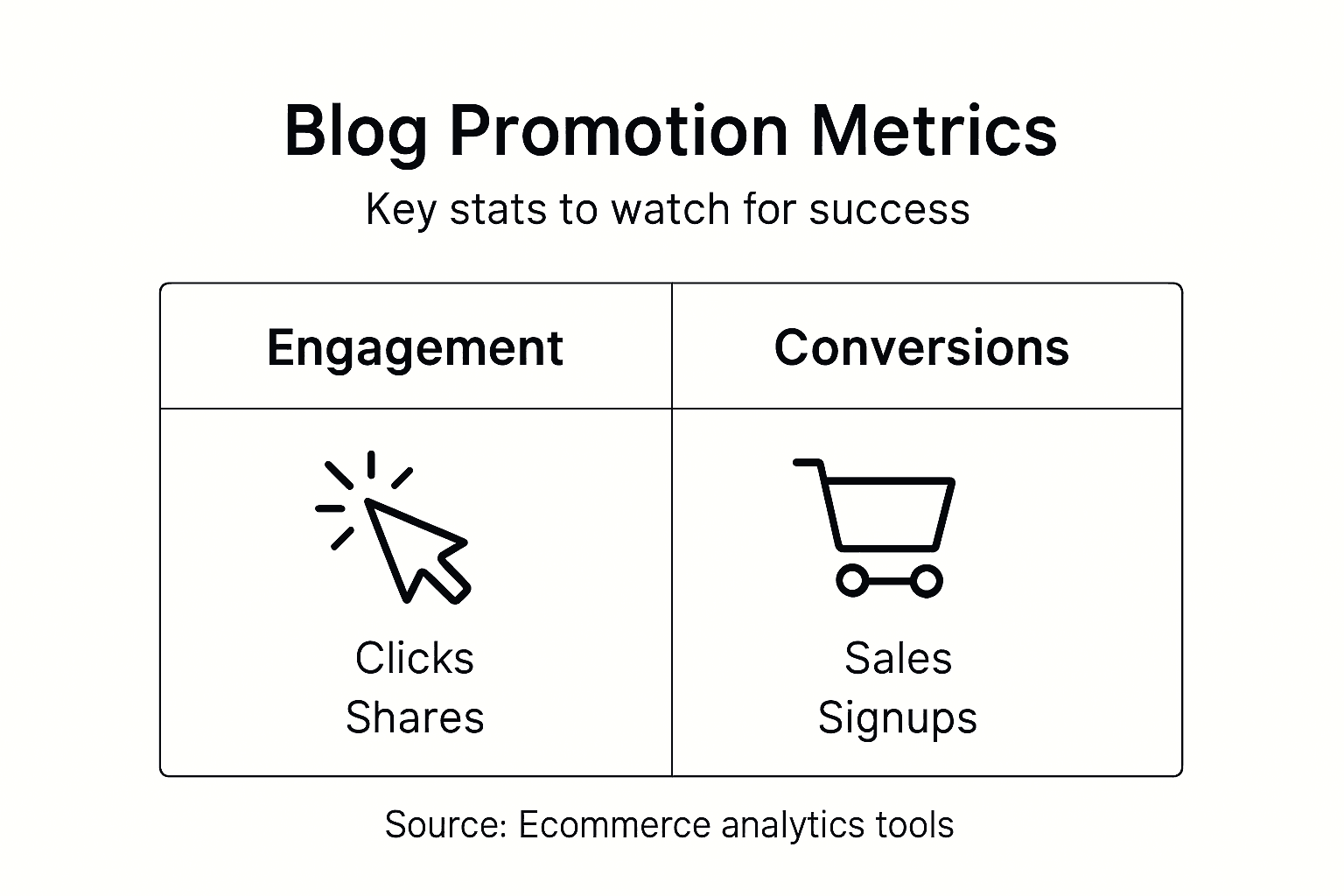
Analyzing promotional performance metrics demands a comprehensive view beyond basic sales numbers. Implement advanced tracking tools that capture multi-touch attribution, revealing how different channels and touchpoints contribute to your blog’s visibility and conversion journey. Set up detailed dashboards that track key performance indicators such as engagement rates, click through percentages, time spent on page, and direct conversions generated from blog content. Compare these metrics across various promotional channels to understand which strategies deliver the most significant results. Use UTM parameters for precise tracking, allowing you to distinguish the performance of social media, email, and other distribution methods with granular accuracy.
Develop a systematic process for continuous optimization by establishing regular performance review cycles. Create quarterly benchmark reports that compare current promotional performance against previous periods, identifying trends and opportunities for improvement. Use A/B testing to experiment with different promotional approaches, testing variables like content format, headline styles, distribution timing, and audience segmentation. Leverage analytics insights to make data driven decisions about resource allocation, focusing your efforts on the most effective promotional tactics. Remember that performance tracking is an iterative process where each insight provides an opportunity to refine and enhance your blog post promotion strategy.
Pro tip: Create a standardized performance tracking template with predefined metrics and automated calculation fields to streamline your quarterly performance review process.
Unlock the Full Potential of Your Ecommerce Blog Promotion with Expert Email Automation
The article highlights how driving ecommerce growth relies heavily on preparing high-quality content, optimizing email announcements, leveraging social channels, and automating blog distribution through Klaviyo flows. You understand the challenge of turning content into measurable revenue and engagement while mastering segmentation, timing, and personalized messaging. Pain points like automating targeted email campaigns, increasing open and click rates, and tracking promotional impact align perfectly with Take Action’s expertise. By combining AI-powered insights with human strategy, we help ecommerce brands automate customer retention processes, boost email flow performance, and scale with precision.
If you want to bridge your blog post promotion strategies with hands-on Klaviyo automation and expert campaign management, Take Action is your dedicated partner. From strategically setting up welcome and abandoned cart flows to integrating dynamic email announcements, we transform your blog content into a primary growth channel. Discover how our tailored solutions complement your marketing efforts to maximize engagement and diversify revenue streams beyond paid ads.
Ready to elevate your ecommerce blog promotions and turn email marketing into your most powerful growth driver Visit Take Action now to start automating smarter email campaigns that deliver measurable results and lasting customer relationships.
Frequently Asked Questions
How can I prepare my blog content for effective promotion?
To prepare your blog content, craft clear and engaging content that addresses your audience’s needs. Structure your post with meaningful headings, use digestible paragraphs, and include visual elements like images or infographics for better understanding.
What are key elements to include in an email campaign for blog announcements?
Key elements of an email campaign include a compelling subject line, a concise preview of the blog content, and a clear call to action that directs subscribers to read the full article. Personalize your emails to specific segments of your audience to increase engagement rates.
Which social media platforms should I focus on for promoting my blog?
Focus on the social media platforms where your target audience is most active, such as Instagram, LinkedIn, and Twitter. Create platform-specific content that teases your blog post and encourages followers to engage and share.
How can I automate my blog post distribution effectively?
You can automate your blog post distribution by setting up targeted email flows that cater to different audience segments based on their behaviors. Use advanced trigger mechanisms in your email platform to ensure timely delivery of relevant content.
What metrics should I track to measure the success of my blog promotion strategy?
Track key metrics such as engagement rates, click-through percentages, and conversion rates to determine the effectiveness of your blog promotion strategy. Set up dashboards to continuously monitor these metrics and adjust your tactics as needed.
How can I refine my blog promotion tactics over time?
Refine your blog promotion tactics by conducting regular performance reviews and creating benchmark reports that compare current performance with past results. Use A/B testing to experiment with different approaches and apply insights to optimize your future promotions.
Recommended
- 7 Best Blog Post Formats for Ecommerce Success | Take Action Blog | Take Action
- Complete Guide to SEO for Ecommerce Stores | Take Action Blog | Take Action
- Increasing Website Visibility for Ecommerce Growth Success | Take Action Blog | Take Action
- SEO Matters: Complete Guide for Ecommerce Brands | Take Action Blog | Take Action