

Complete Guide to Blogging for Business Success
More than 80 percent of businesses now use blogs as a core part of their marketing efforts. With so many companies competing for attention online, choosing the right blogging strategy can make a huge difference in reaching your target audience and building real trust. Whether you want to boost search rankings or position your brand as an industry expert, understanding the true role of blogging for business helps you tap into opportunities that drive growth and lasting customer relationships.
Table of Contents
- What Is Blogging for Business?
- Types of Business Blogs and Purposes
- Core Elements of Effective Business Blogging
- Integrating Blogging With Email Marketing Automation
- Common Blogging Pitfalls and How to Avoid Them
Key Takeaways
| Point | Details |
|---|---|
| Purpose of Business Blogging | Business blogging is a strategic tool for engaging customers, establishing authority, and driving business outcomes through valuable content. |
| Types of Blogs | Different blog types (e.g., community, goal-oriented) serve specific business objectives, necessitating tailored content strategies. |
| Core Elements for Success | Effective blogging hinges on authenticity, strategic planning, engagement, and performance tracking for meaningful audience connections. |
| Avoiding Common Pitfalls | Consistency, clear objectives, and audience engagement are critical to prevent common blogging mistakes that can harm brand reputation. |
What Is Blogging for Business?
Blogging for business is a strategic digital marketing approach where companies create and publish online content to engage customers, establish industry authority, and drive meaningful business outcomes. Unlike personal blogs that serve as electronic diaries, business blogs are purposeful communication channels designed to build relationships, share expertise, and connect with target audiences.
According to NIST, business blogs serve multiple critical functions for organizations. These include:
- Exposing the brand to new potential audiences
- Improving search engine visibility and rankings
- Establishing thought leadership in your industry
- Gaining valuable customer insights
- Increasing positive brand sentiment and trust
The core purpose of business blogging transcends simple content creation. It’s about crafting strategic narratives that provide genuine value to your target audience while subtly positioning your brand as a knowledgeable solution provider. By consistently delivering high-quality, relevant content, businesses can transform their blogs from mere digital platforms into powerful relationship-building tools.
While TD cautions that blogs might not suit every organization due to potential risks, the benefits typically outweigh the challenges for businesses willing to invest time and creativity into their content strategy. Successful business blogs require authenticity, consistent quality, and a deep understanding of your audience’s needs and interests.
Types of Business Blogs and Purposes
Business blogs are not a one-size-fits-all communication strategy. According to ScholarWorks, corporate blogs can be strategically categorized into four distinct types, each serving unique organizational objectives:
- Community of Interest Blogs: Focus on shared passions or topics related to the industry
- Goal-Oriented Community Blogs: Designed to achieve specific business objectives
- Learner’s Community Blogs: Emphasize educational content and knowledge sharing
- Community of Practice Blogs: Connect professionals within a specific domain or expertise
BCS highlights that corporations are increasingly using blogs as powerful communication tools for both internal and external stakeholders. These digital platforms enable businesses to create informal, interactive channels that empower customers and employees alike.
The strategic purposes of business blogs extend far beyond simple content publication. Companies like Vespa, General Motors, and IBM demonstrate how blogs can be leveraged to build relationships, manage knowledge, enhance marketing strategies, and create meaningful connections with target audiences. By understanding the nuanced roles different blog types can play, businesses can design content strategies that align precisely with their communication and growth objectives.

Successful business blogging requires a deep understanding of your audience, clear strategic goals, and a commitment to delivering genuine value through your content. Whether you’re aiming to establish thought leadership, provide customer education, or create a community around your brand, selecting the right blog type and purpose is crucial to achieving meaningful engagement and business results.
Core Elements of Effective Business Blogging
Effective business blogging is more than just publishing content. Journals Scholarpublishing reveals that successful organizational blogs require strategic elements like managed socialization, meaningful dialogue, and continuous reflection.
Key core elements of impactful business blogs include:
- Authentic Voice: Developing a consistent, genuine tone that reflects your brand’s personality
- Strategic Content Planning: Creating a structured approach to content creation and publication
- Interactive Engagement: Encouraging reader comments and discussions
- Performance Tracking: Monitoring metrics to understand content effectiveness
- Continuous Learning: Adapting content strategy based on audience insights
AMA Net emphasizes that successful blogs create dynamic brand identities and build loyal customer communities. This requires a nuanced approach that goes beyond simple information sharing, focusing instead on creating meaningful connections and value for your audience.
The most successful business blogs transform from mere communication channels into interactive platforms that foster trust, demonstrate expertise, and provide genuine value. By combining strategic content planning, authentic storytelling, and a commitment to audience engagement, businesses can leverage blogging as a powerful tool for building brand awareness, establishing thought leadership, and driving meaningful customer relationships.
Integrating Blogging With Email Marketing Automation
Web Tech Solution highlights a powerful strategy for businesses: using blog content as a critical mechanism for nurturing leads and building customer relationships through targeted email marketing automation. The integration transforms traditional content distribution into a sophisticated, personalized communication channel.
Key strategies for effective blog and email marketing integration include:
- Content Segmentation: Categorize blog posts by audience interests
- Automated Subscriber Nurturing: Create email flows based on blog engagement
- Personalized Recommendations: Use reading behavior to trigger relevant content emails
- Lead Scoring: Track blog interactions to qualify potential customers
- Consistent Messaging: Align blog content with email communication style
Chamber of Commerce emphasizes that consistent blogging can significantly accelerate lead generation, particularly for small businesses seeking cost-effective marketing strategies. By creating valuable, targeted content and strategically linking blog posts to email automation, businesses can create a seamless customer journey that moves prospects through the sales funnel.
Successful integration requires more than technical implementation. It demands a holistic approach that treats blog content and email marketing as interconnected components of a comprehensive customer engagement strategy. The goal is to create a dynamic, responsive ecosystem where each blog post becomes a potential entry point for deeper customer relationships, powered by intelligent, data-driven email automation.
Common Blogging Pitfalls and How to Avoid Them
BCS warns that while business blogging offers tremendous opportunities, it also presents significant challenges that can derail an organization’s content strategy if not carefully managed. Understanding these potential pitfalls is crucial for creating a successful and sustainable blogging approach.
Common blogging mistakes businesses frequently encounter include:
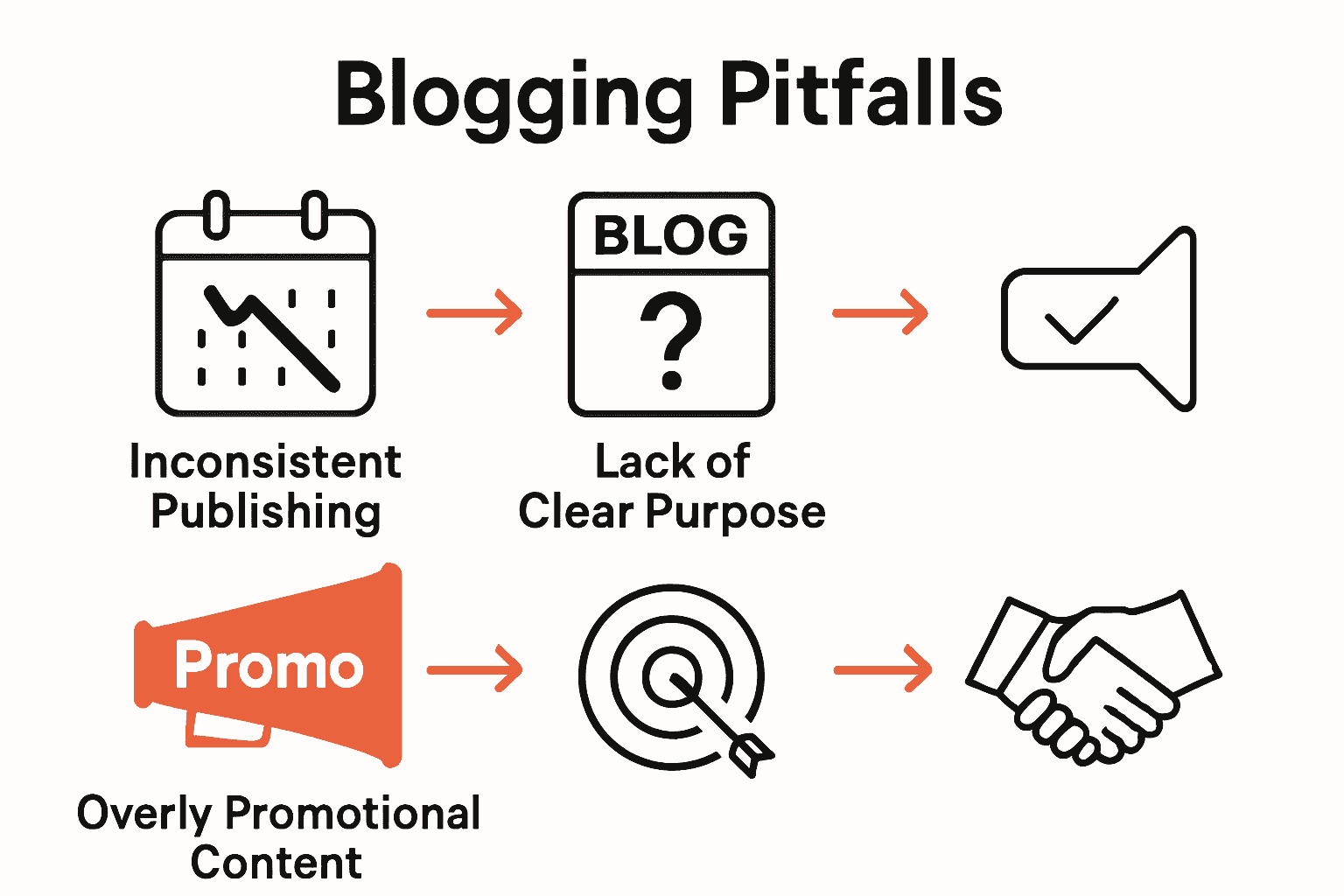
- Inconsistent Publishing: Irregular content schedules that diminish audience engagement
- Lack of Clear Purpose: Blogging without strategic objectives
- Ignoring Audience Feedback: Failing to interact with or respond to reader comments
- Overly Promotional Content: Writing posts that feel like aggressive sales pitches
- Poor Quality Writing: Publishing content without proper editing or research
Journals Scholarpublishing emphasizes the critical importance of managed socialization and appropriate organizational oversight. Without structured guidelines and strategic checks, business blogs can quickly become ineffective or potentially damaging to the brand’s reputation.
Successful blogging requires a proactive approach that balances creativity with strategic discipline. By anticipating potential pitfalls, developing clear content guidelines, maintaining consistent quality, and staying genuinely connected to your audience’s needs, businesses can transform blogging from a potential risk into a powerful engagement and growth tool.
 The key is viewing your blog as a dynamic, evolving platform for meaningful communication, not just another marketing channel.
Elevate Your Business Blogging with Smart Email Marketing Automation
Struggling to turn your engaging blog content into measurable business growth The Complete Guide to Blogging for Business Success highlights challenges like inconsistent publishing, lack of strategic purpose, and poor audience engagement. These pain points can leave your valuable blog content underperforming and unable to nurture leads effectively. The key lies in integrating your business blog with a robust email marketing automation strategy to automate customer retention, segment your audience, and deliver personalized content that builds genuine connections.
Take Action specializes in crafting data-driven, conversion-focused email campaigns that complement and enhance your blogging efforts. Our expert team builds tailored automations including welcome series, abandoned cart flows, and post-purchase sequences that escalate engagement and increase revenue. Don’t let your blog become just another content channel. Visit Take Action now to discover how we transform blogging into a powerful lead nurturing engine that aligns perfectly with your brand voice and drives sustained ecommerce growth. Explore our campaign strategy services and unlock the full potential of your content today.
Frequently Asked Questions
What is blogging for business?
Blogging for business is a digital marketing strategy where companies create and publish content to engage customers, establish authority, and drive business outcomes. It serves as a communication channel to build relationships and share expertise with the target audience.
What are the types of business blogs?
There are four main types of business blogs: Community of Interest blogs, Goal-Oriented Community blogs, Learner’s Community blogs, and Community of Practice blogs. Each type serves distinct organizational objectives related to engagement and knowledge sharing.
How can I effectively integrate blogging with email marketing?
To integrate blogging with email marketing, you can categorize blog content based on audience interests, automate email flows based on blog engagement, and personalize content recommendations. This approach nurtures leads and enhances customer relationships.
What are common pitfalls in business blogging?
Common pitfalls include inconsistent publishing schedules, a lack of clear purpose, ignoring audience feedback, creating overly promotional content, and publishing poor-quality writing. Recognizing and addressing these challenges is essential for a successful blogging strategy.
Recommended
- 7 Must-Read Business Book Recommendations for Ecommerce Growth | Take Action Blog | Take Action
- 7 Evergreen Content Ideas for Growing Your Brand | Take Action Blog | Take Action
- Blog - Email Marketing Insights | Take Action | Take Action
- Complete Guide to SEO for Ecommerce Stores | Take Action Blog | Take Action