

Buyer Intent Signals: Unlocking Higher Ecomm Sales
Over 80 percent of American shoppers admit that subtle online behaviors influence their final buying decisions. With digital storefronts more crowded than ever, understanding these signals can give ecommerce brands a real advantage. By recognizing the intent cues hidden in browsing and email interactions, you can unlock precise ways to reach your customers before competitors do and turn interest into loyal sales.
Table of Contents
- Buyer Intent Signals Defined For Ecommerce Brands
- Types Of Buyer Intent Signals In Email Marketing
- How To Identify And Track Key Intent Signals
- Leveraging Intent Signals For Automated Campaigns
- Common Mistakes When Using Buyer Intent Data
Key Takeaways
| Point | Details |
|---|---|
| Understanding Buyer Intent Signals | Ecommerce brands must identify explicit and implicit buyer intent signals to convert browsing customers into buyers. |
| Leveraging Email Engagement | Advanced email marketing strategies utilize intent signals to tailor communication and enhance customer conversion potential. |
| Tracking for Insights | Implement robust intent tracking methodologies to transform behavioral data into actionable insights and predictive models. |
| Avoiding Common Pitfalls | Brands should avoid overgeneralizing intent data and ensure a nuanced approach to interpret diverse buyer signals effectively. |
Buyer Intent Signals Defined for Ecommerce Brands
Understanding buyer intent signals is critical for ecommerce brands seeking to convert browsing shoppers into paying customers. At its core, buyer intent represents a potential customer’s psychological readiness and motivation to purchase a product. Consumer behavior research reveals that intent goes far beyond simple product interest, encompassing complex emotional and rational decision-making processes.
Buyer intent signals are behavioral indicators that suggest a customer is approaching a purchasing decision. These signals can be explicit or implicit, ranging from direct interactions like adding items to a cart to more nuanced actions such as repeated website visits, extended product page views, or engagement with specific content. Key signals include:
- Browsing Duration: Time spent examining product details
- Interaction Frequency: Number of return visits to product pages
- Search Behavior: Specific product-related search queries
- Comparison Shopping: Viewing multiple product variations
- Cart Interactions: Adding items, exploring checkout process
Moreover, online purchase intention studies highlight how influencer-generated content and social proof can dramatically enhance a customer’s likelihood of converting. Sophisticated ecommerce brands leverage advanced analytics and machine learning to track and interpret these intricate behavioral patterns, transforming raw data into actionable insights.
Here is a summary table highlighting how various buyer intent signals map to potential marketing actions and expected business outcomes:
| Intent Signal Type | Recommended Marketing Action | Expected Business Impact |
|---|---|---|
| Repeated Page Visits | Personalized product recommendations | Higher conversion rate |
| High Email Interaction | Trigger targeted follow-up emails | Increased customer engagement |
| Cart Abandonment | Automated reminder sequence | Reduced lost sales |
| Social Proof Engagement | Showcase reviews and testimonials | Enhanced customer trust |
| Deep Content Exploration | Deliver educational content | Longer customer lifecycle |
Pro Tip: Tracking Intent Signals: Implement robust analytics tools that can capture granular user interactions, enabling you to create personalized retargeting campaigns that speak directly to a customer’s specific stage in the purchase journey.
Types of Buyer Intent Signals in Email Marketing
Email marketing transforms raw communication into a strategic pathway for understanding customer purchase intentions. Advanced email analysis models demonstrate how sophisticated techniques can decode intricate behavioral signals hidden within digital interactions. These signals provide critical insights into a customer’s psychological readiness to make a purchase.
Buyer intent signals in email marketing manifest through multiple engagement dimensions:
- Open Rate Patterns: Frequency and timing of email opens
- Click-Through Behavior: Links clicked, sections explored
- Interaction Depth: Time spent reading specific email content
- Forwarding Activity: Sharing emails with potential decision makers
- Repetitive Engagement: Consistent interaction with specific campaign types
Behavioral intent tracking reveals that email activity serves as a nuanced communication channel, where each interaction provides a granular view of customer interest. Sophisticated marketers interpret these signals as complex narratives, transforming seemingly simple metrics into predictive insights about potential purchasing behavior.

Email engagement goes beyond surface-level metrics. Successful brands develop intricate segmentation strategies that map these intent signals, allowing for hyper-personalized communication that resonates with individual customer journeys. By understanding the subtle language of email interactions, brands can create targeted experiences that feel intuitive and compelling.
Pro Tip: Intent Signal Mapping: Develop a comprehensive scoring system that weights different email interactions, enabling you to create dynamic customer segments that automatically adjust based on real-time engagement patterns.
How to Identify and Track Key Intent Signals
Intent tracking represents a sophisticated approach to understanding customer behavior beyond traditional analytics. Neural network research reveals advanced techniques for predicting purchasing intentions by analyzing complex user interactions without extensive manual intervention. Modern ecommerce brands need robust strategies to transform raw data into actionable insights.
Comprehensive intent signal tracking involves multiple strategic approaches:
- Behavioral Segmentation: Categorizing customers based on interaction patterns
- Conversion Funnel Analysis: Mapping touchpoints and drop-off moments
- Predictive Scoring: Assigning numerical values to potential purchase likelihood
- Cross-Channel Tracking: Integrating signals from email, website, and social platforms
- Real-Time Monitoring: Continuous assessment of customer engagement levels
Intent data classification demonstrates that successful tracking requires a multidimensional approach. Sophisticated brands recognize that intent signals are not linear but complex, interconnected indicators of customer readiness. By developing nuanced tracking mechanisms, businesses can create predictive models that anticipate customer needs before traditional indicators emerge.
Effective intent signal tracking demands a holistic view of customer interactions. Successful strategies integrate technological tools with human insight, creating dynamic systems that adapt to changing customer behaviors. Advanced analytics platforms now offer machine learning capabilities that can identify subtle patterns invisible to manual review, transforming raw data into strategic intelligence.
The table below compares traditional analytics and intent signal tracking methods in ecommerce:
| Approach | Data Focus | Depth of Insight | Adaptability to Behavior |
|---|---|---|---|
| Traditional Analytics | Surface metrics (e.g., pageviews) | Limited | Low |
| Intent Signal Tracking | Behavioral patterns and signals | Granular and predictive | High; dynamic segmentation |
Pro Tip: Signal Integration Strategy: Develop a centralized dashboard that aggregates intent signals from multiple sources, creating a comprehensive view of customer behavior that allows for real-time, personalized marketing interventions.
Leveraging Intent Signals for Automated Campaigns
Automated marketing campaigns represent a powerful strategy for transforming raw intent signals into targeted customer experiences. Advanced intent optimization models demonstrate how sophisticated algorithms can simultaneously learn and adapt to advertiser intentions, creating dynamic marketing approaches that respond in real-time to customer behavior.
Effective automated campaign strategies involve several critical components:
- Dynamic Segmentation: Automatically categorizing customers based on intent signals
- Personalized Trigger Workflows: Creating responsive email sequences
- Behavioral Targeting: Matching content to specific customer interaction patterns
- Predictive Content Delivery: Anticipating customer needs before explicit requests
- Continuous Learning Mechanisms: Refining campaign strategies through ongoing data analysis
Strategic lead segmentation enables brands to develop hyper-personalized outreach strategies that feel intuitive and relevant. By mapping customer interactions across multiple touchpoints, businesses can design automated campaigns that adapt dynamically to individual customer journeys, transforming generic marketing into precision-targeted communication.
The most successful automated campaigns treat intent signals as living, breathing data points that continuously evolve. Machine learning algorithms now allow marketers to create fluid systems that can instantaneously adjust messaging, timing, and content based on the most recent customer interactions. This approach moves beyond traditional linear marketing models, creating a responsive ecosystem that feels more like a conversation than a broadcast.
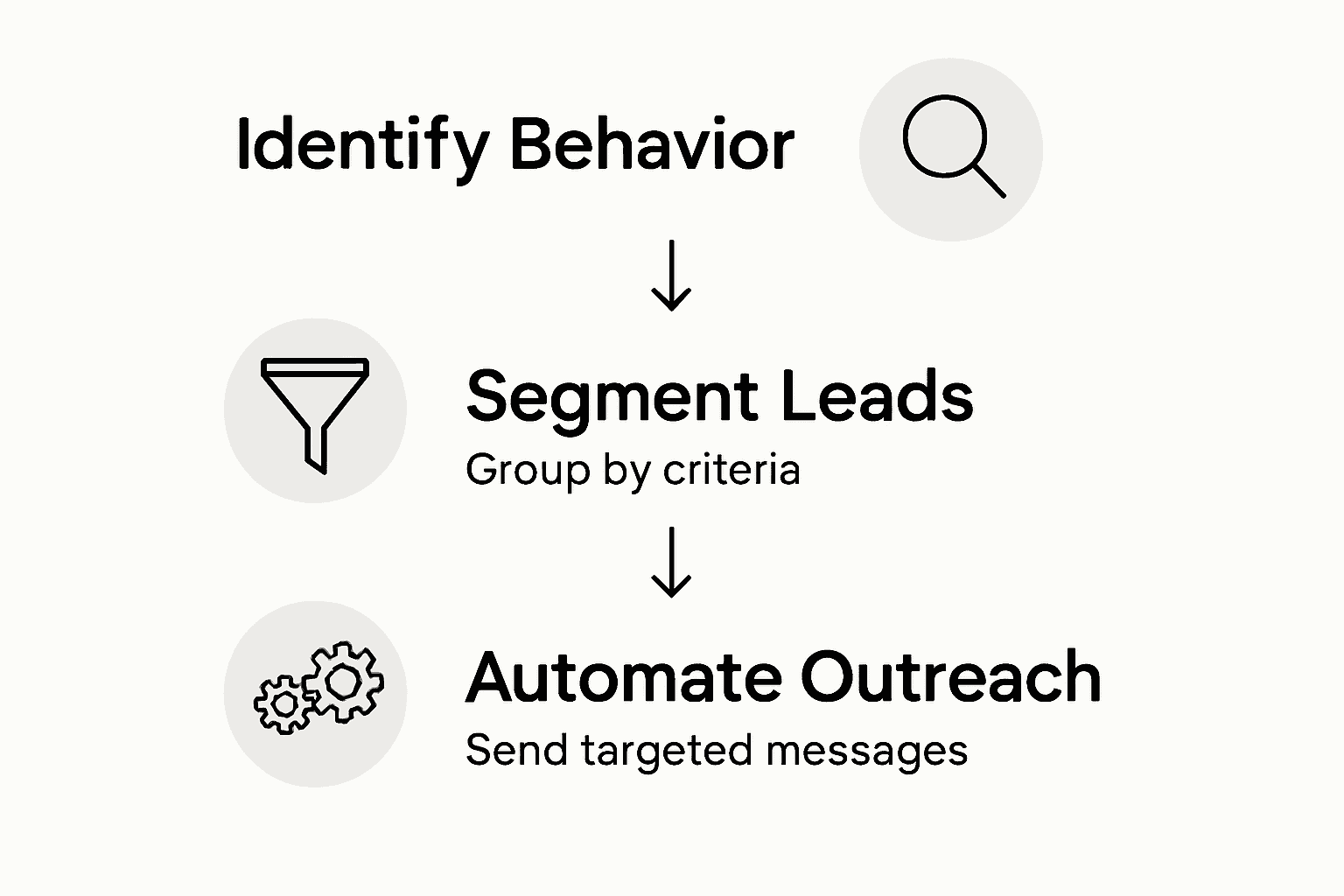
Pro Tip: Intent Signal Automation: Design modular campaign workflows with multiple conditional branches that can automatically shift communication strategies based on real-time customer engagement metrics.
Common Mistakes When Using Buyer Intent Data
Intent data analysis requires precision and strategic understanding. Complex intent data categorization reveals that misinterpreting different signal types can dramatically undermine marketing effectiveness. Businesses frequently stumble by treating all intent signals as equivalent, failing to recognize the nuanced distinctions between search, engagement, firmographic, and technographic data.
The most critical mistakes in buyer intent data management include:
- Overgeneralization: Applying broad strategies across diverse customer segments
- Data Tunnel Vision: Focusing on single-channel intent signals
- Ignoring Signal Decay: Treating historical data as perpetually relevant
- Lack of Contextual Understanding: Misinterpreting raw data without deeper insight
- Algorithmic Rigidity: Using inflexible analysis frameworks
Inaccurate lead segmentation can transform potentially powerful marketing strategies into generic, ineffective outreach. Sophisticated brands recognize that intent signals are complex, dynamic indicators requiring continuous refinement and nuanced interpretation. Simply collecting data is not enough; brands must develop intelligent systems that can dynamically adapt to changing customer behaviors.
Successful intent data utilization demands a holistic, adaptive approach. Advanced marketers treat intent signals as living ecosystems, not static data points. This means developing flexible analytical frameworks that can quickly incorporate new information, recognize emerging patterns, and automatically adjust segmentation strategies. The most effective organizations create learning systems that become more precise with each interaction.
Pro Tip: Signal Validation Protocol: Implement a quarterly review process that critically examines your intent signal interpretation methodology, ensuring your segmentation strategies remain agile and responsive to evolving customer behaviors.
Unlock Higher Ecommerce Sales by Mastering Buyer Intent Signals
Understanding buyer intent signals is the key challenge many ecommerce brands face when trying to turn casual visitors into loyal customers. The article reveals that tracking behaviors like cart abandonment, repeated page visits, and email engagement provides valuable clues about a shopper’s readiness to buy. However, translating these complex signals into actionable marketing strategies can feel overwhelming without expert guidance and the right technology.
At Take Action, we specialize in helping ecommerce brands harness the power of automation and strategic segmentation to decode these intent signals. Our expertise in Klaviyo email flows such as abandoned cart reminders, personalized product recommendations, and targeted follow-up sequences lets you recover lost sales while boosting customer lifetime value. Combining human creativity with AI-driven insights, we deliver data-driven campaigns that match your brand voice and resonate deeply with your audience.
Ready to turn buyer intent data into a primary growth channel for your business?

Explore how our email marketing and retention services can transform your customer engagement with intelligent automation designed around unique buyer behaviors. Act now to scale your ecommerce revenue sustainably by partnering with a team that turns data into decisive action.
Frequently Asked Questions
What are buyer intent signals?
Buyer intent signals are behavioral indicators that reveal a customer’s readiness and motivation to make a purchase. These can include actions like adding items to a cart, repeated visits to product pages, and engaging with specific content.
How can ecommerce brands track buyer intent signals?
Ecommerce brands can track buyer intent signals through tools that analyze user interactions, such as time spent on pages, email engagement metrics, and cart interactions. This data can be used to create personalized marketing strategies.
What role does email marketing play in understanding buyer intent?
Email marketing serves as a vital channel for assessing buyer intent by monitoring engagement metrics like open rates, click-through behavior, and the depth of interaction with email content. These insights help brands tailor their communication to meet customer needs.
What common mistakes should be avoided when analyzing buyer intent data?
Common mistakes include overgeneralization of data across different segments, ignoring the context of signals, and relying solely on historical data. Brands should develop flexible systems for ongoing learning and adjustment of marketing strategies.
Recommended
- 7 Essential Ecommerce Marketing Strategies for Growth | Take Action Blog | Take Action
- 7 Essential Keyword Research Tips for Ecommerce Growth | Take Action Blog | Take Action
- 7 Conversion Rate Optimization Tips for Ecommerce Success | Take Action Blog | Take Action
- Complete Guide to SEO for Ecommerce Stores | Take Action Blog | Take Action