

Avoid Common Email Marketing Mistakes for Higher ROI
Every marketing manager has faced the challenge of seeing email engagement plateau despite their best efforts. For mid-sized DTC brands using Klaviyo, the difference between mediocre and meaningful results often comes down to segmentation, automation, and brand alignment. Mastering these elements lets you deliver personalized content aligned with individual preferences, which not only improves engagement but also fuels long-term customer retention. Inside, discover how to refine your approach and avoid mistakes that stall results for global brands.
Table of Contents
- Step 1: Review Segmentation For Targeted Messaging
- Step 2: Optimize Automation To Reduce Manual Errors
- Step 3: Align Campaigns With Brand Voice And Aesthetics
- Step 4: Test Deliverability And Monitor Engagement Metrics
- Step 5: Adjust Strategies Using Performance Insights
Quick Summary
| Key Point | Explanation |
|---|---|
| 1. Create targeted email segments | Segment your email list to deliver personalized content based on shared behaviors and demographics for better engagement. |
| 2. Utilize automation for consistency | Implement automated workflows to reduce manual errors and ensure timely, relevant messaging for each subscriber. |
| 3. Maintain brand voice consistency | Ensure your emails reflect your brand’s personality and visual identity to foster recognition and trust among customers. |
| 4. Regularly test deliverability | Conduct pre-send tests and monitor engagement metrics to optimize inbox placement and overall campaign performance. |
| 5. Adjust strategies based on insights | Perform monthly performance audits to refine email strategies and make data-driven adjustments for continual improvement. |
Step 1: Review segmentation for targeted messaging
Your email list is probably not one homogeneous group, so your messages shouldn’t treat them that way. The key is dividing your list into specific groups based on shared characteristics so you can send targeted content that actually resonates with each segment. This is where the real power of email marketing lives, especially when you’re trying to maximize ROI on every send.
Start by auditing what data you already have about your subscribers. Pull your customer information into your email platform (if you’re using Klaviyo, you already have this capability built in) and examine what behavioral signals are available. Look at purchase history, browsing behavior, email engagement patterns, customer lifecycle stage, and demographic information like location or product category preferences. The more detailed your data, the more meaningful your segments become. Dividing your email list into specific groups allows you to deliver personalized content aligned with individual preferences, which directly improves engagement and conversion rates.
Once you’ve inventoried your data, start creating your foundational segments. Begin with behavior-based groups: customers who made a purchase in the last 30 days, those who abandoned a cart, repeat buyers, and inactive subscribers. Then layer in demographic or preference-based segments: geographic location, product interest, customer tier, or whether they’ve opened your emails in the last 90 days. Don’t overcomplicate this at first. You want segments that are large enough to be actionable but specific enough to receive truly relevant messages. For example, a segment of customers who purchased women’s activewear in the past 60 days should receive different recommendations than those who bought men’s accessories, even if they’re both customers.
Test your segments by sending a targeted campaign to one group and comparing its performance against a broader send. Watch for higher open rates, click rates, and conversion rates. These wins prove your segmentation strategy is working and justify the effort. As you grow more comfortable with segmentation, you can build more sophisticated automated workflows that respond to specific customer behaviors in real time.
Pro tip: Review your segments monthly and retire any that no longer show meaningful engagement differences. As your customer base and preferences evolve, your segmentation strategy needs to evolve with it.
Here’s a summary of common segmentation types and their targeting impact:
| Segmentation Type | Description | Targeting Benefit |
|---|---|---|
| Behavioral Segmentation | Based on actions like purchase or engagement | Sends relevant offers to active users |
| Demographic Segmentation | Uses data like location or age | Personalizes content by region or group |
| Lifecycle Segmentation | Groups subscribers by their customer stage | Increases relevance with stage-specific messaging |
| Preference-Based Segmentation | Based on stated or inferred interests | Boosts engagement with tailored recommendations |
Step 2: Optimize automation to reduce manual errors
Manual campaign execution is a breeding ground for mistakes. You’re juggling send times, tracking which customers received what messages, updating segments, and managing follow-up sequences all by hand. Automation strips away these manual touchpoints and replaces them with rules-based workflows that execute consistently, every single time. When you build email automation workflows properly, you eliminate data entry errors, ensure subscribers receive timely messages based on their specific behavior, and free up your team to focus on strategy instead of execution.

Start by mapping out your core automation sequences in Klaviyo. Identify the workflows that repeat every month or season: welcome series, abandoned cart recovery, post-purchase flows, win-back campaigns, and re-engagement sequences. For each workflow, define the specific triggers that activate it. An abandoned cart workflow triggers when a customer adds items to their cart but doesn’t complete purchase. A post-purchase flow triggers the moment an order is confirmed. A win-back sequence triggers when a subscriber hasn’t engaged in 180 days. Once these triggers are set, the system automatically sends the right message to the right person at the right time without you lifting a finger. This consistency is exactly what improves ROI because every customer gets treated the same way within that workflow, removing human error from the equation.
Next, test each automation thoroughly before it goes live. Run through the complete workflow yourself as if you were a customer hitting each trigger. Check that email content renders correctly, links work, personalization tokens populate accurately, and the timing feels natural. Many teams also run small test sends to internal addresses before rolling out to full lists. After launch, monitor your automation performance weekly. Track open rates, click rates, conversion rates, and unsubscribe rates for each workflow. If a particular automation is underperforming, audit it for issues: maybe the timing is wrong, the subject line isn’t compelling, or the offer doesn’t resonate with that segment. Automation tools reduce manual data entry errors and ensure consistent, relevant messaging, so when performance dips, the issue is usually strategic, not technical.
As your automations mature, layer in conditional logic. Instead of sending the same post-purchase email to everyone, segment that flow so new customers receive onboarding content while repeat customers get cross-sell recommendations. This kind of precision doesn’t add complexity to your system; it actually reduces errors because you’re removing the guesswork about what each customer needs.
Pro tip: Document each automation’s purpose, triggers, and expected performance benchmarks in a simple spreadsheet. This reference guide makes it easy to audit automations quarterly and quickly troubleshoot when something isn’t performing as expected.
Step 3: Align campaigns with brand voice and aesthetics
Your emails are often the most frequent touchpoint customers have with your brand. If your campaign tone sounds nothing like your website, your product pages, or your social media, you’re creating cognitive dissonance that makes customers question who they’re really dealing with. Brand consistency isn’t about being robotic or formulaic. It’s about ensuring every email reflects your company’s personality, values, and visual identity so customers recognize you instantly and trust what you’re saying.
Start by documenting your brand voice in writing. What words describe how your brand communicates? Are you playful and irreverent, or professional and trustworthy? Are you conversational and casual, or formal and sophisticated? Write out 5 to 10 words that capture your tone, then create concrete examples of what your brand would and wouldn’t say. If you’re a sustainable fashion DTC brand, your voice might be inspiring and purpose-driven, so an email opening with “Stop wasting money on throwaway clothes” fits your brand, while “Our inventory is depleting fast” sounds generic and corporate. Defining your brand’s tone and style clearly helps teams maintain consistency and prevents confusion in every communication element. Document your email templates, subject line patterns, sign-off styles, and how you address customers. Should you use first person or third person? Do you sign emails with just the brand name, a team member’s name, or something more creative? These small decisions compound across every send.
Next, audit your email templates for visual consistency. Your header logo, color palette, typography, button styles, and spacing should match your brand guidelines exactly. In Klaviyo, build modular template blocks that ensure consistency across campaigns. Create a primary template with your brand colors and fonts, then reuse sections for welcome emails, promotional campaigns, and transactional messages. When new team members create campaigns, they’re working within guardrails that make it nearly impossible to go off-brand. Check your existing email library against this standard. You might find older campaigns that look dated or inconsistent. Update those, not just for aesthetics, but because visual inconsistency erodes trust and makes customers wonder if they’re receiving emails from the real brand or a phishing attempt.
Test your brand voice across different campaign types. A welcome series should sound warm and onboarding-focused. An abandoned cart email can be slightly more urgent. A post-purchase follow-up can be helpful and educational. The voice stays consistent, but the tone shifts slightly based on context. This nuance prevents your brand from feeling one-dimensional.
Pro tip: Create a one-page brand voice reference document with tone examples, approved phrases, words to avoid, and visual asset specifications. Share it with anyone who touches your email templates so consistency becomes the default, not an afterthought.
Step 4: Test deliverability and monitor engagement metrics
A beautifully designed email campaign that never reaches the inbox is worthless. Before you hit send, you need to verify your emails will actually land where they belong and then monitor what happens once they do. Testing and monitoring aren’t one-time tasks. They’re ongoing processes that reveal problems early and give you the data you need to optimize performance over time.
Start with pre-send testing in Klaviyo. Send test emails to multiple email addresses across different providers (Gmail, Outlook, Apple Mail, Yahoo) to see how your email renders on each platform. Check for broken images, misaligned text, clickable links that don’t work, and personalization tokens that fail to populate. Open the test emails on mobile and desktop devices separately. A campaign that looks perfect on desktop might be unreadable on a smartphone. Beyond visual testing, verify your authentication protocols are set up correctly. Your sending domain needs SPF, DKIM, and DMARC records configured so email providers recognize you as legitimate. Klaviyo walks you through this setup, but if you’re unclear, confirm with your IT or email support team that these are properly authenticated. Monitoring bounce rates, open rates, and click-through rates combined with rigorous pre-send testing helps optimize inbox placement and improves overall campaign performance.
After your campaign launches, monitor these metrics religiously. In Klaviyo, track your bounce rate, complaint rate, and list growth or decline. A sudden spike in bounces often signals a list hygiene problem. Are you sending to stale addresses? Have you cleaned out invalid emails? A rising complaint rate means subscribers are marking your emails as spam, which damages your sender reputation. Clean your list quarterly by removing addresses with repeated bounces and monitoring unsubscribe patterns. Beyond deliverability metrics, obsess over engagement. Open rates tell you if your subject line and send time are resonating. Click rates show whether your content and call-to-action are compelling. Conversion rates reveal if traffic from email is actually turning into revenue. Watch these numbers weekly, not monthly. If you notice a campaign underperforming, investigate immediately. Did you send at the wrong time? Was the subject line confusing? Did you target the wrong segment? The data tells a story if you listen to it.
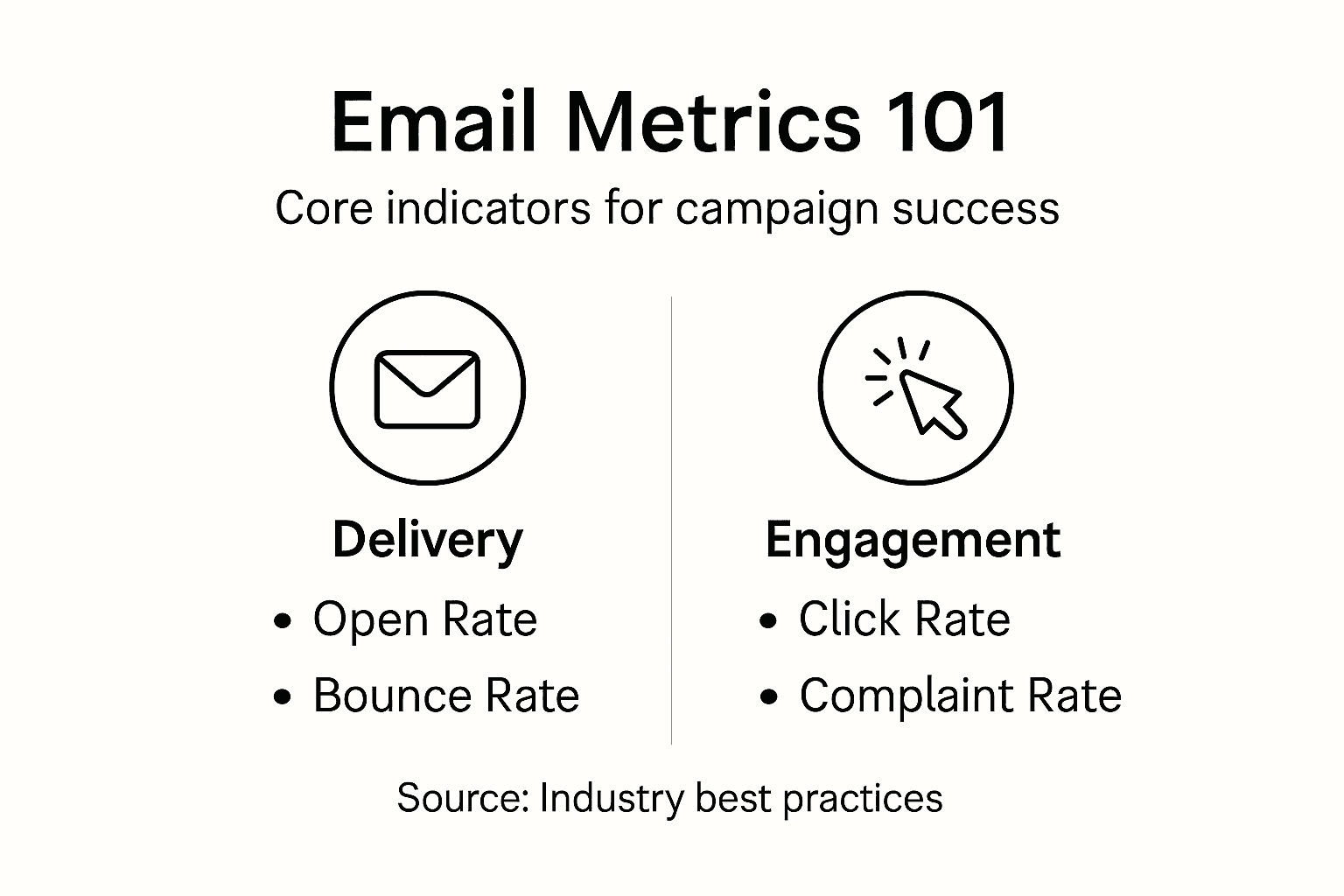
Create a simple dashboard in a spreadsheet or Klaviyo reporting interface to track these metrics over time. Compare performance across segments, campaign types, and send days. You’ll start seeing patterns: maybe mobile users engage differently than desktop users, or your post-purchase segment converts at twice the rate of your general audience. Use these insights to inform your next campaign.
See how core email campaign metrics inform strategy adjustments:
| Metric | What It Measures | Insight for Marketers |
|---|---|---|
| Open Rate | Initial email engagement | Reveals subject line effectiveness |
| Click Rate | Content interaction | Measures in-email interest |
| Conversion Rate | Actions leading to sales | Assesses revenue generation |
| Bounce Rate | Failed email deliveries | Flags list hygiene issues |
Pro tip: Set up automatic alerts in Klaviyo for red flag metrics like bounce rates above 2%, complaint rates above 0.3%, or open rates dropping more than 15% from your average. Early detection lets you troubleshoot problems before they tank your sender reputation.
Step 5: Adjust strategies using performance insights
Data without action is just noise. You’ve been monitoring your metrics, watching your engagement rates, and tracking conversion performance. Now comes the part that actually moves the needle: using those insights to make real changes. This is where good email marketers become great ones. You stop guessing and start iterating based on what your customers are actually telling you through their behavior.
Start by conducting a monthly performance audit. Pull your key metrics from Klaviyo and ask yourself hard questions. Which segments are engaging and which are silent? Which email types are driving conversions and which are getting ignored? Where are your open rates declining and why? Analyzing open rates, click-through rates, and conversion rates helps identify gaps and opportunities for strategic improvement. Look for patterns. Maybe your welcome series has a 45 percent open rate but your promotional emails drop to 18 percent. That tells you new customers are eager to hear from you, but your selling approach is turning them off. Maybe your post-purchase educational content converts at 12 percent while your clearance sales emails convert at only 3 percent. That insight should reshape your content calendar. Don’t just observe these patterns. Document them. Write down what’s working, what’s not, and your hypothesis for why. This creates accountability and gives you a baseline to measure against next month.
Then take action based on your findings. If open rates are dropping, test new subject line approaches or adjust your send times. If click rates are low, revisit your email copy and call-to-action placement. If a particular segment isn’t engaging, consider removing them from certain workflows or adjusting the messaging. If your abandoned cart recovery is crushing it, allocate more resources and frequency to that flow. The key is making one or two changes at a time so you can attribute results to specific adjustments. Change everything at once and you’ll never know what actually worked. Using comprehensive analytics and performance data allows email teams to refine messaging, timing, and audience targeting for continuous improvement. Document these changes in a simple changelog so you can reference what you tested and what the outcome was.
Build this feedback loop into your regular workflow. Make performance review and strategy adjustment a standing monthly or weekly task, not something you get around to when you have time. The teams winning in email marketing right now aren’t the ones sending perfect campaigns on day one. They’re the ones who measure relentlessly, adjust quickly, and compound small improvements week after week.
Pro tip: Create a simple test calendar that tracks what you changed, when you tested it, and the results. Over time, you’ll build institutional knowledge about what works for your specific audience, which becomes far more valuable than any industry benchmark.
Unlock Higher Email Marketing ROI by Avoiding Costly Mistakes
Every ecommerce brand faces the challenge of turning email campaigns into dependable revenue streams without wasting time on manual errors or generic messaging. This article highlights the key pitfalls such as ineffective segmentation, inconsistent automation, weak brand alignment, and poor deliverability that can silently sabotage your returns. If you recognize struggles with segmentation or automation workflows, low open and click rates, or difficulty aligning your emails with your brand voice, you are not alone.
Take Action is designed to help you overcome these obstacles by leveraging data-driven segmentation, flawless automation using Klaviyo, and consistent brand storytelling that resonates. Our expert team at Take Action combines human insight with AI-powered optimization to ensure your emails reach inboxes and prompt action every time. Imagine recovering more abandoned carts, boosting open rates with tailored campaigns, and turning every email into a measurable growth driver.
Don’t let common email marketing mistakes hold you back from scalable growth. Explore how Take Action’s proven strategies and hands-on automation management can transform your email marketing into a powerful retention and revenue engine right now. Learn more and get started today at Take Action.
Frequently Asked Questions
How can I improve email engagement for higher ROI?
To improve email engagement, segment your email list based on behaviors, demographics, or preferences. Create targeted campaigns that resonate with each segment’s interests, resulting in better open and click rates.
What are the key metrics to monitor for email marketing success?
Key metrics include open rate, click rate, conversion rate, and bounce rate. Regularly track these metrics weekly to identify trends and adjust your strategies accordingly for improved results.
How often should I clean my email list?
Clean your email list at least quarterly to remove stale addresses that may inflate your bounce rate. This action can help boost engagement and overall campaign effectiveness in as little as 30 days.
What types of email segmentation should I use?
You should use behavioral segmentation, such as identifying customers who abandoned carts or recently made purchases. Focus on creating actionable segments that allow for tailored messaging, which can drive conversions substantially.
How can I test my email campaigns before sending them?
Conduct pre-send tests by sending your emails to various email service providers and checking for rendering issues. This practice ensures your emails look great across platforms and reduces error rates.
How do I adjust my email strategies based on performance data?
Review your key performance metrics monthly to identify successful tactics and areas needing improvement. Make specific changes based on your findings, like testing different subject lines or adjusting send times, to optimize future campaigns.
Recommended
- Email Marketing Mistakes That Hurt Ecommerce Growth | Take Action Blog | Take Action
- 7 Content Marketing Mistakes Ecommerce Brands Must Avoid | Take Action Blog | Take Action
- Benefits of Segmentation: Unlocking Email Revenue Growth | Take Action Blog | Take Action
- Email Marketing Explained: Strategies for Ecommerce Growth | Take Action Blog | Take Action