

Content Marketing Explained: Strategies, Types, and Impact
Nearly 70 percent of marketers say that regular content creation produces more qualified leads than traditional ads. In a crowded digital space, audiences no longer respond to interruptions but instead look for genuine value before making decisions. Understanding the core principles of content marketing gives brands a practical way to connect, inform, and earn trust, setting the stage for lasting customer relationships and real business growth.
Table of Contents
- Defining Content Marketing And Its Core Principles
- Major Types Of Content Marketing Channels
- How Content Marketing Drives Brand Growth
- Common Challenges And Cost Considerations
- Best Practices And Mistakes To Avoid
Key Takeaways
| Point | Details |
|---|---|
| Content Marketing Essentials | Focus on creating valuable, consistent content that addresses audience needs and drives engagement. |
| Effective Channels | Utilize diverse content marketing channels such as blogs, social media, and email to enhance audience communication. |
| Strategic Brand Growth | Leverage content marketing to build credibility, increase visibility, and generate qualified leads for sustainable brand growth. |
| Common Challenges | Address challenges in content quality, audience targeting, and performance measurement to optimize content strategies effectively. |
Defining Content Marketing And Its Core Principles
Content marketing represents a strategic approach to creating and distributing valuable, targeted content designed to attract, engage, and retain a specific audience. According to ICJ-E, this methodology involves crafting relevant and consistent content that ultimately drives profitable customer actions.
At its core, content marketing is about solving audience problems through thoughtful, informative experiences. Rather than traditional advertising that interrupts consumers, content marketing provides genuine value. GeeksForGeeks highlights that successful content marketing focuses on delivering comprehensive information that addresses specific audience challenges.
The fundamental principles of content marketing include:
- Creating valuable, targeted content that speaks directly to audience needs
- Maintaining consistent messaging across different platforms
- Providing in-depth information that educates and entertains
- Building trust through transparent, authentic communication
- Solving specific problems for your target audience
Effective content marketing transforms traditional sales pitches into meaningful conversations. When brands understand the value of branded content, they shift from interrupting customers to becoming a trusted resource that customers actively seek out and appreciate.
Major Types Of Content Marketing Channels
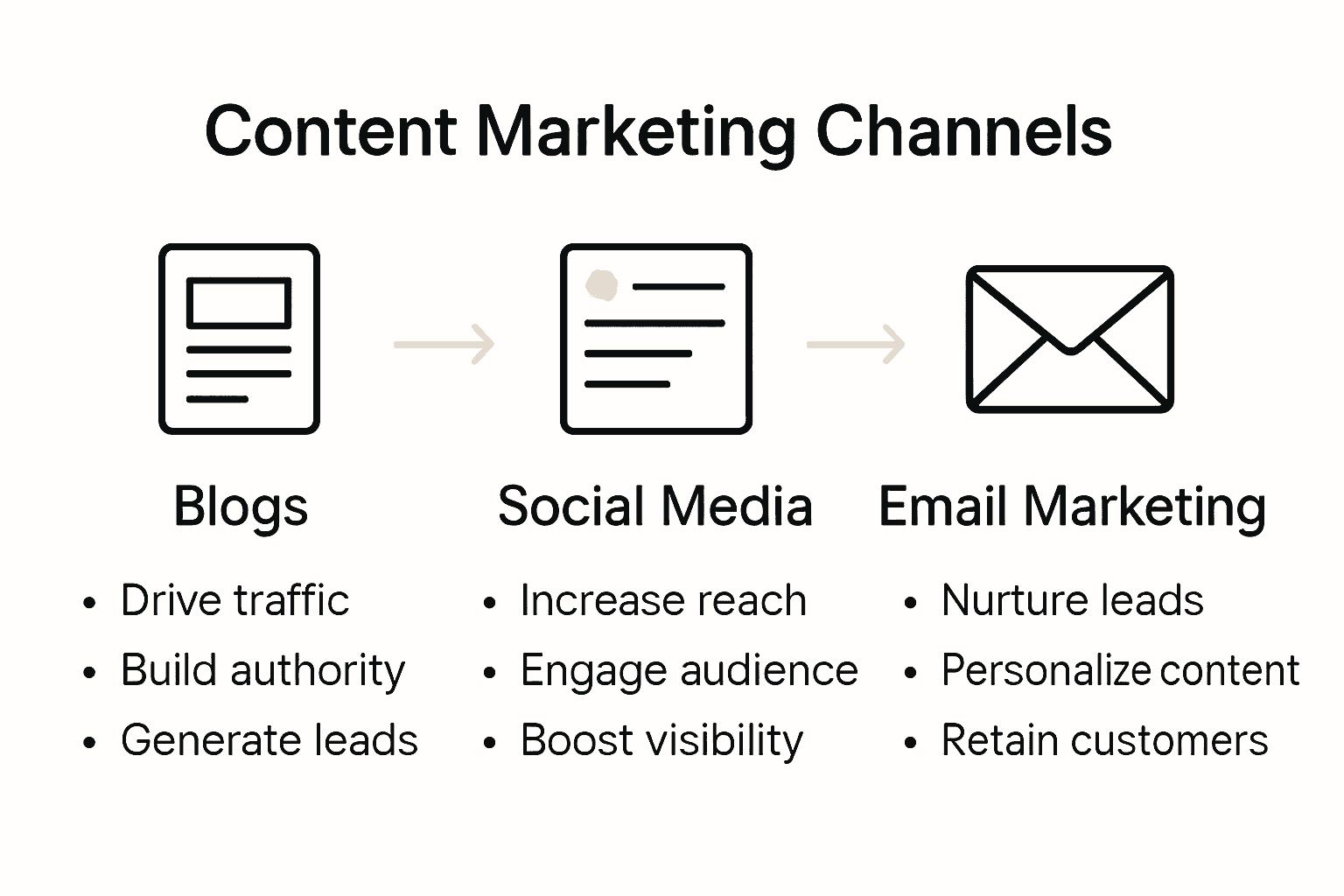
Content marketing encompasses a diverse range of channels that enable brands to connect with their target audience through strategic communication. According to Revv Growth, these channels include blogs for in-depth articles, social media platforms for multi-platform engagement, and email marketing for targeted communication.
Coursera emphasizes that successful content marketing requires leveraging different channels to create a comprehensive engagement strategy. The key is selecting platforms that align with your audience’s preferences and behaviors.
The primary content marketing channels include:
Here’s an overview of major content marketing channels and their key benefits:
| Channel | Primary Benefit | Example Use Cases |
|---|---|---|
| Blogs | In-depth insights | Thought leadership Case studies |
| Social Media | Broad audience engagement | Brand updates Real-time interaction |
| Email Marketing | Personalized communication | Newsletters Targeted promotions |
| Webinars | Interactive learning | Live Q&A Workshops |
| Interactive Content | Audience participation | Polls Quizzes Assessments |
- Blogs: Long-form content that provides deep insights and establishes thought leadership
- Social Media: Quick, engaging content across platforms like LinkedIn, Twitter, Instagram
- Email Marketing: Personalized, direct communication with segmented audience groups
- Webinars: Live interactive sessions that offer real-time learning experiences
- Interactive Content: Quizzes, polls, and assessments that drive audience participation
For brands looking to maximize their content strategy, understanding what makes content shareable becomes crucial in selecting and optimizing these marketing channels. By diversifying content approaches, businesses can create more meaningful connections with their target audiences.

How Content Marketing Drives Brand Growth
Brand growth requires more than traditional advertising. According to GeeksForGeeks, content marketing drives organizational success by enhancing brand awareness, building trust, and improving customer engagement through consistent delivery of valuable content.
Coursera emphasizes that strategic content marketing transforms how businesses connect with their audience. By utilizing diverse channels like social media and email, brands can foster deeper relationships and create meaningful interactions that go beyond transactional exchanges.
Key ways content marketing accelerates brand growth include:
- Building Credibility: Establishing thought leadership through expert content
- Increasing Visibility: Expanding brand reach across multiple digital platforms
- Enhancing Customer Trust: Creating transparent, value-driven communication
- Generating Qualified Leads: Attracting potential customers through targeted content
- Improving Customer Retention: Providing ongoing value beyond product offerings
For brands seeking sustainable growth, understanding measuring content marketing ROI becomes crucial in refining and optimizing content strategies that drive meaningful business outcomes.
Common Challenges And Cost Considerations
Content marketing presents a complex landscape of strategic challenges that require careful navigation. According to ICJ-E, organizations frequently struggle with creating consistently high-quality content, effectively targeting the right audience, and measuring the tangible impact of their content strategies.
GeeksForGeeks highlights that successful content marketing demands strategic resource allocation and performance analysis. The primary challenges extend beyond content creation to include sustained audience engagement and precise measurement of marketing effectiveness.
Key challenges and cost considerations include:
- Content Quality: Maintaining high-standard, original content consistently
- Resource Allocation: Balancing budget between content creation and distribution
- Audience Targeting: Developing precise strategies to reach the right demographic
- Performance Measurement: Implementing robust tracking and analytics systems
- Skill Development: Investing in team training and specialized content expertise
For brands seeking to optimize their content marketing investments, 7 evergreen content ideas can provide a strategic framework for developing sustainable, cost-effective content approaches that deliver long-term value and minimize ongoing production expenses.
Best Practices And Mistakes To Avoid
Navigating the complex world of content marketing requires strategic insight and careful execution. According to GeeksForGeeks, successful content marketing hinges on understanding your target audience and creating valuable, relevant content that resonates with their specific needs and interests.
Coursera emphasizes the importance of consistent, personalized content delivery across multiple channels. The key is developing a nuanced approach that adapts to audience preferences while maintaining a coherent brand message.
Best practices and critical mistakes to avoid include:
- Audience Research: Deeply understanding audience demographics and behaviors
- Content Personalization: Tailoring content to specific audience segments
- Consistent Messaging: Maintaining a unified brand voice across all platforms
- Performance Tracking: Implementing robust analytics to measure content effectiveness
- Quality Over Quantity: Prioritizing valuable, in-depth content instead of high-volume, low-value material
To minimize potential pitfalls in your content strategy, brands can learn from 7 branding mistakes to avoid, which provides crucial insights into maintaining a compelling and authentic content approach that drives meaningful audience engagement.
Unlock Your Brand’s Full Potential with Strategic Email Marketing
The article highlights common challenges like consistently creating valuable content, reaching the right audience, and measuring marketing effectiveness. If you feel overwhelmed trying to build trust, increase visibility, or generate qualified leads through content alone, you are not alone. Many brands struggle to transform content marketing insights into measurable growth without a focused, automated retention strategy. That is where combining the power of content marketing with targeted email campaigns creates a winning formula.
At Take Action, we specialize in turning email into your primary growth channel using proven strategies like automation, segmentation, and tailored flows such as welcome series and abandoned cart recovery. Our approach helps ecommerce brands convert engagement into real revenue, improving open rates and boosting customer retention while aligning perfectly with your brand voice.
Ready to turn valuable content into lasting customer relationships?

Discover how to automate your customer journey and unlock revenue beyond paid ads today with Take Action. Start your journey to smarter, conversion-focused email marketing that complements your content efforts and drives sustained growth. Learn more about our email flow setup and how to make your marketing channels work smarter for you.
Frequently Asked Questions
What is content marketing?
Content marketing is a strategic approach focused on creating and distributing valuable, targeted content to attract, engage, and retain a specific audience. It aims to address audience problems through informative experiences rather than traditional advertising.
What are the key principles of effective content marketing?
The core principles include creating valuable, audience-focused content, maintaining consistent messaging, providing in-depth information, building trust through authenticity, and solving specific problems for the target audience.
What types of content marketing channels are available?
Major content marketing channels include blogs for in-depth insights, social media for broader engagement, email marketing for personalized communication, webinars for interactive learning, and interactive content like quizzes to drive audience participation.
How does content marketing contribute to brand growth?
Content marketing enhances brand growth by building credibility, increasing visibility, enhancing customer trust, generating qualified leads, and improving customer retention through the consistent delivery of valuable content.
Recommended
- Understanding the Value of Branded Content in Marketing | Take Action Blog | Take Action
- What is a Content Hub? Understanding its Importance | Take Action Blog | Take Action
- Understanding Copywriting vs Content Writing: Key Differences | Take Action Blog | Take Action
- What is Content Repurposing? Understanding Its Value | Take Action Blog | Take Action