

Complete Guide to Content Marketing Strategies
Over 80 percent of marketers say content marketing is the most reliable way to build trust and connect with customers. In a crowded digital space, sharing helpful, relevant information makes a brand stand out from businesses focused only on sales. Understanding the core concepts behind content marketing strategies empowers companies to create stronger relationships, increase loyalty, and drive long-term growth without relying on pushy tactics.
Table of Contents
- Core Concepts Of Content Marketing Strategies
- Major Types Of Content Marketing Approaches
- How Content Marketing Drives Ecommerce Growth
- Developing Effective Campaigns With Automation
- Avoiding Common Pitfalls In Content Marketing
Key Takeaways
| Point | Details |
|---|---|
| Strategic Content Development | Content marketing should align with business goals and resonate with the target audience by providing genuine value, rather than just promoting products. |
| PESO Model Utilization | Employing the PESO Model (Paid, Earned, Shared, Owned) can enhance media integration strategies for maximum marketing impact. |
| Automation for Personalization | Leveraging automation allows for personalized, data-driven campaigns that can flexibly adapt in real-time to audience behavior. |
| Avoiding Common Pitfalls | Focus on quality over quantity, maintain a consistent brand voice, and prioritize audience research to successfully navigate content marketing. |
Core Concepts Of Content Marketing Strategies
Content marketing represents a strategic approach that goes far beyond traditional advertising by creating and distributing valuable, relevant content to attract and engage a specific target audience. According to ICJ-E, content marketing fundamentally involves conveying a company’s brand philosophy through various media channels to effectively reach consumers.
At its core, content marketing focuses on building trust and establishing meaningful connections with potential customers by providing them genuine value. This means creating content that solves problems, answers questions, or entertains - not just promotes products. The most successful strategies understand audience needs and craft narratives that resonate on an emotional and practical level.
The key components of effective content marketing include:
- Strategic Planning: Developing a clear roadmap that aligns content with business goals
- Audience Understanding: Deep research into target demographic preferences, pain points, and communication styles
- Multichannel Distribution: Leveraging various platforms like blogs, social media, email, and video to maximize reach
- Performance Measurement: Using analytics to track engagement, conversion rates, and content effectiveness
When approached thoughtfully, content marketing helps brands transform from mere product sellers to trusted resources, creating long-term relationships that drive sustainable business growth.
Major Types Of Content Marketing Approaches
Content marketing encompasses a diverse range of approaches designed to engage and inform target audiences. According to IJARSCT, effective content marketing strategies leverage multiple formats including blog posts, eBooks, templates, infographics, and videos, each serving unique engagement purposes.
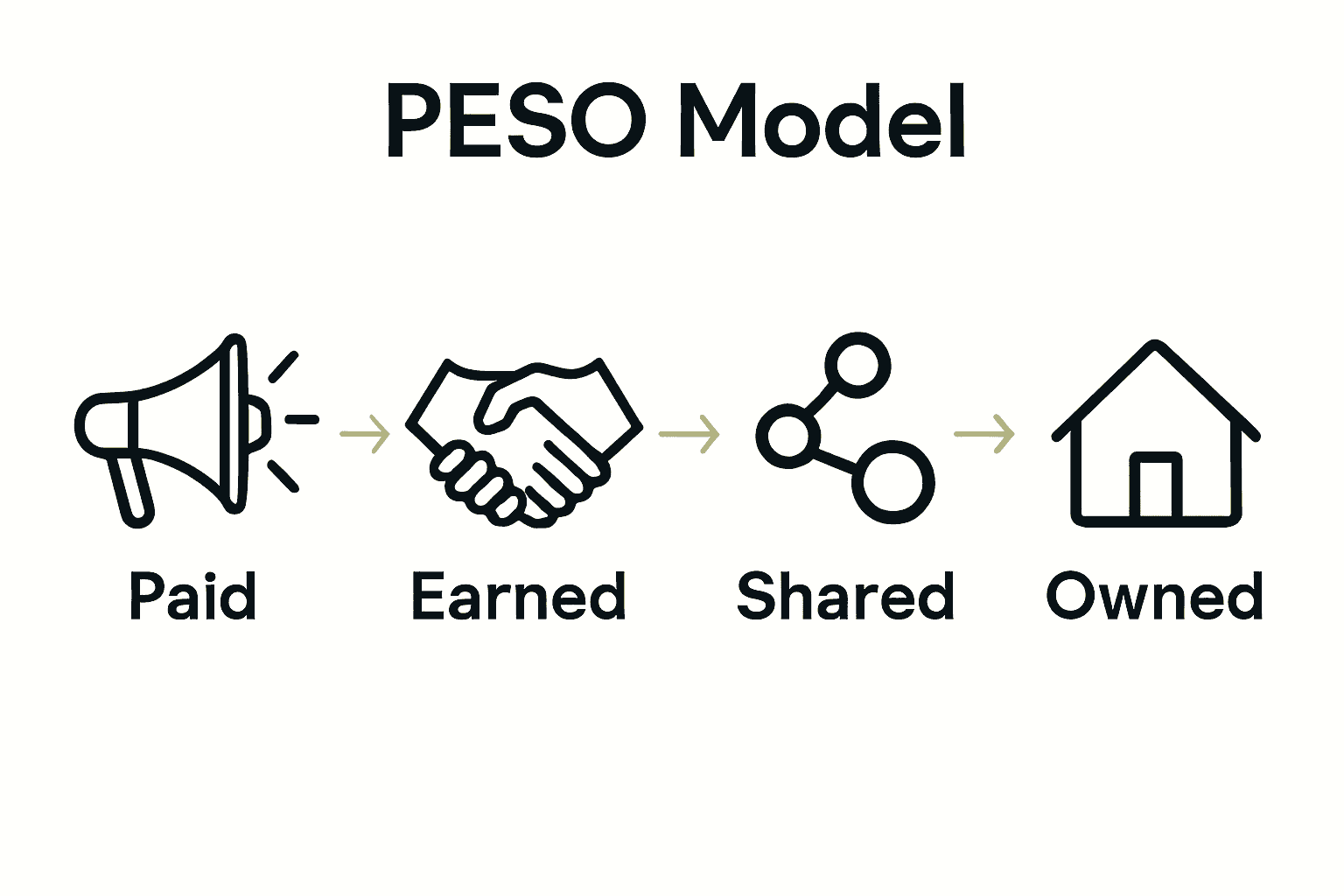
The PESO Model, as defined by Wikipedia, provides a comprehensive framework for understanding content marketing approaches by categorizing media into four distinct types: Paid, Earned, Shared, and Owned. This model helps organizations strategically integrate different media channels to maximize their marketing impact.
Key content marketing approaches include:
- Blog Content: Long-form articles providing in-depth insights and expertise
- Visual Content: Infographics, videos, and images that communicate complex ideas quickly
- Educational Resources: Webinars, whitepapers, and tutorials that provide actionable knowledge
- Interactive Content: Quizzes, calculators, and tools that engage users directly
- User-Generated Content: Testimonials, reviews, and community-driven narratives
For brands looking to dive deeper into visual storytelling strategies, our comprehensive guide on visuals in content marketing offers advanced insights into creating compelling visual narratives that resonate with target audiences.
How Content Marketing Drives Ecommerce Growth
Content marketing has become a critical strategy for ecommerce brands seeking sustainable growth and customer engagement. Research from arXiv reveals innovative approaches to blending personalized sponsored content with non-sponsored materials, demonstrating how strategic content can optimize multiple business objectives and enhance user interaction.
Conversion-driven content represents the core mechanism through which ecommerce brands transform casual browsers into loyal customers. According to arXiv, advanced marketing frameworks now integrate prompt engineering and multi-objective fine-tuning to generate marketing copy that balances creativity with conversion potential, resulting in significant increases in click-through and conversion rates.
Key ways content marketing drives ecommerce growth include:

- Building Trust: Creating authentic, value-driven content that establishes brand credibility
- Educating Customers: Providing detailed product insights, usage guides, and industry knowledge
- Improving SEO: Generating keyword-rich content that improves search engine visibility
- Nurturing Customer Relationships: Developing ongoing engagement through relevant, helpful content
- Reducing Purchase Friction: Addressing customer questions and concerns before they arise
Our comprehensive guide to ecommerce marketing strategies offers deeper insights into transforming content into a powerful growth engine for online businesses.
Developing Effective Campaigns With Automation
Automation has revolutionized content marketing by enabling more personalized, targeted, and efficient campaign strategies. According to research from arXiv, innovative systems now allow brands to blend personalized sponsored content with non-sponsored materials, optimizing multiple business objectives and significantly enhancing user engagement.
Strategic automation transforms content marketing by allowing marketers to create sophisticated, data-driven campaigns that adapt in real-time. arXiv highlights emerging frameworks that integrate prompt engineering and multi-objective fine-tuning, enabling marketing teams to generate creative content that dramatically improves conversion rates and click-through performance.
Key components of developing effective automated content campaigns include:
- Segmentation: Dividing audience into precise demographic and behavioral groups
- Personalization: Crafting tailored messaging for specific customer segments
- Trigger-Based Messaging: Creating automated responses based on user actions
- Dynamic Content: Adjusting content recommendations in real-time
- Performance Tracking: Continuous monitoring and optimization of campaign metrics
Understanding the benefits of email automation can provide deeper insights into leveraging these powerful marketing technologies for sustained business growth.
Avoiding Common Pitfalls In Content Marketing
Content marketing requires a nuanced approach that goes beyond simple promotional tactics. According to ICJ-E, effective content marketing fundamentally involves conveying a brand’s philosophy through carefully selected media channels, ensuring authentic communication with target consumers.
Strategic content development demands more than just creating random materials. Brands frequently stumble by producing content that lacks clear purpose, fails to resonate with their audience, or becomes overly self-promotional. The most successful content marketing strategies focus on providing genuine value, addressing specific customer pain points, and creating meaningful connections.
Common content marketing pitfalls to avoid include:
- Inconsistent Brand Voice: Producing content that feels disconnected from your core brand identity
- Neglecting Audience Research: Creating content without deep understanding of target demographics
- Quantity Over Quality: Prioritizing content volume instead of meaningful, impactful messaging
- Ignoring Performance Metrics: Failing to track and adapt based on content engagement data
- Lack of Clear Goals: Developing content without specific, measurable objectives
Our comprehensive guide on content marketing mistakes for ecommerce brands provides additional insights into navigating these potential challenges and developing more effective content strategies.
Transform Your Content Marketing Into Measurable Growth With Expert Email Strategies
Struggling to turn your strategic content plans into real ecommerce success? The challenge many brands face is building trust and engagement while automating personalized customer journeys. This guide highlights key pain points like aligning content with clear business goals, delivering relevant messaging, and measuring performance effectively. At Take Action, we specialize in harnessing automation and segmentation through Klaviyo to solve exactly these issues and turn your content marketing efforts into a powerful growth engine.

Get ready to increase your open and click rates, recover abandoned carts, and nurture lasting customer relationships with targeted, data-driven email campaigns. Discover how our tailored solutions can integrate seamlessly with your content marketing strategy to boost revenue sustainably. Start scaling your ecommerce brand today by visiting Take Action and exploring how our email flow setup and campaign strategy services can transform your content into consistent conversions.
Frequently Asked Questions
What is content marketing?
Content marketing is a strategic approach that involves creating and distributing valuable, relevant content to attract and engage a specific target audience, ultimately building trust and establishing meaningful connections with potential customers.
What are some key components of effective content marketing?
Key components include strategic planning, audience understanding, multichannel distribution, and performance measurement to track engagement and effectiveness.
How does content marketing drive ecommerce growth?
Content marketing drives ecommerce growth by building trust, educating customers, improving SEO, nurturing customer relationships, and reducing purchase friction through targeted, value-driven content.
What are common pitfalls to avoid in content marketing?
Common pitfalls include inconsistent brand voice, neglecting audience research, prioritizing quantity over quality, ignoring performance metrics, and lacking clear goals for content development.
Recommended
- Content Marketing Explained: Strategies, Types, and Impact | Take Action Blog | Take Action
- What is a Content Hub? Understanding its Importance | Take Action Blog | Take Action
- 7 Evergreen Content Ideas for Growing Your Brand | Take Action Blog | Take Action
- What is Content Repurposing? Understanding Its Value | Take Action Blog | Take Action