

Customer Feedback Collection: Driving Retail Growth
Over 80 percent of American shoppers expect businesses to act on their feedback, yet many brands still miss this crucial opportunity. Customer opinions now shape everything from new product launches to email strategies, making direct insights more valuable than ever. Understanding how to collect and use customer feedback empowers American companies to create exceptional experiences and remain agile in a market where customer voices lead the way.
Table of Contents
- What Customer Feedback Collection Means
- Methods For Gathering Customer Feedback
- How Feedback Powers Email Automation
- Legal And Ethical Feedback Practices
- Maximizing Feedback With Klaviyo
Key Takeaways
| Point | Details |
|---|---|
| Customer Feedback Collection | Effective feedback collection utilizes multiple channels to gather insights that guide product improvement and enhance customer experience. |
| Balancing Techniques | Successful strategies integrate both quantitative and qualitative methods to fully understand customer needs and preferences. |
| Ethical Practices | Transparent data handling and customer consent are paramount to building trust and maintaining ethical standards in feedback collection. |
| Automation Benefits | Leveraging customer feedback in automated email systems allows for personalized communication, increasing engagement and customer loyalty. |
What Customer Feedback Collection Means
Customer feedback collection represents a systematic approach businesses use to gather insights directly from their customers about products, services, experiences, and overall satisfaction. Unlike traditional market research methods, modern feedback collection focuses on real-time, actionable intelligence that helps brands rapidly adapt and improve their offerings.
At its core, customer feedback collection involves multiple strategic channels designed to capture authentic customer perspectives. These channels can range from post-purchase surveys and email questionnaires to social media interactions and direct customer service communications. Customer feedback lifecycle management involves carefully structured activities that transform raw customer input into meaningful strategic improvements.
Successful feedback collection requires a nuanced understanding of data gathering techniques. Research demonstrates that continuous feedback loops are critical for aligning product development with actual customer needs. By implementing structured feedback collection strategies, businesses can create more responsive, customer-centric product development processes that dramatically reduce the risk of creating solutions that miss market expectations.
Pro Tip: Design Feedback Strategy: Create multiple low-friction feedback channels that make it genuinely easy for customers to share their honest, unfiltered experiences with minimal effort.
Methods For Gathering Customer Feedback
Customer feedback collection encompasses diverse strategies designed to capture authentic insights across multiple interaction points. Retail businesses can leverage comprehensive feedback collection techniques to understand customer experiences, preferences, and potential areas of improvement.
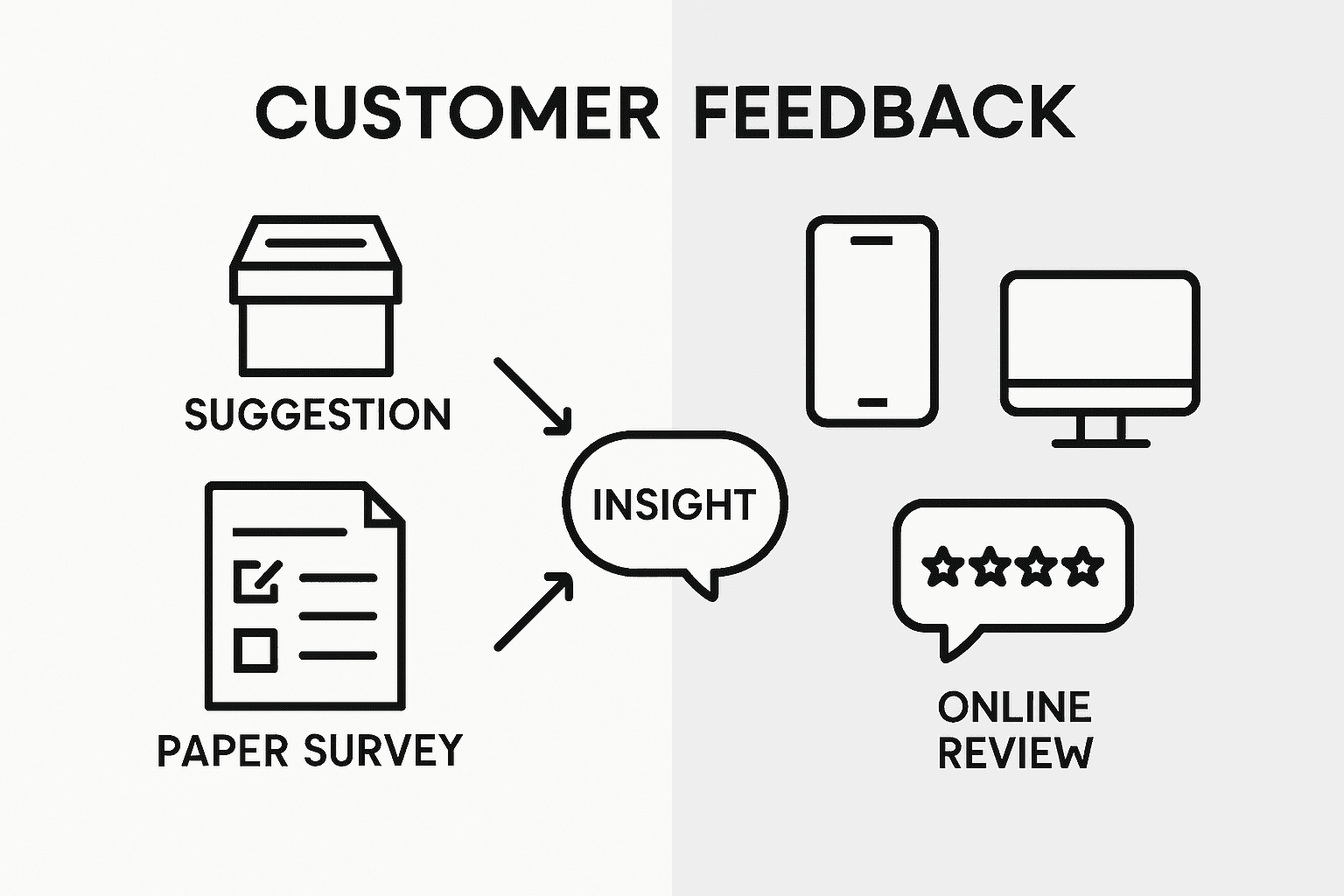
Traditional methods remain powerful feedback gathering tools. These include:
- Post-purchase email surveys
- Phone interviews
- Physical comment cards
- In-store feedback terminals
- Customer service interaction records
Digital platforms have dramatically expanded feedback collection capabilities. Modern retailers now utilize sophisticated online channels like social media polls, website feedback widgets, live chat transcripts, and automated sentiment analysis tools. Modern customer feedback mechanisms allow businesses to collect real-time data across multiple touchpoints, providing unprecedented insights into customer perceptions and behaviors.
Successful feedback collection requires a strategic approach that balances quantitative metrics with qualitative insights. By implementing multi-channel feedback strategies, businesses can create a comprehensive understanding of customer experiences, enabling more targeted improvements and personalized engagement.
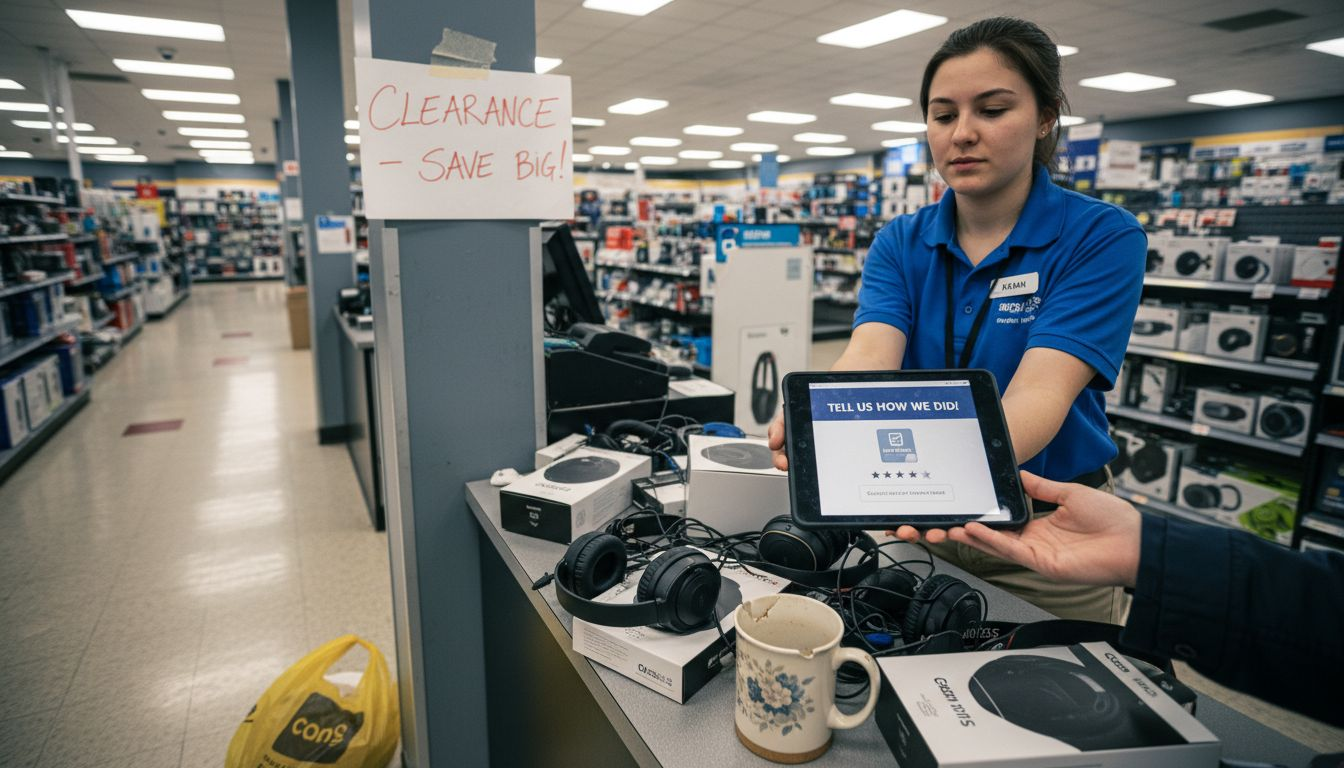
Pro Tip: Feedback Channel Design: Create a seamless, user-friendly feedback process that incentivizes customers to share honest opinions by making participation quick, easy, and genuinely appreciated.
Here’s a comparison of traditional and digital feedback collection methods for modern businesses:
| Aspect | Traditional Methods | Digital Methods |
|---|---|---|
| Response Speed | Slow, days to weeks | Instant or near real-time |
| Reach | Limited to in-person/store | Global and multi-channel |
| Data Analysis | Manual, time-consuming | Automated, data-rich insights |
| Customer Engagement | May feel intrusive | Integrated into user experience |
| Scalability | Hard to expand quickly | Easily scales to large audiences |
How Feedback Powers Email Automation
Email automation represents a sophisticated strategy for transforming raw customer feedback into targeted, personalized communication experiences. By leveraging advanced AI and natural language processing techniques, retailers can create intelligent email systems that dynamically respond to customer insights and behavioral patterns.
The integration of customer feedback into email automation follows several key strategic approaches:
- Segmenting customers based on feedback sentiment
- Triggering personalized email sequences
- Adapting communication tone and content
- Identifying potential churn risks
- Generating proactive support communications
Technological innovations are dramatically expanding automation capabilities. Emerging feedback system designs now enable more contextual and responsive email interactions, allowing businesses to create hyper-personalized communication pathways that feel genuinely tailored to individual customer experiences. These systems can automatically detect nuanced emotional signals, enabling more empathetic and precise automated responses.
Successful email automation powered by customer feedback requires continuous refinement and a deep understanding of customer communication preferences. By treating automated emails as dynamic, adaptive conversations rather than static messages, businesses can create more engaging and meaningful customer interactions that drive loyalty and long-term retention.
Pro Tip: Automation Calibration: Regularly audit your automated email sequences, using actual customer feedback to fine-tune messaging, timing, and personalization to maintain authenticity and relevance.
This summary highlights key business impacts of leveraging customer feedback in email automation:
| Automation Feature | Business Benefit | Example Outcome |
|---|---|---|
| Sentiment Segmentation | Tailors communication style | Higher email open rates |
| Triggered Campaigns | Responds to customer behaviors | Reduced churn, increased loyalty |
| Adaptive Content | Personalizes messaging automatically | Improved engagement and relevance |
| Proactive Support | Addresses concerns before escalation | Enhanced customer satisfaction |
Legal And Ethical Feedback Practices
Data Privacy is the cornerstone of responsible customer feedback collection. Comprehensive research on user feedback factors reveals critical ethical considerations that businesses must navigate when gathering and utilizing customer insights, ensuring transparent and respectful data handling practices.
Key legal and ethical principles for feedback collection include:
- Obtaining explicit consent before data collection
- Providing clear privacy policy disclosures
- Allowing customers to opt out of feedback requests
- Protecting personally identifiable information
- Maintaining secure data storage systems
- Using feedback only for intended purposes
- Anonymizing data when possible
Modern feedback management requires a holistic approach to ethical practices. User feedback lifecycle management principles emphasize the importance of creating trust-based relationships with customers by demonstrating responsible data stewardship. This involves not just legal compliance, but also establishing a transparent communication framework that respects individual privacy and autonomy.
Successful ethical feedback practices go beyond mere regulatory checkboxes. Businesses must cultivate a culture of genuine respect for customer data, treating feedback as a privileged insight rather than a commodity. By prioritizing transparency, consent, and data protection, organizations can build meaningful customer relationships founded on mutual trust and understanding.
Pro Tip: Consent Management: Develop a clear, easily understandable consent process that explicitly explains how customer feedback will be collected, used, and protected, empowering customers to make informed decisions about their data.
Maximizing Feedback With Klaviyo
Klaviyo provides a powerful platform for transforming customer feedback into actionable marketing intelligence. Advanced customer feedback collection techniques enable businesses to leverage sophisticated email marketing strategies that adapt dynamically to customer insights and preferences.
Key strategies for maximizing feedback through Klaviyo include:
- Implementing targeted post-purchase surveys
- Creating segmented feedback flows
- Designing responsive email questionnaires
- Tracking customer interaction metrics
- Analyzing sentiment across communication channels
- Developing personalized re-engagement campaigns
Artificial intelligence and natural language processing technologies are revolutionizing how businesses interpret and utilize customer feedback within email marketing platforms. Klaviyo users can now deploy intelligent systems that automatically categorize, analyze, and respond to customer insights, transforming raw feedback into strategic marketing intelligence that drives continuous improvement and customer engagement.
Successful feedback maximization requires a holistic approach that treats each customer interaction as an opportunity for deeper understanding. By integrating sophisticated feedback mechanisms directly into email marketing workflows, businesses can create a responsive, adaptive communication ecosystem that continuously learns and evolves based on authentic customer experiences.
Pro Tip: Feedback Optimization: Design a systematic approach to reviewing and implementing customer feedback, treating each response as a valuable data point that can inform product development, service improvements, and marketing strategies.
Unlock Retail Growth with Strategic Customer Feedback and Email Automation
Collecting authentic customer feedback is the first step toward transforming insights into powerful marketing actions. If you struggle to seamlessly capture, analyze, and leverage this data into personalized, automated email campaigns that truly resonate, you are not alone. The article highlights crucial concepts such as sentiment segmentation, triggered campaigns, and adaptive content that every ecommerce brand must master to reduce churn and boost loyalty.
Take Action specializes in turning these challenges into opportunities. Our expertise in Klaviyo automation and customer feedback integration helps your brand implement multi-channel feedback strategies that feed directly into targeted email workflows like welcome sequences, abandoned cart recovery, and post-purchase engagement. By combining human expertise with AI-driven insights, we ensure your messaging achieves higher open rates, clicks, and conversions while faithfully aligning with your brand voice.
Don’t let valuable customer insights go underused. Discover how our data-driven, conversion-focused approaches can automate retention processes and diversify revenue streams beyond paid ads today.
Ready to transform feedback into growth?
Explore how Take Action can optimize your feedback-driven email marketing strategy. Visit us now to start crafting adaptive, results-oriented campaigns and unlock scalable ecommerce success.
Frequently Asked Questions
What is customer feedback collection?
Customer feedback collection is a systematic approach used by businesses to gather insights directly from customers about their experiences, products, and overall satisfaction, enabling brands to improve their offerings based on real-time feedback.
Why is collecting customer feedback important for retail growth?
Collecting customer feedback is crucial for retail growth as it helps businesses understand customer preferences, identify areas for improvement, and adapt product development to align with customer needs, leading to increased satisfaction and loyalty.
What methods can be used to gather customer feedback?
Customer feedback can be gathered using various methods such as post-purchase surveys, social media interactions, in-store feedback terminals, and automated online tools. This multi-channel approach provides a comprehensive understanding of customer experiences.
How can businesses effectively use customer feedback in email automation?
Businesses can use customer feedback in email automation by segmenting customers based on feedback sentiment, triggering personalized email sequences, and adapting content according to customer preferences, allowing for more engaging and tailored communications.
Recommended
- 7 Must-Read Business Book Recommendations for Ecommerce Growth | Take Action Blog | Take Action
- 7 Habits of Successful Entrepreneurs for Ecommerce Growth | Take Action Blog | Take Action
- Master Community Building Online for Ecommerce Success | Take Action Blog | Take Action
- Complete Guide to Building Customer Loyalty Online | Take Action Blog | Take Action