

How to Plan Content for Scalable Ecommerce Growth
Over 75 percent of american ecommerce leaders say deciding where to focus their marketing efforts is tougher than ever. As competition grows and digital trends shift quickly, making smart choices about which content reaches your audience becomes crucial. This guide reveals how a focused, data-driven content strategy can help your american brand stay ahead, connect with the right shoppers, and drive meaningful sales in a crowded market.
Table of Contents
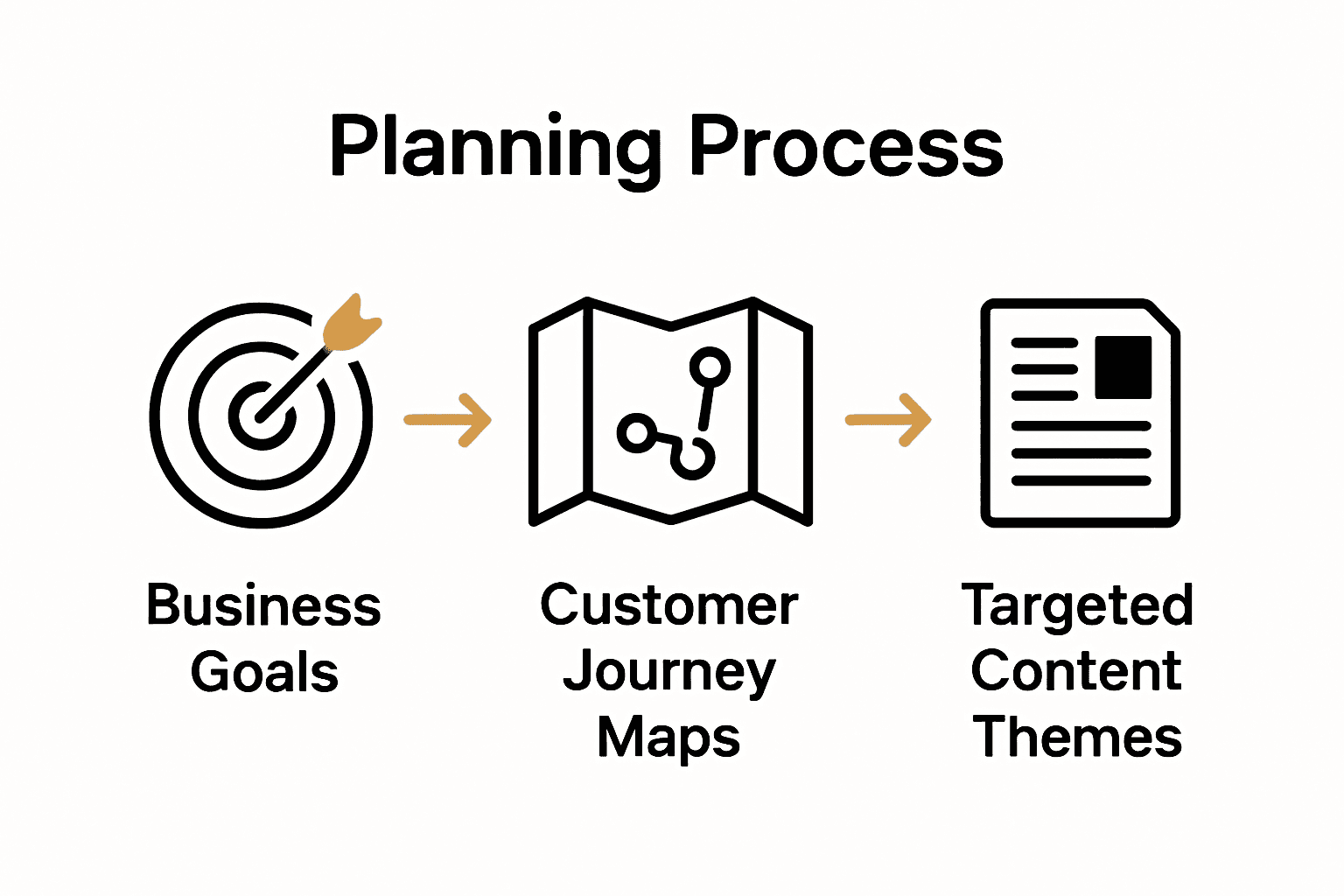
- Step 1: Assess Business Goals And Audience Data
- Step 2: Map Key Touchpoints Across The Customer Journey
- Step 3: Define Targeted Content Themes And Topics
- Step 4: Schedule Campaigns And Automations Strategically
- Step 5: Measure Performance And Refine Content Strategy
Quick Summary
| Key Insight | Explanation |
|---|---|
| 1. Define Business Goals Clearly | Establish specific objectives like increasing revenue or improving customer retention to guide your content strategy effectively. |
| 2. Map Customer Touchpoints | Identify every interaction point along the customer journey to optimize and enhance customer experience and satisfaction. |
| 3. Develop Targeted Content Themes | Create content that addresses specific customer needs, aligning with different stages of the customer journey for better engagement. |
| 4. Schedule Campaigns Strategically | Time your communications based on customer behavior patterns and preferences to maximize engagement and improve trust. |
| 5. Measure and Refine Performance | Use analytics to evaluate content effectiveness and continuously adapt strategies based on audience engagement and behavior insights. |
Step 1: Assess Business Goals and Audience Data
Successfully planning content for scalable ecommerce growth starts with a strategic assessment of your business objectives and understanding your audience’s core characteristics. This critical first step allows you to create targeted, data-driven strategies that maximize marketing effectiveness.
According to research from arXiv, predicting customer quality requires analyzing key factors like visit frequency and social network interactions. By leveraging big data and unsupervised learning techniques, you can gain deeper insights into your audience’s behavior and potential value. Web analytics plays a crucial role in this process, providing comprehensive measurement and collection of web data to help you understand visitor behaviors and preferences.
To begin your assessment, start by clearly defining your primary business goals. Are you looking to increase revenue, expand customer base, improve retention, or launch new product lines? Next, gather audience data through multiple channels:
- Website analytics platforms
- Social media insights
- Customer surveys
- Purchase history reports
- Email engagement metrics
Pro tip: Don’t just collect data. Look for meaningful patterns that reveal your audience’s motivations, pain points, and potential growth opportunities. The more granular your understanding, the more precisely you can tailor your content strategy.

As you complete this assessment, you will have a solid foundation for developing a content plan that speaks directly to your target audience and supports your business objectives.
Step 2: Map Key Touchpoints Across the Customer Journey
Mapping customer touchpoints is a critical strategy for understanding and optimizing your ecommerce brand’s interactions with potential buyers. This step helps you identify every meaningful interaction a customer has with your brand from initial awareness through post purchase engagement.
According to research from Qualtrics, the ecommerce customer journey involves multiple distinct stages that require strategic touchpoint mapping. Integrated Consulting reinforces this approach by emphasizing how understanding these interactions can dramatically improve customer satisfaction and loyalty.
To effectively map touchpoints, follow these strategic steps:
- Identify each stage of the customer journey
- List all potential interaction points
- Document channels and communication methods
- Analyze current performance of each touchpoint
- Determine gaps or opportunities for improvement
Key touchpoint categories include:
- Pre purchase awareness (social media ads, search results)
- Consideration phase (product pages, comparison tools)
- Purchase process (checkout experience, payment options)
- Post purchase support (email confirmations, delivery tracking)
- Customer retention (follow up communications, loyalty programs)
Pro tip: Think beyond traditional marketing channels. Consider every potential moment where a customer might interact with your brand digital or physical.
By comprehensively mapping these touchpoints, you create a holistic view of your customer experience and uncover strategic opportunities for optimization and growth.
Step 3: Define Targeted Content Themes and Topics
Defining targeted content themes is a strategic approach to creating meaningful connections with your audience and driving scalable ecommerce growth. This critical step transforms your understanding of customer needs into actionable content strategies that resonate and convert.
Research from arXiv highlights the importance of identifying lookalike customer segments as a foundation for expanding marketing audiences. By developing content themes that speak directly to specific customer groups, you can create more personalized and engaging experiences that drive meaningful interactions.
To define your content themes effectively, follow these strategic steps:
- Analyze your audience research from previous steps
- Identify key customer pain points and aspirations
- Explore intersections between customer needs and your brand offerings
- Consider your unique value proposition
- Match content themes to different stages of the customer journey
Potential content theme categories include:
- Product education and use cases
- Customer success stories
- Industry trends and insights
- Problem solving content
- Lifestyle and brand values alignment
Pro tip: Your content themes should feel like a natural conversation with your ideal customer. Think about the questions they ask, the challenges they face, and the solutions you can provide.
With well defined content themes, you create a roadmap for consistent, targeted communication that speaks directly to your audience and supports your business growth objectives. Understanding the value of branded content will further enhance your strategy by ensuring each piece of content reinforces your brand narrative.
Step 4: Schedule Campaigns and Automations Strategically
Scheduling campaigns and automations strategically transforms your marketing approach from reactive to proactive customer engagement. This critical step ensures your communications reach customers at the most opportune moments to maximize impact and conversion potential.
Research from arXiv reveals the significant impact of strategic timing in automated interactions, particularly demonstrating how well timed engagement can substantially improve customer trust. Behavioral analytics provides additional insights by helping predict optimal communication windows based on detailed consumer behavior patterns.
To schedule your campaigns and automations effectively, consider these key strategies:
- Analyze customer purchase history and interaction times
- Segment audiences based on engagement patterns
- Create time sensitive triggers for specific customer actions
- Align automation schedules with customer time zones
- Develop sequential messaging that builds narrative momentum
Critical automation scheduling considerations include:
- Welcome series timing
- Abandoned cart recovery windows
- Post purchase follow up sequences
- Re engagement campaign intervals
- Seasonal promotional timing
Pro tip: Your automation timing should feel natural not intrusive. Think like your customer would think about receiving communications.
To maximize your strategic scheduling, how to boost engagement with Klaviyo email automation can provide additional insights into creating perfectly timed customer interactions that feel personalized and meaningful.
Step 5: Measure Performance and Refine Content Strategy
Measuring and refining your content strategy transforms raw data into actionable insights that drive continuous improvement for your ecommerce brand. This crucial step helps you understand what resonates with your audience and optimize your marketing efforts for maximum impact.
Web analytics provides a comprehensive framework for measuring digital performance, enabling businesses to track and analyze visitor behaviors across multiple channels. Behavioral analytics complements this approach by revealing deeper insights into how consumers interact with your content and identifying opportunities for strategic refinement.
To effectively measure and refine your content strategy, implement these key approaches:
- Establish clear performance metrics and KPIs
- Track engagement rates across different content types
- Monitor conversion metrics for each content piece
- Analyze audience segmentation and behavior patterns
- Compare performance against initial content objectives
Critical performance measurement metrics include:
- Click through rates
- Time spent on page
- Conversion rates
- Social media shares
- Email engagement metrics
Pro tip: Performance measurement is not about perfection but continuous learning. View each metric as an opportunity to understand your audience better.
To dive deeper into understanding how these insights translate into strategic growth, performance marketing explained can provide additional context for transforming data into actionable marketing strategies.
Drive Scalable Ecommerce Growth with Expert Email Marketing Solutions
Struggling to turn your content plan into measurable ecommerce growth The article highlights key challenges such as mapping customer touchpoints identifying targeted content themes and strategically scheduling campaigns to maximize engagement. If you are focused on automating customer retention boosting open and click rates or recovering abandoned carts Take Action specializes in transforming these complex strategies into powerful, automated email marketing campaigns that align with your brand voice and drive revenue.
Unlock the full potential of your ecommerce content plan today by partnering with a team dedicated to leveraging AI-driven insights and Klaviyo automation for sustained growth. Explore how our campaign strategy and email flow setup services can help you automate personalized customer journeys that convert. Visit Take Action now to start turning your content into an unstoppable growth channel.
Frequently Asked Questions
How can I assess my business goals for scalable ecommerce growth?
To assess your business goals, clearly define what you want to achieve. Focus on areas such as increasing revenue, expanding your customer base, and improving retention rates. Consider gathering data from website analytics and customer surveys within 30 days to gain insights into your objectives.
What are the key touchpoints I should map in the customer journey?
Key touchpoints to map include stages such as pre-purchase awareness, consideration, the purchase process, and post-purchase support. List all potential interaction points at each stage and analyze their current performance. This comprehensive mapping will help you optimize engagement and improve customer satisfaction.
How do I define targeted content themes for my ecommerce strategy?
Define targeted content themes by analyzing your customer research to identify key pain points and aspirations. Explore how your brand can uniquely address these needs and align content with different stages of the customer journey. This approach will create more relevant content that resonates and drives conversions.
What strategies should I use for scheduling campaigns and automations?
To schedule campaigns effectively, analyze customer purchase history and segment audiences based on their engagement patterns. Create time-sensitive triggers for specific actions and develop messaging that builds momentum. Aim to automate communications in a way that feels natural and timely to your customers, such as follow-up emails after purchases.
How can I measure the performance of my content strategy?
Measure performance by establishing clear metrics such as click-through rates, conversion rates, and social media engagement. Track these metrics consistently across different content types to understand what resonates with your audience. Regularly analyze this data to refine your content strategy, aiming for ongoing improvement.
What should I focus on when refining my content strategy?
Focus on analyzing audience behavior and tracking engagement rates to identify effective content. Use this information to compare performance against your initial goals and adjust your approach as needed. Aim to view each metric as a chance to learn more about your audience and enhance future content creation.
Recommended
- Master Content Calendar Creation for eCommerce Success | Take Action Blog | Take Action
- 7 Must-Read Business Book Recommendations for Ecommerce Growth | Take Action Blog | Take Action
- Complete Guide to Content Marketing Strategies | Take Action Blog | Take Action
- Complete Guide to SEO for Ecommerce Stores | Take Action Blog | Take Action
- E-commerce content strategy: 15 Winning Strategies
- E-commerce growth strategy: Top 3 Pillars