

Complete Guide to Improving Online Visibility
Did you know that over 75 percent of shoppers never scroll past the first page of search results? For ecommerce brands, this simple fact can make or break online sales. If your products are hidden from view, you lose out on countless opportunities to reach new and returning customers. Mastering online visibility means showing up where buyers are already searching, interacting, and making decisions so your brand always stays top of mind.
Table of Contents
- Defining Online Visibility for Ecommerce Brands
- Core Channels: SEO, Email, and Social Media
- Leveraging Email Automation and Segmentation
- Strategies for Sustained Audience Engagement
- Metrics to Measure Online Visibility Success
- Common Mistakes That Limit Visibility Gains
Key Takeaways
| Point | Details |
|---|---|
| Online Visibility Importance | Effective online visibility is crucial for ecommerce brands to be found and engaged by potential customers across digital platforms. |
| Core Digital Channels | SEO, Email Marketing, and Social Media are foundational in enhancing brand exposure and engaging target audiences. |
| Email Segmentation | Implementing email automation and segmentation enhances targeted engagement, leading to better conversion rates. |
| Common Mistakes | Brands often undermine their visibility by neglecting SEO, maintaining inconsistent messaging, and failing to engage effectively with their audience. |
Defining Online Visibility for Ecommerce Brands
Online visibility represents how effectively an ecommerce brand can be discovered and engaged with by potential customers across digital platforms. According to BigCommerce, online visibility encompasses the overall presence of a brand and its products in the consumer digital environment, fundamentally measuring how easily users can find and interact with the business online.
For ecommerce brands, online visibility isn’t just about being present—it’s about being strategically positioned where your target audience actively searches and engages. Human Level explains that digital marketing visibility specifically denotes a brand’s capability to be seen and recognized by the maximum number of relevant users within its intended market segment.
Key components of online visibility for ecommerce brands include:
- Search engine ranking positions
- Social media presence and engagement
- Content marketing effectiveness
- Digital advertising reach
- Website traffic and user interaction metrics
Successful online visibility requires a holistic approach that combines technical optimization, compelling content strategy, and targeted marketing efforts. Building Brand Awareness for Ecommerce Success: Step by Step can provide additional insights into developing a comprehensive digital presence that goes beyond mere visibility to create meaningful customer connections.
Core Channels: SEO, Email, and Social Media
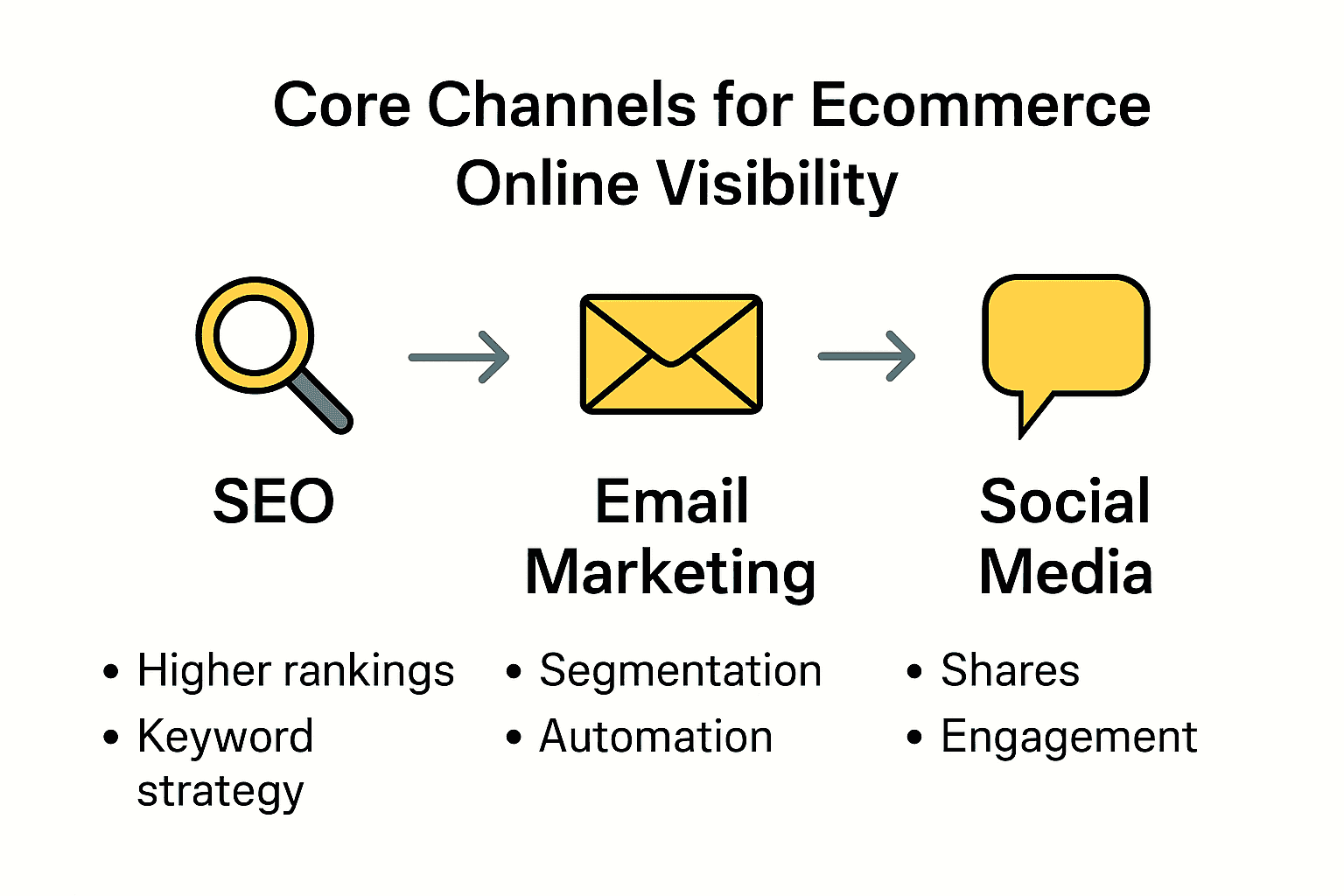
Online visibility for ecommerce brands hinges on effectively leveraging three core digital channels: Search Engine Optimization (SEO), Email Marketing, and Social Media. According to EDUCBA, these channels are critical for amplifying brand exposure and engaging potential customers across different digital touchpoints.
Here’s a comparison of the three core channels for ecommerce online visibility:
| Channel | Primary Benefit | Key Strategies |
|---|---|---|
| SEO | Organic visibility growth | Keyword optimization Technical site fixes Content creation |
| Email Marketing | Direct audience engagement | Personalization Segmentation Automation |
| Social Media | Brand awareness & reach | Shareable content Consistent messaging Targeted ads |
Search Engine Optimization remains the foundational channel for driving organic visibility. By optimizing website content, improving site structure, and targeting relevant keywords, brands can significantly enhance their search rankings and attract qualified traffic. For ecommerce stores looking to dive deeper into SEO strategies, our comprehensive guide to SEO for ecommerce stores offers advanced insights into technical optimization techniques.
Email marketing and social media channels complement SEO by providing direct engagement opportunities. MSCREA highlights these channels as pivotal for reaching and connecting with target audiences. Key strategies include:
- Crafting personalized email campaigns
- Creating shareable social media content
- Developing consistent brand messaging across platforms
- Implementing targeted advertising
- Tracking engagement metrics
Successful online visibility requires a synchronized approach where SEO, email, and social media work together to create a comprehensive digital presence that attracts, converts, and retains customers.

Leveraging Email Automation and Segmentation
Email automation and segmentation represent powerful strategies for ecommerce brands to enhance customer engagement and drive targeted marketing efforts. EDUCBA reveals that implementing these techniques allows businesses to send precisely targeted messages to specific customer groups, significantly improving engagement and conversion rates.
The core of effective email segmentation lies in dividing your audience into distinct groups based on critical characteristics such as purchase history, browsing behavior, demographic information, and engagement levels. By understanding the benefits of email automation, brands can create more personalized communication strategies that resonate with individual customer needs and preferences.
Key segmentation and automation strategies include:
- Behavioral segmentation based on customer interactions
- Demographic targeting
- Purchase history analysis
- Engagement-based filtering
- Lifecycle stage targeting
MSCREA emphasizes that well-crafted, segmented email campaigns not only improve online visibility but also offer an exceptional return on investment. By delivering the right message to the right customer at the right time, ecommerce brands can transform email from a simple communication tool into a sophisticated customer retention and growth engine.
Strategies for Sustained Audience Engagement
Sustained audience engagement requires a multifaceted approach that goes beyond traditional marketing tactics. Kiwop suggests that businesses can maintain audience interest by developing innovative content formats, creating strategic partnerships, and offering exclusive free content that genuinely resonates with their community.
To build a robust engagement strategy, brands must focus on creating authentic connections. This involves developing evergreen content ideas that provide consistent value, understanding audience pain points, and delivering solutions that address their specific needs. Successful engagement is not about constant selling, but about establishing trust and providing meaningful interactions.
Key strategies for sustained audience engagement include:
- Creating interactive and personalized content
- Developing a consistent brand narrative
- Leveraging user-generated content
- Implementing responsive communication channels
- Hosting community-driven events and discussions
MSCREA emphasizes the importance of maintaining an active social media presence and building an interested community around the brand. By consistently engaging with online media, industry influencers, and your target audience, you transform passive followers into active brand advocates who are genuinely invested in your brand’s success.
Metrics to Measure Online Visibility Success
Online visibility metrics provide critical insights into a brand’s digital performance and market positioning. EDUCBA highlights key indicators that businesses should track, including website traffic, search engine rankings, social media engagement, and conversion rates, which collectively paint a comprehensive picture of digital presence and effectiveness.
Understanding these metrics requires a holistic approach to measuring marketing analytics. While raw numbers are important, the real value lies in interpreting how these metrics interconnect and reflect your brand’s overall digital health. Successful brands don’t just collect data—they transform insights into strategic actions that drive continuous improvement.
Critical online visibility metrics include:
- Organic search traffic volume
- Keyword ranking positions
- Social media reach and engagement rates
- Bounce and click-through rates
- Conversion and retention metrics
- Domain authority and backlink quality
- Brand mention frequency
BigCommerce emphasizes that measuring online visibility goes beyond simple traffic numbers. It’s about understanding unique visitor characteristics, assessing brand reputation, and determining how distinctively your business stands out from competitive alternatives. The most successful brands view these metrics as a dynamic, evolving narrative of their digital strategy’s effectiveness.
Common Mistakes That Limit Visibility Gains
Online visibility requires strategic, consistent effort, and brands often inadvertently sabotage their digital growth through common missteps. MSCREA identifies critical errors that can dramatically undermine a brand’s digital presence, including neglecting SEO, maintaining inconsistent social media activity, and failing to engage with online media and industry influencers.
Many brands struggle to create meaningful digital connections, often falling into predictable traps that limit their visibility potential. By understanding performance marketing strategies, businesses can identify and correct these counterproductive approaches before they significantly impact their digital growth trajectory. The most damaging mistakes often stem from short-sighted, disconnected marketing attempts that fail to provide genuine value to the target audience.
Common visibility-limiting mistakes include:
- Inconsistent brand messaging across platforms
- Neglecting content quality and originality
- Ignoring audience feedback and engagement
- Minimal investment in SEO and organic reach
- Failing to adapt to changing digital landscapes
- Overlooking mobile optimization
- Minimal cross-channel marketing integration
Kiwop emphasizes that brands frequently undermine their visibility by not developing strategic alliances, avoiding original content formats, and failing to create exclusive, valuable content that genuinely interests their target community. The most successful digital strategies transform these potential pitfalls into opportunities for meaningful audience connection.
Boost Your Ecommerce Brand’s Online Visibility with Targeted Email Marketing
Improving your online visibility goes beyond simply attracting visitors. The real challenge lies in engaging those visitors with personalized, timely communication that transforms browsers into loyal customers. This article highlights critical strategies like email automation, segmentation, and sustained audience engagement—areas where many ecommerce brands struggle to unlock their full potential. If you find yourself overwhelmed by inconsistent messaging or looking to recover abandoned carts more effectively, addressing these pain points can exponentially increase your brand’s digital footprint.
At Take Action, we specialize in turning email marketing into your brand’s primary growth channel. Our expertise in Klaviyo-driven automation and strategic campaigns focuses on:
- Automating customer retention processes
- Boosting open and click-through rates
- Recovering lost revenue through abandoned cart flows
- Creating personalized segmented campaigns that resonate deeply

Ready to transform your online presence with a data-driven, conversion-focused email marketing partner? Visit Take Action today to discover how our long-term partnerships and tailored email strategies can help you scale effectively. Don’t let missed opportunities hold your ecommerce brand back—take the next step toward sustained, measurable growth now.
Frequently Asked Questions
What is online visibility for ecommerce brands?
Online visibility refers to how effectively an ecommerce brand can be discovered and engaged with by potential customers across digital platforms. It measures a brand’s presence and ability to be found online by its target audience.
How can I improve my ecommerce brand’s SEO?
Improving SEO involves optimizing website content, enhancing site structure, conducting keyword research, and creating valuable content that targets your audience. Regularly updating and maintaining your site is also crucial for better search engine rankings.
What role does social media play in enhancing online visibility?
Social media boosts online visibility by increasing brand awareness and engagement. By sharing compelling content and interacting with followers, brands can enhance their reach and connect with potential customers more effectively.
How do I measure the success of my online visibility efforts?
You can measure success by tracking metrics such as website traffic, search engine rankings, social media engagement rates, and conversion rates. Analyzing these data points provides insights into your brand’s digital performance and areas for improvement.