

Influencer Marketing’s Impact on Ecommerce Growth
Finding new ways to keep customers engaged and coming back is a constant challenge for ecommerce brands. Influencer marketing offers a powerful solution by creating authentic connections that drive trust and credibility, reshaping consumer perceptions of brand credibility according to recent research. Brands using platforms like Klaviyo can unlock even greater potential by integrating influencer data for more personalized email strategies. This guide highlights how genuine influencer partnerships can enhance customer retention and increase revenue through smarter email campaigns.
Table of Contents
- What Influencer Marketing Means For Brands
- Types Of Influencers And Campaign Models
- How Influencer Marketing Drives Ecommerce
- Key Risks, Costs, And Compliance Factors
- Integrating Influencers With Email And Klaviyo
What Influencer Marketing Means for Brands
| Point | Details |
|---|---|
| Influencer Partnerships Humanize Brands | Authentic influencer endorsements create a sense of trust, making products more relatable to consumers. |
| Micro and Nano Influencers Drive Engagement | Smaller influencers often achieve higher conversion rates due to their perceived authenticity and strong connections with niche audiences. |
| Align Influencers with Brand Values | Selecting influencers based on genuine alignment rather than follower counts enhances campaign effectiveness and credibility. |
| Implement Robust Risk Management | Utilize vetting processes and legal frameworks to mitigate risks associated with influencer marketing, ensuring brand integrity. |
What Influencer Marketing Means for Brands
Influencer marketing represents a strategic collaboration between brands and content creators who leverage their online presence and audience trust to drive meaningful consumer engagement. Unlike traditional advertising, this approach transforms marketing from a one-way broadcast into a dynamic, interactive conversation. Consumer perceptions of brand credibility are fundamentally reshaped through authentic influencer partnerships that feel personal and genuine.
The core value of influencer marketing lies in its ability to humanize brand messaging. When an influencer authentically endorses a product, their followers perceive the recommendation as a trusted friend’s suggestion rather than a corporate advertisement. This psychological shift significantly impacts purchase decisions, with studies showing that consumers are more likely to trust peer recommendations over direct brand communications. The most effective influencers are those who can seamlessly integrate brand narratives into their existing content without seeming overtly commercial.
Successful influencer marketing strategies require careful selection and alignment between brand values and influencer personas. Not all followers or engagement metrics are created equal - brands must look beyond subscriber counts and examine factors like audience demographics, engagement rates, and content authenticity. Brand performance metrics indicate that micro-influencers with highly engaged, niche audiences often deliver more meaningful results than macro-influencers with massive but less targeted followings.
Pro tip: When selecting influencers, prioritize genuine alignment with your brand’s core values and target audience over raw follower numbers.
Types of Influencers and Campaign Models
Influencer marketing encompasses a diverse ecosystem of content creators segmented by audience reach, engagement levels, and specialized niches. Influencer classification models reveal distinct categories ranging from mega influencers with millions of followers to nano influencers who represent hyper-local, highly authentic voices. These tiers are not just about follower count, but about the depth and quality of audience interaction.
The primary influencer categories include mega influencers (500,000+ followers), macro influencers (100,000-500,000 followers), micro influencers (10,000-100,000 followers), and nano influencers (1,000-10,000 followers). Each segment offers unique advantages for ecommerce brands. Social media influencer effectiveness demonstrates that smaller-scale influencers often generate more meaningful engagement, with micro and nano influencers delivering higher conversion rates due to their perceived authenticity and targeted audience connections.
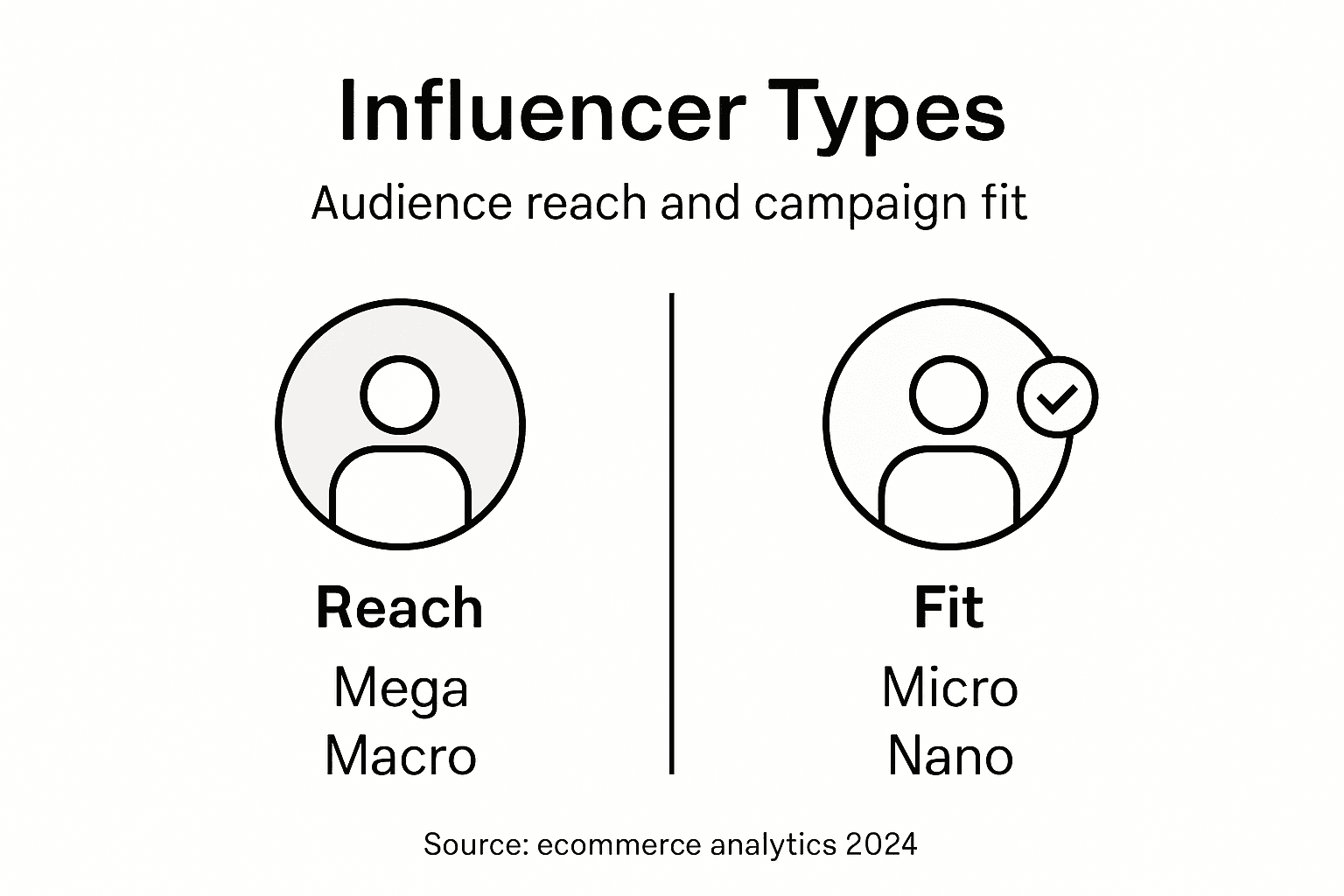
Here’s a quick comparison of influencer categories and their typical brand impact:
| Influencer Type | Audience Size | Engagement Quality | Best For |
|---|---|---|---|
| Mega Influencer | 500,000+ | High visibility, low targeting | Brand awareness |
| Macro Influencer | 100,000-500,000 | Broad reach, moderate interaction | Product launches |
| Micro Influencer | 10,000-100,000 | Strong niche engagement | Conversions |
| Nano Influencer | 1,000-10,000 | Highly authentic, personal | Trust-building |
Successful campaign models align influencer characteristics with specific marketing objectives. Brand awareness campaigns might leverage mega influencers for broad reach, while conversion-focused strategies could prioritize micro-influencers with niche audiences. Emerging trends show increasing investment in user-generated content and collaborative campaign approaches that integrate UGC influencer marketing strategies to create more interactive and trust-driven marketing experiences.
Pro tip: Design influencer partnerships as collaborative relationships, not transactional exchanges, to maximize authenticity and long-term brand credibility.
How Influencer Marketing Drives Ecommerce
Consumer purchasing behaviors have been dramatically transformed by influencer marketing, creating powerful pathways for ecommerce brands to connect directly with potential customers. By leveraging authentic storytelling and personal recommendations, influencers bridge the critical gap between brand messaging and consumer trust. This approach goes beyond traditional advertising by offering relatable, genuine content that resonates with specific audience segments and drives meaningful engagement.

The mechanics of influencer-driven ecommerce revolve around several key psychological triggers. Potential customers are more likely to make purchases when recommendations come from trusted voices who share similar interests and lifestyles. Social media influencer strategies demonstrate that authentic product demonstrations, personal testimonials, and behind-the-scenes content create powerful social proof that significantly accelerates purchasing decisions. These strategies transform passive content consumption into active buying experiences by making products feel accessible and desirable.
Modern ecommerce brands are increasingly integrating social proof techniques into their influencer marketing strategies. By creating trackable discount codes, custom landing pages, and collaborative content, brands can directly measure the impact of influencer partnerships. Advanced tracking mechanisms allow businesses to understand conversion rates, audience demographics, and return on investment with unprecedented precision, turning influencer marketing from a nebulous brand awareness tool into a quantifiable sales channel.
Pro tip: Develop long-term relationships with influencers who genuinely align with your brand values, treating them as strategic partners rather than transient marketing assets.
Key Risks, Costs, and Compliance Factors
Influencer marketing risks encompass a complex landscape of potential challenges that ecommerce brands must carefully navigate. The primary threats include fake follower networks, insufficient content transparency, and potential misalignment between brand values and influencer personas. These risks can quickly transform a promising marketing strategy into a reputational minefield, requiring sophisticated monitoring and strategic approach.
Financial considerations extend beyond simple campaign costs. Brands must account for comprehensive risk management, including potential legal expenses, reputation damage mitigation, and advanced screening processes for potential influencer partners. Marketing compliance challenges demand robust contractual frameworks that clearly define content guidelines, disclosure requirements, and performance expectations. Successful strategies involve developing detailed agreements that protect both brand integrity and influencer creative autonomy.
Effective risk management requires a multilayered approach. Brands should implement rigorous vetting processes that examine not just follower counts, but audience engagement, content history, and alignment with brand values. Customer testimonial strategies can provide additional validation by creating transparent, authentic marketing narratives that complement influencer partnerships. Advanced tracking mechanisms, comprehensive legal contracts, and ongoing performance monitoring are critical to minimizing potential financial and reputational risks.
The table below summarizes key risks and solutions for influencer marketing:
| Risk Area | Typical Challenge | Mitigation Strategy |
|---|---|---|
| Fake Followers | Inflated reach, low ROI | Advanced vetting tools |
| Content Compliance | Regulatory breaches | Comprehensive legal contracts |
| Value Misalignment | Brand reputation damage | Rigorous persona assessment |
| Transparency | Audience trust loss | Mandated content disclosures |
Pro tip: Develop a comprehensive influencer evaluation matrix that scores potential partners across multiple dimensions, including audience authenticity, engagement quality, and brand value alignment.
Integrating Influencers With Email and Klaviyo
Influencer data integration transforms email marketing by enabling hyper-personalized communication strategies that leverage detailed audience insights. Klaviyo’s robust platform allows ecommerce brands to synchronize influencer-generated engagement data, creating dynamic segments that reflect precise audience behaviors and preferences. This approach goes beyond traditional marketing by transforming raw follower interactions into actionable email targeting mechanisms.
The technical integration process involves multiple strategic steps. Brands must establish comprehensive tracking mechanisms using UTM parameters, custom landing pages, and unique referral codes that capture granular interaction data from influencer campaigns. Behavioral segmentation techniques within Klaviyo enable marketers to create sophisticated email flows that respond dynamically to individual user interactions, dramatically improving engagement and conversion potential.
Successful implementation requires a holistic approach to data management. Ecommerce brands should develop clear protocols for collecting, validating, and segmenting influencer-driven data while maintaining strict adherence to privacy regulations. Email marketing strategies can be enhanced by creating specialized email flows that reflect the unique journey of customers acquired through specific influencer partnerships, ensuring a seamless and personalized communication experience.
Pro tip: Create dedicated email segments for customers acquired through different influencer channels, allowing for more targeted and contextually relevant messaging.
Unlock Ecommerce Growth with Smarter Influencer-Driven Email Marketing
Influencer marketing changes how ecommerce brands connect with customers but capturing that impact requires expert integration of influencer data into your email marketing strategy. If you are struggling to turn influencer engagement into measurable sales or to personalize campaigns based on real customer behavior, you are not alone. Challenges like tracking influencer-driven traffic, segmenting audiences precisely, and building authentic email flows aligned with your brand voice keep many brands from fully realizing growth opportunities. The key lies in combining influencer insights with advanced automation, segmentation, and targeted retention campaigns.
Take Action specializes in helping ecommerce brands leverage the power of influencer marketing by transforming follower interactions into highly effective email sequences. Our expert team uses Klaviyo to build personalized flows like welcome series, abandoned cart recovery, and post-purchase campaigns designed to deepen customer relationships and increase revenue. We focus on automating retention, improving open and click rates, and unlocking new revenue streams beyond paid ads—all while maintaining your unique brand identity. Experience how integrating influencer data with expert email marketing drives sustained ecommerce growth.
Ready to turn influencer buzz into ongoing revenue?

Discover how Take Action can help you harness influencer data and automate your email marketing for unstoppable ecommerce growth. Visit our site today and start building scalable retention strategies that turn engagement into sales. Don’t let influencer potential go untapped—partner with experts who know how to convert your audience into loyal customers.
Learn more about our email flow setup and automation services and see why brands trust us to amplify their influencer marketing success.
Frequently Asked Questions
What is influencer marketing and how does it benefit ecommerce growth?
Influencer marketing involves brands collaborating with content creators to promote products, leveraging their trusted relationships with followers. This approach helps brands build credibility and drive consumer engagement, ultimately boosting ecommerce sales.
How do I choose the right influencer for my brand?
Select influencers whose values align with your brand and who have a genuine connection with their audience. Look beyond follower counts to consider engagement rates, audience demographics, and content authenticity for the best results.
What types of influencers are most effective for ecommerce marketing?
Micro and nano influencers often deliver higher engagement and conversion rates compared to mega influencers, as their smaller, more targeted audiences perceive them as more relatable and trustworthy.
How can I measure the success of my influencer marketing campaigns?
Use advanced tracking mechanisms, such as UTM parameters and custom landing pages, to assess conversion rates, audience demographics, and return on investment. This data will help quantify the impact of influencer partnerships on your ecommerce growth.
Recommended
- SEO Matters: Complete Guide for Ecommerce Brands | Take Action Blog | Take Action
- What Is Social Proof? Complete Guide for Ecommerce Brands | Take Action Blog | Take Action
- Complete Guide to Improving Online Visibility | Take Action Blog | Take Action
- Importance of Customer Testimonials for Ecommerce Brands | Take Action Blog | Take Action