

Managing Business Growth with Automated Email Retention
Every Ecommerce brand owner faces the challenge of turning customer interactions into repeat sales. With competition rising across American and European markets, harnessing advanced strategies for automated email retention can make all the difference. By focusing on automated email workflows, you tap into proven methods that nurture relationships, boost engagement, and drive meaningful revenue growth. This guide explores clear steps to assess opportunities, design flows, segment campaigns, and optimize every interaction for long-term business success.
Table of Contents
- Step 1: Assess Current Growth Opportunities
- Step 2: Design Automated Email Retention Flows
- Step 3: Implement Strategic Campaign Segmentation
- Step 4: Optimize Workflows For Customer Engagement
- Step 5: Verify Results With Data-Driven Analysis
Quick Overview
| Main Idea | Description |
|---|---|
| 1. Assess Current Growth Opportunities | Analyze customer data and market trends to identify pathways for sustainable growth. |
| 2. Design Automated Email Retention Flows | Create triggered email sequences to enhance customer retention and automate engagement. |
| 3. Implement Strategic Campaign Segmentation | Use multiple criteria to segment audiences for tailored communication and improved response. |
| 4. Optimize Workflows for Customer Engagement | Focus on enhancing customer interactions through responsive and personalized email strategies. |
| 5. Verify Results with Data-Driven Analysis | Ensure analytical accuracy and reliability through comprehensive verification methods. |
Step 1: Assess Current Growth Opportunities
Identifying growth opportunities is critical for sustainable business expansion. By understanding your current market position and potential pathways, you can strategically design email retention strategies that drive meaningful revenue.
To effectively assess your growth potential, begin by analyzing your existing customer data and market landscape. Emerging market trends indicate significant opportunities across technology and digital sectors. Here are key steps to evaluate your growth trajectory:
- Review your current customer retention metrics
- Analyze purchase frequency and average order value
- Identify highest-performing customer segments
- Examine potential market expansion areas
- Benchmark against industry performance standards
Understanding your data requires a comprehensive approach. Break down your customer interactions across different touchpoints - email engagement, purchase history, and behavioral patterns. This granular analysis reveals untapped potential for automated email retention strategies.
Your email retention strategy should transform raw data into actionable insights that drive customer loyalty and repeat purchases.
Successful growth assessment means looking beyond immediate metrics and understanding long-term potential. Global economic projections suggest modest but strategic growth opportunities for businesses willing to innovate.
Pro tip: Create a dynamic dashboard that tracks key performance indicators in real-time, allowing you to pivot your email retention strategy quickly and efficiently.
Step 2: Design Automated Email Retention Flows
Creating strategic automated email flows is essential for transforming customer interactions into sustainable business growth. Automated email workflows provide a powerful mechanism for nurturing customer relationships without constant manual intervention.
To design effective email retention flows, focus on these critical components:
- Map out key customer journey touchpoints
- Identify behavioral triggers for each flow
- Develop personalized messaging sequences
- Set up segmentation criteria
- Establish performance measurement metrics
Your automated email flows should address specific customer needs and pain points. Different types of flows serve unique purposes in your retention strategy:
To better visualize common automated email flows and their business benefits, see the comparison below:
| Email Flow Type | Primary Objective | Impact on Business |
|---|---|---|
| Welcome Series | Onboard new subscribers | Boosts first purchase rates |
| Abandoned Cart Recovery | Recover lost sales | Increases conversion rates |
| Post-Purchase Follow-Up | Enhance customer satisfaction | Drives repeat purchases |
| Re-Engagement Campaign | Win back inactive users | Improves retention metrics |
| Loyalty/Milestone Email | Reward loyal customers | Strengthens lifetime value |
- Welcome series for new subscribers
- Abandoned cart recovery sequences
- Post-purchase follow-up communications
- Re-engagement campaigns for inactive customers
- Loyalty and milestone recognition emails
Successful email automation transforms transactional interactions into meaningful customer relationships.
Workflow design strategies emphasize the importance of hyper-personalization and continuous optimization. This means regularly analyzing performance data and refining your approach to maximize engagement and conversion rates.

Pro tip: Create modular email templates that can be easily customized and A/B tested to improve performance across different customer segments.
Step 3: Implement Strategic Campaign Segmentation
Transforming your email marketing approach requires precise audience targeting that goes beyond basic demographics. Strategic segmentation techniques enable you to create highly personalized communication that resonates with specific customer groups.
To develop an effective segmentation strategy, consider these fundamental criteria:
- Purchase history and frequency
- Customer lifetime value
- Behavioral interactions
- Engagement levels
- Geographic and demographic characteristics
Your segmentation approach should include multiple dimensions that reveal deeper customer insights. Key segmentation methods include:
Here’s a summary table highlighting key segmentation methods and their core advantages:
| Segmentation Type | Main Focus | Competitive Advantage |
|---|---|---|
| Demographic | Age, income, profession | Enables tailored offers |
| Behavioral | Buying patterns | Targets relevant actions |
| Psychographic | Values, interests | Connects on deeper motivation |
| Engagement-Based | Email interactions | Prioritizes highly engaged users |
- Demographic segmentation (age, income, profession)
- Behavioral segmentation (buying patterns, product preferences)
- Psychographic segmentation (lifestyle, values, interests)
- Engagement-based segmentation (email interaction, website activity)
Effective segmentation transforms generic messaging into targeted, meaningful communication.
Data-driven customer clustering allows you to optimize marketing resources and improve campaign performance. By understanding the nuanced characteristics of each segment, you can craft more compelling and conversion-focused email strategies.
Pro tip: Regularly audit and refine your segmentation criteria to ensure your targeting remains dynamic and responsive to evolving customer behaviors.
Step 4: Optimize Workflows for Customer Engagement
Optimizing your email marketing workflows requires a strategic approach to customer interaction management. Digital customer engagement frameworks provide sophisticated methods for transforming routine communications into meaningful customer experiences.
To create high-performing engagement workflows, focus on these critical elements:
- Map comprehensive customer touchpoints
- Develop responsive communication triggers
- Integrate personalization at each interaction stage
- Implement adaptive response mechanisms
- Track and analyze engagement metrics
Your workflow optimization should incorporate multiple strategic dimensions:
- Predictive behavioral analysis
- Real-time interaction monitoring
- Contextual content personalization
- Cross-channel synchronization
- Continuous performance refinement
Effective workflow optimization turns generic interactions into personalized customer journeys.
AI-driven personalization techniques enable more nuanced and responsive customer engagement strategies. By leveraging advanced analytics, you can create workflows that anticipate and meet customer needs dynamically.
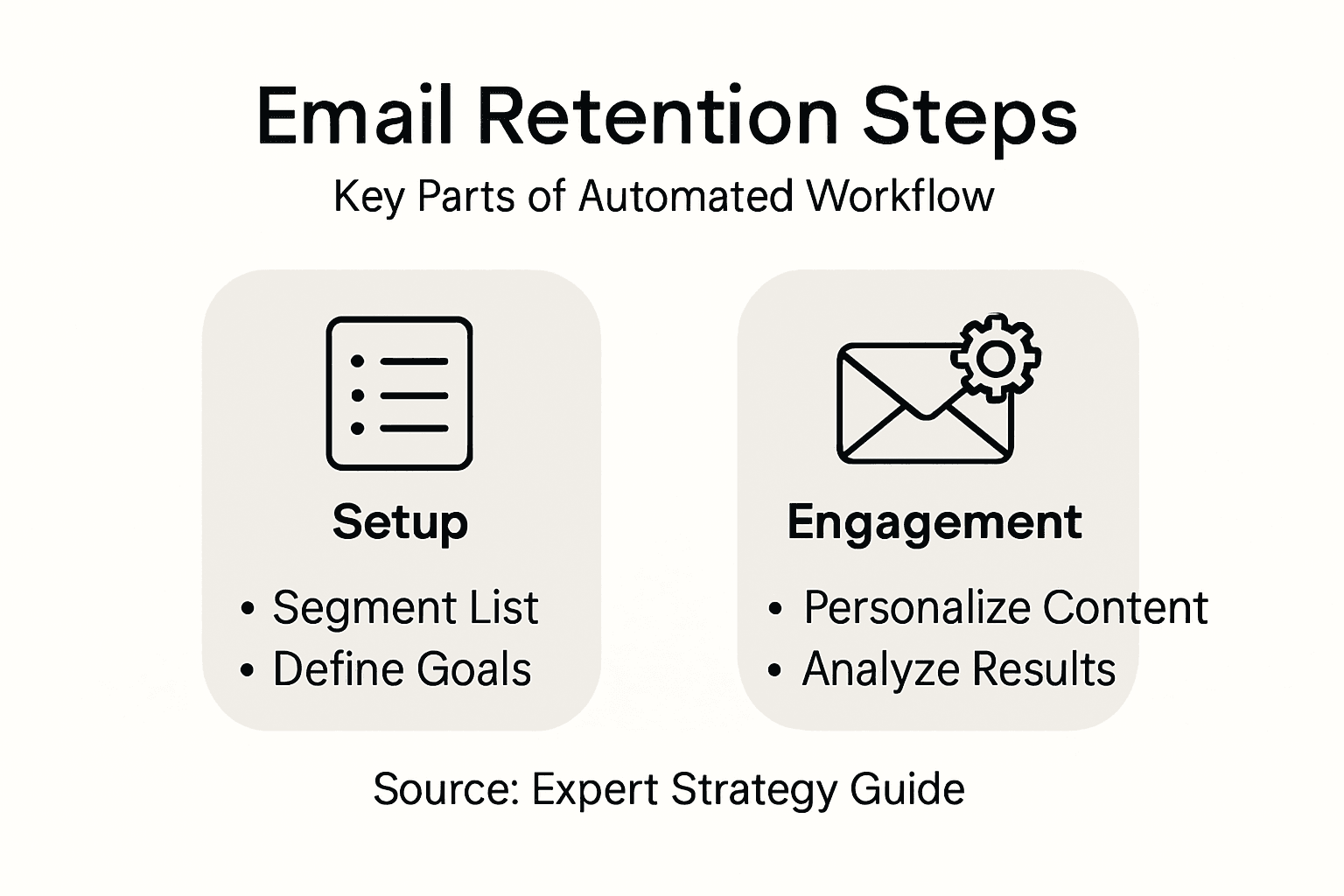
Pro tip: Implement a quarterly workflow audit to ensure your engagement strategies remain adaptive and aligned with evolving customer expectations.
Step 5: Verify Results with Data-Driven Analysis
Unlocking meaningful insights requires a rigorous approach to data verification and interpretation. Open data research methodologies provide critical frameworks for ensuring the reliability and transparency of your analytical process.
To conduct comprehensive data-driven analysis, implement these key verification strategies:
- Cross-reference multiple data sources
- Validate statistical significance
- Identify potential sampling biases
- Conduct comparative performance assessments
- Document all analytical methodologies
Your verification process should encompass multiple analytical dimensions:
- Statistical hypothesis testing
- Peer review of analytical methods
- Reproducibility checks
- Anomaly detection
- Contextual performance benchmarking
Robust data analysis transforms raw numbers into actionable business intelligence.
AI-assisted verification techniques can enhance the accuracy and reliability of your analytical workflows. By leveraging advanced validation tools, you can uncover deeper insights and minimize potential interpretation errors.
Pro tip: Create a standardized verification checklist that includes both quantitative metrics and qualitative assessment criteria to ensure comprehensive result validation.
Accelerate Your Business Growth with Expert Automated Email Retention
Managing business growth through automated email retention is a challenge that requires precision and strategic insight. This article highlights key pain points such as designing personalized email flows, implementing precise segmentation, and verifying results with data-driven analysis. You want to transform email marketing into a primary growth channel by automating retention, recovering abandoned carts, and increasing customer engagement without constant manual effort. Terms like “automated email flows,” “segmentation,” and “data verification” underscore the complexity of creating scalable, conversion-focused campaigns that truly resonate with your customers.
At Take Action, we specialize in exactly this kind of work. Our team blends human expertise with AI-driven insights to craft email retention strategies tailored for ecommerce brands using Klaviyo. We ensure your email marketing aligns with your brand voice and aesthetic while maximizing revenue by increasing open and click rates and driving repeat purchases. Whether you need help setting up welcome series, abandoned cart flows, or sophisticated segmentation and optimization, we provide long-term partnership solutions designed to automate growth and diversify your revenue streams.
Take control of your customer retention today with a proven partner who understands how to unlock the full potential of automated email marketing. Visit Take Action and discover how strategic automation, expert segmentation, and continuous optimization will transform your email marketing into a powerful driver of sustainable business growth.
Looking for a clear path to automated email success? See how you can boost conversion rates with campaign strategy and email flow setup backed by data-driven analysis and expert support.
Partner with us to automate your customer retention, recover abandoned carts, and scale your ecommerce brand now. Act quickly to turn your email list into your most profitable growth asset by visiting Take Action.
Frequently Asked Questions
How can I assess my current growth opportunities for email retention?
To assess your growth opportunities effectively, start by analyzing your current customer retention metrics and examining your purchase frequency and average order value. Use this information to identify high-performing customer segments and areas for market expansion within 30 days.
What components should I include when designing automated email retention flows?
When designing automated email retention flows, focus on mapping key customer journey touchpoints and identifying behavioral triggers. Additionally, develop personalized messaging sequences and establish performance metrics to measure success, ensuring you track the impact within the first few weeks of implementation.
How can I segment my audience for better email engagement?
To segment your audience effectively, utilize criteria like purchase history, customer lifetime value, and engagement levels. Combine these factors to create targeted messaging that resonates with specific groups, aiming to refine your segmentation every quarter to maintain effectiveness.
What strategies optimize my email marketing workflows to enhance customer engagement?
Optimize your email marketing workflows by mapping comprehensive customer touchpoints and integrating personalization at each interaction stage. Regularly monitor engagement metrics and adopt adaptive response mechanisms to respond to customer behavior, reviewing performance at least once a month.
How can I verify the results of my email retention strategy with data-driven analysis?
To verify your results effectively, cross-reference multiple data sources and validate statistical significance while identifying any potential biases. Conduct these analytical processes consistently to uncover actionable insights, aiming to complete your analysis within 30 days of your marketing campaigns.
Recommended
- Understanding the Benefits of Email Automation | Take Action Blog | Take Action
- Best Retention Marketing Services – Expert Comparison 2025 | Take Action Blog | Take Action
- 7 Examples of Automated Workflows for Ecommerce Brands | Take Action Blog | Take Action
- Sustainable Business Growth: Complete Guide for Brands | Take Action Blog | Take Action
- Boost Sales with Top E-commerce Notification Tools - WISMOlabs