

Online Marketing Strategy: Driving Ecommerce Retention
Online marketing can feel like an endless maze when you are tasked with increasing retention and recovering abandoned carts for a Direct-to-Consumer brand. With customer expectations rising across every digital touchpoint, staying ahead requires more than just sending out mass emails. Discover how a strategic approach to automation and customer segmentation in Klaviyo gives your brand the personal edge to drive repeat sales and recover revenue that would otherwise slip away.
Table of Contents
- Online Marketing Strategy Fundamentals
- Major Types of Online Marketing Channels
- Automation and Segmentation With Klaviyo
- Creating Conversion-Focused Email Campaigns
- Retention Strategies and Recovering Lost Sales
- Common Pitfalls and Optimization Mistakes
Key Takeaways
| Point | Details |
|---|---|
| Understand Your Audience | Conduct thorough market research to grasp target demographics and behaviors, which is critical for effective online marketing. |
| Utilize Multiple Channels | Integrate various digital marketing channels to create a seamless and comprehensive customer engagement strategy. |
| Prioritize Personalization | Leverage automation tools like Klaviyo to deliver personalized marketing experiences that cater to individual customer needs. |
| Evaluate and Adapt | Regularly audit marketing strategies to ensure alignment with evolving consumer behaviors and technology trends. |
Online marketing strategy fundamentals
Developing an effective online marketing strategy requires understanding the core principles that drive digital success. Marketing strategy fundamentals involve creating a comprehensive approach that connects business goals with targeted digital tactics.
Successful online marketing strategies typically encompass several key components:
- Market Research: Deeply understanding target audience demographics, behaviors, and digital interactions
- Digital Channels: Identifying and prioritizing platforms where potential customers are most active
- Value Proposition: Crafting a clear, compelling message that differentiates your brand
- Conversion Pathways: Designing intuitive customer journeys that guide prospects toward purchasing
Strategic marketing requires a systematic approach to analyzing and responding to dynamic digital environments. Brands must continuously evaluate their digital performance, track key metrics, and adapt their strategies to changing consumer behaviors and technological innovations.
Digital marketing success depends not just on tactics, but on a holistic, data-driven approach to understanding and engaging customers.
The most effective online marketing strategies integrate multiple channels and touchpoints, creating a seamless experience that guides potential customers through awareness, consideration, and conversion stages.
Pro Tip: Conduct quarterly digital strategy audits to ensure your marketing approach remains aligned with evolving customer expectations and technological capabilities.
Major types of online marketing channels
Effective online marketing requires a strategic approach to leveraging diverse digital channels. Digital marketing ecosystems encompass multiple platforms that work together to create comprehensive customer engagement strategies.
The primary online marketing channels can be categorized into several key types:
- Search Engine Marketing (SEM): Paid and organic strategies to increase visibility on search platforms
- Social Media Marketing: Engagement and advertising across platforms like Facebook, Instagram, Twitter
- Email Marketing: Targeted communication and nurturing campaigns
- Content Marketing: Blog posts, videos, podcasts, and informative digital assets
- Affiliate Marketing: Partnerships that drive referral traffic and sales
- Influencer Marketing: Collaborations with digital personalities to expand brand reach
Each marketing channel offers unique advantages and requires specialized tactics to maximize effectiveness. Social media marketing strategies have become particularly crucial in creating integrated digital experiences that connect brands with consumers across multiple touchpoints.
Modern digital marketing success depends on creating a seamless, interconnected approach that allows brands to engage customers through multiple complementary channels.
The most sophisticated online marketing strategies integrate these channels, creating a holistic approach that provides consistent messaging and personalized experiences across different digital platforms.
Here’s a quick comparison of major online marketing channels and their typical use cases:
| Channel | Best Use Case | Key Advantage |
|---|---|---|
| Search Engine Marketing | Capturing buyers with intent | Immediate visibility via search |
| Social Media Marketing | Building brand awareness | Viral content potential |
| Email Marketing | Nurturing leads and driving sales | High personalization options |
| Content Marketing | Educating and engaging audiences | Long-term brand authority |
| Affiliate Marketing | Expanding reach cost-effectively | Pay-for-performance model |
| Influencer Marketing | Reaching niche communities | Authentic endorsements |
Pro Tip: Develop a cross-channel marketing dashboard to track performance metrics and ensure consistent strategy alignment across different online marketing platforms.
Automation and segmentation with Klaviyo
Klaviyo offers powerful tools for ecommerce brands to create sophisticated marketing automation and customer segmentation strategies. Email segmentation strategies enable businesses to deliver highly personalized marketing experiences that drive engagement and revenue.
Effective Klaviyo automation and segmentation involves several critical components:
- Behavioral Segmentation: Categorizing customers based on specific interactions and purchase history
- Dynamic Personalization: Creating targeted messaging that adapts to individual customer profiles
- Trigger-Based Workflows: Designing automated email sequences based on specific customer actions
- Predictive Analytics: Utilizing customer data to anticipate future purchasing behaviors
- Advanced Filtering: Developing granular audience segments for precise targeting
Automated workflows for ecommerce transform how brands communicate with customers by enabling real-time, contextually relevant interactions. The most sophisticated strategies leverage multiple data points to create nuanced customer journeys that feel personal and timely.
Successful marketing automation is not about sending more messages, but about sending the right message to the right customer at the right moment.
Klaviyo’s segmentation capabilities allow brands to move beyond generic mass marketing, creating targeted experiences that speak directly to individual customer needs and preferences.

Pro Tip: Regularly audit and refresh your customer segments to ensure your automation remains precise and relevant to evolving customer behaviors.
Creating conversion-focused email campaigns
Driving conversions through email marketing requires a strategic, data-driven approach that goes beyond simple messaging. Building email campaigns that convert demands a sophisticated understanding of customer psychology and targeted communication techniques.
Key elements of high-converting email campaigns include:
- Compelling Subject Lines: Creating curiosity and urgency that drives opens
- Personalized Content: Tailoring messaging to specific customer segments
- Clear Call-to-Action (CTA): Designing visually prominent and persuasive action buttons
- Social Proof: Incorporating customer testimonials and trust signals
- Strategic Sequencing: Developing logical email flow that guides customers toward conversion
- Mobile Optimization: Ensuring seamless experience across all devices
Successful email campaigns leverage psychological triggers and strategic design elements to transform casual readers into engaged customers. Email campaign best practices emphasize creating a narrative arc that connects with recipients on an emotional level while providing tangible value.
Effective email marketing is about creating a conversation, not just broadcasting a message.
The most successful conversion-focused campaigns combine data-driven insights, creative storytelling, and precise segmentation to deliver highly relevant, timely communications that resonate with individual customer needs.
Pro Tip: Implement A/B testing for every campaign element to continuously refine your email conversion strategy and uncover what truly motivates your audience.
Retention strategies and recovering lost sales
Ecommerce brands face significant challenges in maintaining customer loyalty and recovering potentially lost revenue. Customer retention strategies are critical for sustainable business growth and minimizing customer acquisition costs.
Effective retention and sales recovery approaches include:
- Abandoned Cart Recovery: Implementing targeted email sequences to re-engage potential customers
- Win-Back Campaigns: Designing personalized reactivation strategies for dormant customers
- Loyalty Programs: Creating incentive structures that reward repeat purchases
- Personalized Recommendations: Using purchase history to suggest relevant products
- Proactive Customer Support: Addressing potential friction points before they cause churn
Ecommerce newsletter strategies play a crucial role in maintaining ongoing customer engagement and preventing sales loss. Sophisticated brands develop multi-touchpoint communication approaches that keep customers connected and interested beyond initial purchases.
Successful retention is not about preventing every potential loss, but about creating consistent value that makes customers choose you repeatedly.
The most effective retention strategies combine data-driven insights, personalized communication, and strategic incentives to transform one-time buyers into long-term brand advocates.
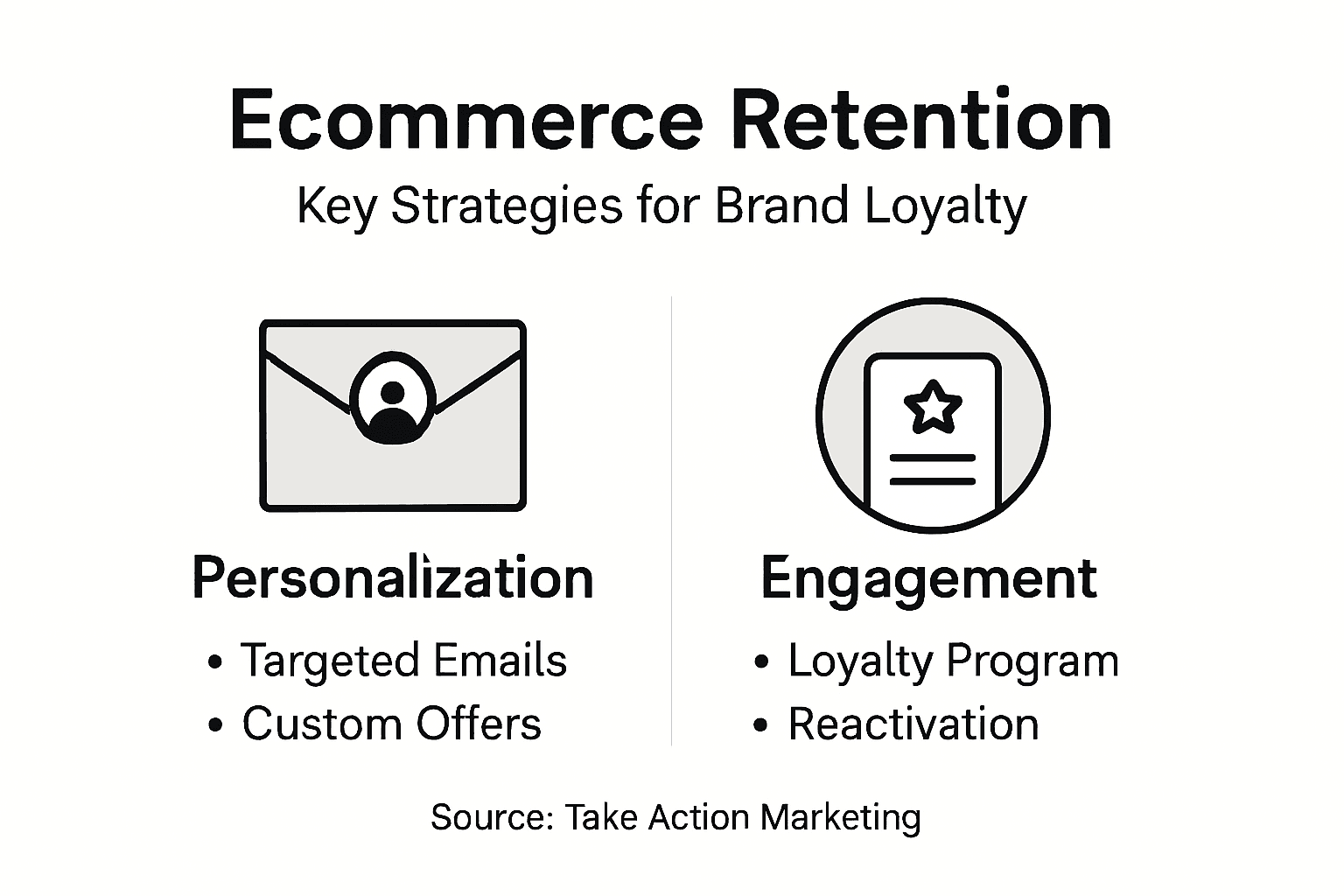
Pro Tip: Create a comprehensive customer lifecycle map that identifies potential drop-off points and develops targeted interventions for each stage of the customer journey.
Common pitfalls and optimization mistakes
Digital marketing success demands awareness of potential strategic missteps that can derail campaign performance. Common digital marketing pitfalls reveal critical areas where brands frequently compromise their marketing effectiveness.
The most significant optimization challenges include:
- Poor Audience Targeting: Failing to define and understand precise customer segments
- Channel Overreliance: Depending too heavily on a single marketing platform
- Inconsistent Messaging: Creating disconnected experiences across different touchpoints
- Neglecting Mobile Users: Ignoring the growing mobile-first consumer behavior
- Data Analytics Paralysis: Not effectively translating metrics into actionable insights
- Ineffective Personalization: Delivering generic content instead of tailored experiences
Digital marketing mistake prevention requires a holistic approach that emphasizes continuous learning and adaptive strategies. Successful brands transform potential pitfalls into opportunities for strategic refinement.
Optimization is not about achieving perfection, but about creating a system of continuous improvement and learning.
The most resilient marketing strategies embrace experimentation, maintain flexibility, and develop robust feedback mechanisms that allow for rapid iteration and performance enhancement.
This summary illustrates common digital marketing pitfalls and proven solutions:
| Pitfall | Why It Hurts | Optimal Solution |
|---|---|---|
| Poor Audience Targeting | Wasted ad spend, low ROI | Use advanced customer segmentation |
| Channel Overreliance | Risk of platform disruption | Diversify digital channels |
| Inconsistent Messaging | Confused audience experience | Develop unified brand guidelines |
| Neglecting Mobile Users | Missed mobile conversions | Prioritize mobile-first design |
| Data Analytics Paralysis | Unclear priorities, slow growth | Focus on actionable KPIs only |
| Ineffective Personalization | Lower engagement rates | Invest in dynamic personalization |
Pro Tip: Implement a quarterly marketing audit that critically evaluates performance across all channels, identifying potential optimization opportunities and areas of potential strategic improvement.
Boost Your Ecommerce Retention with Expert Email Marketing Solutions
The challenge of driving sustainable ecommerce retention requires more than just sending emails. As highlighted in the article, automation, segmentation, and strategic campaigns are essential to engage customers with personalized, timely messaging that converts. If you want to overcome abandoned cart losses, increase open and click rates, and build loyalty through automated flows like welcome sequences and post-purchase campaigns, you need a partner who excels in these precise areas.
At Take Action, we specialize in turning email marketing into a primary growth engine for ecommerce brands. By combining deep expertise with AI-driven insights, we ensure your customer segments receive the right message at the right moment, maximizing engagement and revenue. Discover how our tailored campaign strategy and automation setup can transform your approach to retention and sales recovery.
Take control of your retention strategy now
Don’t let lost sales slip away or generic messaging weaken your brand voice. Visit Take Action today to partner with a team dedicated to scalable, conversion-focused email marketing that grows your business beyond paid ads. Act now to start crafting personalized customer journeys that turn one-time buyers into lifelong advocates.
Frequently Asked Questions
What are effective ecommerce retention strategies?
Effective ecommerce retention strategies include personalized communication, loyalty programs, abandoned cart recovery emails, and proactive customer support to keep customers engaged and encourage repeat purchases.
How can I use email marketing to improve customer retention?
Email marketing can improve customer retention through targeted campaigns, personalized content, and automated workflows that re-engage customers, recover lost sales, and nurture leads over time.
What is the importance of customer segmentation in ecommerce?
Customer segmentation is crucial in ecommerce as it allows brands to tailor marketing messages and offers to specific groups, enhancing relevance and engagement while driving conversions.
How can I recover potentially lost sales in my ecommerce store?
To recover potentially lost sales, implement abandoned cart recovery strategies, create win-back campaigns for dormant customers, and utilize personalized recommendations to encourage customers to return and complete their purchases.
Recommended
- Customer Retention: Key Driver of Ecommerce Growth | Take Action Blog | Take Action
- Complete Guide to Building Customer Loyalty Online | Take Action Blog | Take Action
- 7 Essential Ecommerce Marketing Strategies for Growth | Take Action Blog | Take Action
- 7 Habits of Successful Entrepreneurs for Ecommerce Growth | Take Action Blog | Take Action
- Improve Post-Purchase Customer Experience | Order Tracking & WISMO Reduction