

ROI Influencer Marketing: Boosting Ecommerce Growth
Finding true value in influencer marketing can feel like solving a puzzle when sales, retention, and brand engagement are at stake. For American ecommerce brand managers using Klaviyo, defining ROI in influencer marketing goes far beyond counting followers. Research shows that tracking nuanced engagement and conversion metrics, not just reach, is crucial to uncovering the strategies that drive real growth and loyalty.
Table of Contents
- Defining ROI In Influencer Marketing
- Types Of Influencer Campaigns For Ecommerce
- How Influencer Marketing Drives Retention
- Measuring Success And Key ROI Metrics
- Integrating Influencer Insights With Klaviyo
- Common Pitfalls And Maximizing Returns
Key Takeaways
| Point | Details |
|---|---|
| ROI Measurement | Effective influencer marketing requires tracking both quantitative financial returns and qualitative engagement metrics to assess true performance. |
| Choosing the Right Influencer | Smaller influencers often provide higher ROI through stronger audience connections, emphasizing quality over quantity. |
| Tailored Campaign Types | Different campaign types, such as product reviews and live streaming, should align with specific brand goals and audience demographics for maximized impact. |
| Holistic Tracking Systems | Implement comprehensive tracking mechanisms to capture nuanced interactions and accurately measure ROI across campaigns and influencer partnerships. |
Defining ROI in Influencer Marketing
Influencer marketing return on investment (ROI) represents the measurable financial and strategic value generated from collaborative marketing partnerships with digital content creators. Unlike traditional advertising metrics, influencer marketing ROI encompasses both quantitative financial returns and qualitative brand engagement outcomes.
At its core, ROI in influencer marketing involves analyzing several critical performance indicators:
- Direct Revenue Conversion: Tracking sales directly attributed to influencer promotional content
- Engagement Metrics: Measuring likes, comments, shares, and audience interactions
- Brand Awareness: Evaluating reach and potential audience exposure
- Lead Generation: Assessing new potential customer acquisition through influencer channels
Recent research indicates that successful ROI measurement requires comprehensive tracking across multiple dimensions. Brands must move beyond simplistic follower count metrics and focus on more nuanced engagement indicators that reveal true marketing effectiveness.
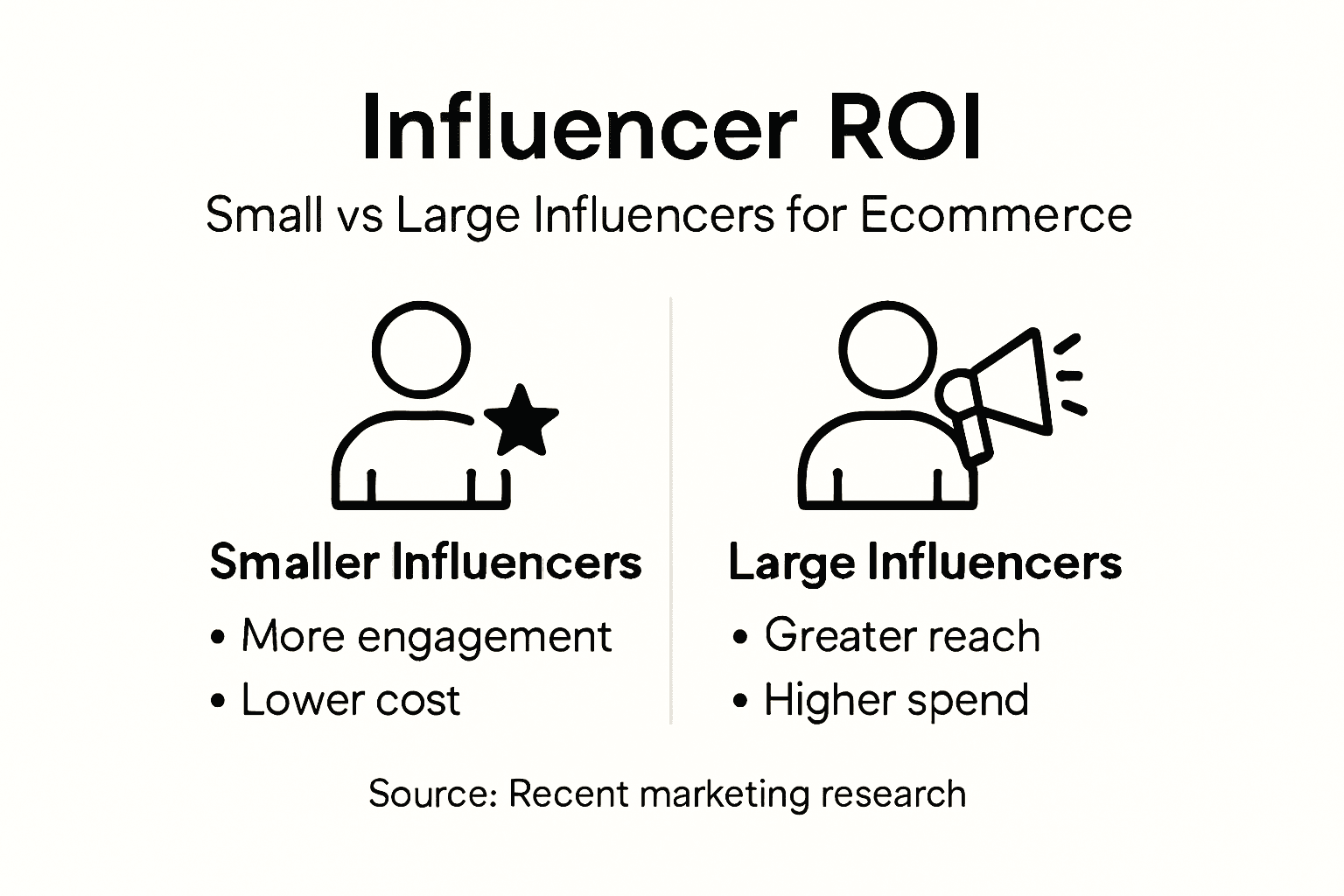
Interestingly, emerging studies suggest that smaller, more targeted influencers often deliver superior ROI compared to macro-influencers. Nano-influencers with highly engaged audiences can generate more meaningful connections and higher conversion rates, demonstrating that quality consistently trumps quantity in modern influencer marketing strategies.
Pro tip: Develop custom tracking URLs and unique promotional codes for each influencer to precisely measure individual campaign performance and ROI attribution.
Types of Influencer Campaigns for Ecommerce
Influencer marketing has evolved into a sophisticated strategy for ecommerce brands, offering multiple campaign types designed to drive engagement, awareness, and direct sales. Social media influencer marketing tactics have become increasingly nuanced, enabling brands to connect with audiences through diverse content approaches.
Key types of influencer campaigns for ecommerce include:
- Product Review Campaigns: Influencers provide authentic, detailed assessments of products
- Unboxing Videos: Create excitement and showcase product features in real-time
- Sponsored Content: Integrated brand mentions within influencer’s regular content
- Affiliate Marketing: Performance-based campaigns where influencers earn commissions
- Live Streaming: Interactive product demonstrations and real-time audience engagement
These campaign types leverage different psychological triggers and engagement mechanisms. Targeted advertising through influencers allows brands to create personalized marketing experiences that feel more authentic and trustworthy compared to traditional advertising methods.
Successful ecommerce brands understand that each influencer campaign type requires a tailored approach. Micro and nano-influencers often provide higher engagement rates, while macro-influencers offer broader reach. The key is matching the right influencer type with specific campaign objectives and target audience demographics.
Here’s a comparison of influencer types commonly used in ecommerce campaigns:
| Influencer Type | Reach Potential | Engagement Quality | Best Use Case |
|---|---|---|---|
| Nano-influencer | Up to 10,000 followers | Very high, intimate | Niche products, loyalty |
| Micro-influencer | 10,000 to 100,000 | High, focused | Product launches, reviews |
| Macro-influencer | 100,000 to 1 million | Moderate, broad | Brand awareness campaigns |
| Mega-influencer | Over 1 million | Lower, wide exposure | Mass campaigns, impressions |
Pro tip: Develop a comprehensive tracking system with unique promotional codes and custom URLs for each influencer to precisely measure individual campaign performance and ROI.
How Influencer Marketing Drives Retention
Customer retention strategies through influencer marketing represent a sophisticated approach to building long-term brand loyalty. Modern ecommerce brands recognize that influencers do more than generate initial sales - they create meaningful connections that transform one-time purchasers into repeat customers.
Key mechanisms of influencer retention include:
- Trust Building: Influencers create authentic narratives around brands
- Social Proof: Demonstrate product value through real-world experiences
- Emotional Connection: Foster deeper relationships beyond transactional interactions
- Community Development: Create shared experiences among brand followers
- Personalized Engagement: Deliver targeted content that resonates with specific audience segments
Consumer trust frameworks demonstrate how influencers enhance retention by establishing credibility through transparent, genuine interactions. Micro-influencers particularly excel at creating intimate connections that translate into sustained customer loyalty, offering more personalized and relatable content compared to traditional marketing approaches.

Successful retention through influencer marketing requires strategic alignment between brand values, influencer authenticity, and audience expectations. Brands that carefully curate influencer relationships and prioritize genuine storytelling can develop robust, long-term customer relationships that extend far beyond initial purchase moments.
Pro tip: Develop a comprehensive tracking system that measures not just initial conversions, but long-term customer lifetime value generated through influencer partnerships.
Measuring Success and Key ROI Metrics
Marketing analytics expertise reveals that influencer marketing ROI extends far beyond simplistic follower counts and likes. Successful ecommerce brands understand that comprehensive measurement requires a multifaceted approach tracking both quantitative and qualitative performance indicators.
Key ROI metrics for influencer marketing include:
- Engagement Rate: Likes, comments, shares, and interactions
- Conversion Rate: Direct sales attributed to influencer content
- Cost per Acquisition: Total campaign spend versus new customer value
- Brand Sentiment: Qualitative perception and audience response
- Audience Growth: Follower increases and platform-specific reach
Advanced ROI measurement techniques demonstrate that successful influencer marketing evaluation goes beyond surface-level metrics. Brands must analyze post characteristics, follower interactions, and influencer credibility to understand true marketing performance.
Complex ROI analysis involves integrating multiple data points, including sales attribution, audience demographics, content performance, and long-term brand impact. Sophisticated marketers develop comprehensive tracking systems that capture nuanced interactions between influencers, content, and target audiences.
Below is a summary of advanced ROI metrics and their specific business impact:
| Metric | What It Measures | Business Impact |
|---|---|---|
| Engagement Rate | Interaction per audience size | Gauges content resonance |
| Conversion Rate | Actions leading to purchases | Direct sales influence |
| Cost per Acquisition | Spend divided by acquired customers | Optimizes marketing efficiency |
| Brand Sentiment | Positive or negative perceptions | Guides reputation management |
| Audience Growth | Follower increase over time | Indicates campaign scalability potential |
Pro tip: Create custom UTM parameters and unique tracking links for each influencer to enable precise performance measurement and granular ROI analysis.
Integrating Influencer Insights with Klaviyo
Email automation strategies transform influencer marketing by enabling sophisticated data integration and personalized customer experiences. Klaviyo’s advanced platform allows ecommerce brands to seamlessly translate influencer engagement data into targeted, high-converting email campaigns.
Key integration strategies include:
- Custom Audience Segmentation: Divide subscribers based on influencer interaction
- Behavioral Tracking: Map customer journeys from social media to email
- Personalized Content Workflows: Develop automated email sequences triggered by influencer engagement
- Performance Analytics: Track conversion rates across different influencer channels
- Dynamic Customer Profiles: Enrich subscriber data with social media insights
Influencer data synchronization enables marketers to create more nuanced, contextually relevant email experiences. By capturing detailed follower behaviors and demographics, brands can design precision-targeted campaigns that feel individually crafted.
Successful integration requires robust tracking mechanisms, including unique UTM parameters, custom landing pages, and comprehensive social listening tools. These approaches transform raw influencer data into actionable marketing intelligence that drives meaningful customer engagement and increased conversion rates.
Pro tip: Develop a centralized dashboard that consolidates influencer performance metrics and email engagement data to create a holistic view of your marketing ecosystem.
Common Pitfalls and Maximizing Returns
Influencer marketing challenges extend far beyond simple follower metrics, requiring sophisticated strategies to navigate potential performance obstacles. Ecommerce brands must develop nuanced approaches that transcend superficial engagement measurements and focus on meaningful audience connections.
Common pitfalls in influencer marketing include:
- Vanity Metric Obsession: Over-focusing on follower counts instead of genuine engagement
- Misaligned Influencer Selection: Choosing creators without authentic brand connection
- Inadequate Performance Tracking: Failing to establish comprehensive ROI measurement systems
- Lack of Clear Campaign Objectives: Pursuing campaigns without specific, measurable goals
- Ignoring Audience Authenticity: Neglecting the quality of influencer follower demographics
Strategic influencer selection demands rigorous evaluation beyond surface-level attractiveness. Brands must conduct deep analysis of potential influencer partners, examining their audience composition, engagement quality, and genuine alignment with brand values.
Maximizing returns requires a holistic approach that combines precise targeting, continuous performance monitoring, and adaptive campaign strategies. Successful ecommerce brands treat influencer marketing as a dynamic, data-driven process that demands constant refinement and strategic intelligence.
Pro tip: Develop a comprehensive influencer vetting scorecard that objectively evaluates potential partners across multiple performance and authenticity dimensions.
Unlock True ROI with Precision Email Marketing and Automation
The article highlights how maximizing influencer marketing ROI depends on precise tracking, authentic engagement, and strategic retention methods. If your ecommerce brand struggles with effectively measuring conversions, maintaining long-term customer relationships, or integrating influencer data into actionable campaigns, you are not alone. Influencer success is about more than follower counts — it requires sophisticated analytics and personalized communication to truly boost revenue and customer loyalty.
At Take Action, we specialize in turning influencer-driven engagement into scalable growth by leveraging Klaviyo-powered email automation and segmentation. Our expert team helps ecommerce brands implement tailored email flows such as welcome sequences, abandoned cart recovery, and post-purchase nurtures that convert influencer audiences into repeat customers. With a data-driven, conversion-focused approach, we automate retention and optimize your email campaigns to increase open rates, clicks, and ultimately sales.
Experience the power of smart, integrated marketing that complements influencer efforts and drives measurable results.

Start transforming your influencer ROI today with a dedicated partner who understands ecommerce growth inside and out. Visit Take Action now to explore how our strategic email marketing solutions can elevate your brand’s performance and create lasting customer connections through automation and expert insights.
Frequently Asked Questions
What is ROI in influencer marketing for ecommerce?
ROI in influencer marketing refers to the financial and strategic value gained from partnerships with digital content creators, encompassing both direct revenue conversions and qualitative brand engagement outcomes.
How can I measure the success of my influencer marketing campaigns?
Success can be measured through key metrics such as engagement rates, conversion rates, cost per acquisition, brand sentiment, and audience growth, providing a comprehensive view of campaign performance.
Why should I consider using smaller influencers for my ecommerce strategy?
Smaller influencers, such as nano and micro-influencers, often deliver better ROI due to their highly engaged audiences, resulting in more meaningful connections and higher conversion rates compared to larger influencers.
What are effective types of influencer campaigns for boosting ecommerce sales?
Effective influencer campaigns include product reviews, unboxing videos, sponsored content, affiliate marketing, and live streaming, each leveraging different engagement mechanisms to drive sales and brand awareness.
Recommended
- Influencer Marketing’s Impact on Ecommerce Growth | Take Action Blog | Take Action
- Complete Guide to Improving Online Visibility | Take Action Blog | Take Action
- 7 Essential Ecommerce Marketing Strategies for Growth | Take Action Blog | Take Action
- Digital Media Buying Agency Impact on Ecommerce | Take Action Blog | Take Action
- Conversion Uplift: Boosting Shopify Store Sales – Automagic