

Social Content Strategy: Driving Email Engagement Growth
Every ecommerce leader knows the disappointment of a beautifully crafted social post failing to translate into sales or email engagement. For Direct-to-Consumer brands using Klaviyo, the true challenge is turning fleeting social interest into lasting customer relationships. Defining social content strategy in ecommerce means intentionally connecting every Instagram story, TikTok video, and user comment back to your broader retention and revenue goals—so your time spent on content directly drives measurable business growth.
Table of Contents
- Defining Social Content Strategy in Ecommerce
- Types of Social Content for Klaviyo Campaigns
- Integrating Social Content With Email Journeys
- Key Metrics for Engagement and Retention
- Common Social Content Strategy Pitfalls
Key Takeaways
| Point | Details |
|---|---|
| Integrated Strategy | Unify social media and email efforts to create a cohesive customer experience that builds trust and drives engagement. |
| Audience Understanding | Know your audience’s needs and preferences; tailoring content based on behavior improves retention and conversion rates. |
| Repurpose Content | Transform high-performing social posts into email content to reinforce messaging and maximize resource effectiveness. |
| Track Key Metrics | Focus on essential metrics like engagement rates and customer lifetime value to measure the impact of social content on email performance. |
Defining Social Content Strategy in Ecommerce
Social content strategy in ecommerce is not about posting randomly and hoping for engagement. It’s a deliberate framework that connects your social media efforts directly to your email marketing and overall customer retention goals. Think of it as the bridge between the conversations happening on social platforms and the revenue you drive through email campaigns. When you align your social content with your email strategy, you create multiple touchpoints where customers see consistent messaging, which dramatically increases the likelihood they’ll open your emails, click through, and make a purchase.
At its core, a strong social content strategy involves three fundamental components. First, you need audience understanding that goes beyond demographics. Know what problems your customers are trying to solve, what objections they have before buying, and what content makes them actually stop scrolling. Second, identify the specific channels where your audience spends time and which platforms drive the behavior you want (engagement, traffic, or direct sales). Third, develop a consistent messaging framework that reflects your brand voice and aligns with the content you’re already sending through email. When someone sees your product story on Instagram, receives it in a welcome email, and then reads it again in a retargeting campaign, that repetition builds credibility and moves them closer to conversion. Understanding your audience and choosing the right channels is foundational to making this work.
For DTC brands specifically, your social content strategy should serve one of three purposes: driving engagement that feeds your email list, nurturing existing customers with valuable content that keeps them coming back, or creating the exact content assets you need for your post-purchase sequences and retention campaigns. Many brands miss an opportunity here. They create beautiful social content but never repurpose it for email. A carousel post about how to use your product? That becomes a multi-part email sequence. A customer testimonial video? That’s gold for your welcome series. Your social strategy and email strategy should feed each other, not compete for attention.
Pro tip: Audit your best-performing social posts from the last 90 days, then identify which ones could be repurposed as email content or used to inspire your next nurture sequence. This ensures your social content strategy directly supports your email engagement goals rather than existing in isolation.
Types of Social Content for Klaviyo Campaigns
Not all social content is created equal when it comes to feeding your Klaviyo campaigns. The most effective social strategies use specific content types that serve a dual purpose: they engage your audience on social platforms while simultaneously generating the signals and assets you need to personalize and strengthen your email sequences. The key is understanding which content types work best for different stages of your customer journey and how to extract maximum value from each piece.
Organic posts form the foundation of your social presence. These are your daily carousel posts, educational content, behind-the-scenes stories, and customer testimonials that build trust and keep your audience engaged. The real magic happens when you track which organic posts generate the most engagement, shares, and comments, then use those signals to segment your email list. Someone who engaged with your “5 ways to use our product” carousel? They’re ready for deeper educational content in your email sequences. User-generated content (UGC) like customer photos, reviews, and testimonial videos deserves its own spotlight. This content carries enormous credibility because it comes from real customers, not from you. When you feature UGC on social, you’re essentially creating social proof that translates directly into email campaigns. A customer who sees their own product photo shared to your Instagram story becomes a brand advocate, and that emotional connection increases email open rates significantly. Different content types and messaging strategies directly impact how your audience responds across channels.

Paid social advertisements and influencer collaborations serve different purposes. Paid ads allow you to reach specific audience segments with tailored messaging, then retarget them through email with complementary offers or content. If you run a paid ad about your spring collection, you can immediately follow up with that same audience segment through a Klaviyo email sequence about styling tips for those pieces. Influencer content works similarly but adds authenticity. When an influencer authentically uses your product, their followers see it as a peer recommendation rather than a brand message. You can then target those engaged viewers with email sequences designed to convert interested prospects into customers. The final critical type is interactive content like polls, quizzes, and contests. This content generates behavioral data that’s gold for Klaviyo segmentation. Someone who takes your “find your ideal product” quiz has just told you exactly what they need, allowing you to send hyper-personalized follow-up emails.
The thread connecting all these content types is data. Each social interaction, engagement, or click provides information that makes your Klaviyo campaigns smarter and more effective. Your organic posts identify what resonates. Your UGC builds social proof. Your paid campaigns reach new segments. Your interactive content reveals customer preferences. Together, they create a feedback loop that continuously improves your email performance.
Here’s a summary of how different types of social content support Klaviyo email campaigns:
| Content Type | Primary Social Goal | Email Benefit | Data/Signal Gained |
|---|---|---|---|
| Organic Posts | Engage and educate audience | Identify topics for segmentation | Audience engagement interests |
| User-Generated Content | Build trust and community | Social proof in email sequences | Advocate identification |
| Paid Social Ads | Acquire targeted leads | Retarget with focused email offers | Source and behavior tracking |
| Influencer Collaborations | Add authentic endorsements | Warm up audience for conversion | Influencer audience insights |
| Interactive Content | Drive interaction and fun | Enable hyper-personalized follow-up | Stated preferences |
Pro tip: Create a content calendar that assigns each social post to a specific Klaviyo segment or email flow, then track which posts drive the highest email engagement from recipients who saw that content first. This connection shows you exactly which social content types drive revenue through your email channel.
Integrating Social Content With Email Journeys
The most sophisticated brands stop thinking of social and email as separate channels and start treating them as a unified customer experience. When someone discovers your product on TikTok, sees a testimonial on Instagram, receives an email about that exact product, and then gets a retargeting ad, they’re experiencing a cohesive brand narrative that builds trust exponentially. This integration is where real retention happens. It’s not about bombarding people across channels, it’s about meeting them where they are with the right message at the right time, informed by what you learned about them on social.
The practical mechanism of integration works like this: your social content generates behavioral signals that feed directly into your Klaviyo segmentation and automation. Someone who clicks on your product link from an Instagram story gets tagged in your “Instagram Explorer” segment. They then enter a specific email flow designed for socially-engaged prospects who already showed interest in a specific product. Or consider this scenario: you post a carousel about a common customer pain point, and the people who engage with it get added to a segment that receives your educational email sequence on that exact topic. Repurposing social content for your email campaigns multiplies the value of every piece you create. That same carousel becomes a four-part email series, each piece expanding on the original concept with deeper information, social proof, and gradually moving toward a soft sell.
The timing component matters enormously. When you post content on social, track which products or topics generate the most engagement, then within 24 to 48 hours, email the engaged segments with complementary content or offers. Someone who commented on your post about styling your bestselling jacket? They’re primed to receive an email showcasing five outfit combinations featuring that jacket. This creates what feels like a personalized experience, even though you’re using automation. Building connectedness through integrated social and email touchpoints increases customer responsiveness across both channels. The key is making each channel feel like a natural continuation of the previous one, not a separate marketing blast.
Here’s what integration looks like in practice for a DTC brand: your welcome email includes a call-to-action directing new subscribers to follow you on Instagram. On Instagram, you share user-generated content and exclusive preview content. The people who engage with that Instagram content get enrolled in a second email sequence about your best sellers. By the time they receive your first promotional email, they’ve already seen multiple social touchpoints, so the email feels less like a cold pitch and more like a natural next step. This layered approach dramatically improves conversion rates because you’ve already built familiarity and trust through social before asking for a purchase.
Pro tip: Set up a UTM tagging system in Klaviyo where every social link includes a custom parameter (for example, utm_source=instagram_carousel_week_17), then create segments based on which specific social content drove the traffic. This lets you see exactly which social content types drive the highest email engagement and revenue, so you can create more of what actually works.
Key Metrics for Engagement and Retention
Tracking the right metrics separates brands that grow from those that simply go through the motions. When you’re running an integrated social and email strategy, you need visibility into what’s actually working and what’s wasting your time. The challenge is that most brands measure too many metrics and understand too few of them. You need a focused set of indicators that directly connect social activity to email performance to revenue.
Start with email engagement metrics as your foundation. Open rate shows you whether your subject lines and send timing resonate, but it’s incomplete without context. Someone opened your email but did they click? Click-through rate tells you if your content and calls to action are compelling enough to drive action. More importantly, track click patterns by traffic source. If people who came from your Instagram post have a 34% click rate compared to 12% from your general list, that’s telling you something valuable about audience quality and readiness to purchase. Conversion rate is the ultimate metric, but segment it by source too. Data-driven tracking systems that measure click-through rates and conversion behaviors reveal which social content types drive the highest-value customers. Someone who converted after seeing your TikTok video is different from someone who converted from a cold email to a purchased list. The former is worth 10 times more because they’re already engaged with your brand.
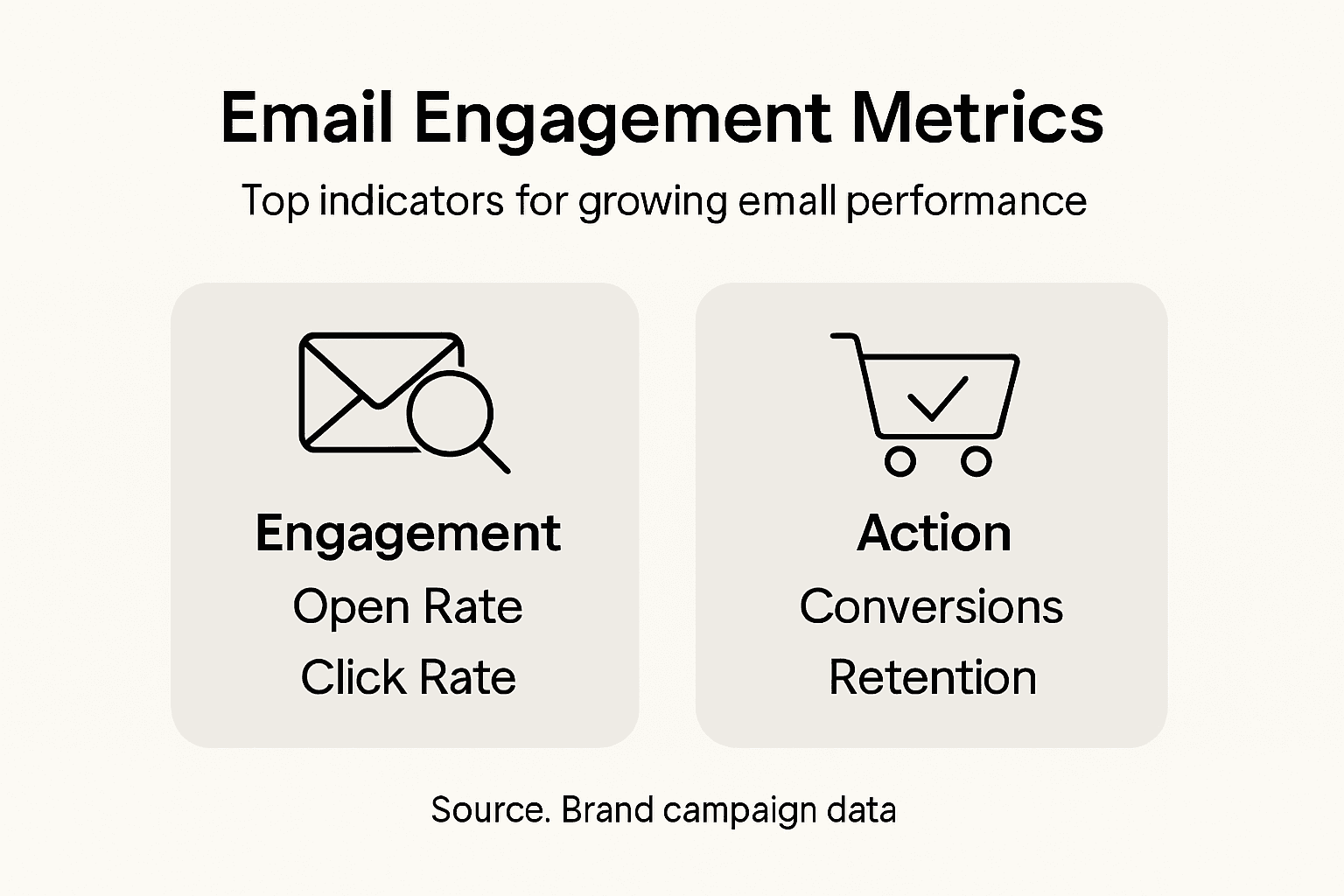
Retention metrics tell a different story than acquisition metrics. Repeat purchase rate from customers who first engaged through social is one of the most underrated metrics. Track how many customers who discovered you on social make a second purchase within 90 days compared to other sources. This reveals whether your social strategy is attracting deal seekers or genuine customers who value your brand. Customer lifetime value (CLV) by acquisition source is the metric that matters most. A customer who came through social might have a CLV of 340 dollars while a customer from a random email list has a CLV of 85 dollars. When you see this disparity, you double down on social because the unit economics work. Email unsubscribe rate is another critical indicator. If your social-sourced subscribers have a 0.8% monthly unsubscribe rate but your cold list has 3.2%, your social audience is genuinely interested. Track these separately in Klaviyo to see which campaigns, segments, and email types drive unsubscribes. Then stop doing those things.
Finally, measure engagement velocity: how quickly someone moves from first social interaction to email signup to purchase. Someone who clicks your Instagram link, subscribes to email, and purchases within 7 days is fundamentally different from someone who takes 60 days. Faster velocity indicates stronger product-market fit and higher likelihood of retention. Create segments based on engagement velocity and send different email cadences accordingly. High-velocity customers need to stay engaged frequently or they lose interest. Low-velocity customers need more nurturing content and fewer aggressive promotional emails.
See how key email and retention metrics reveal business impact by traffic source:
| Metric | What It Measures | Insight for DTC Brands |
|---|---|---|
| Open Rate | Subject line and timing resonance | List engagement health |
| Click-Through Rate by Source | Content and CTA strength per channel | Most valuable traffic sources |
| Conversion Rate by Source | Email’s ability to sell by origin | True ROI from each social platform |
| Repeat Purchase Rate | Loyalty of acquired customers | Effectiveness of retention efforts |
| Customer Lifetime Value (CLV) | Average spend by source | Which sources build brand loyalists |
| Email Unsubscribe Rate | List fatigue or irrelevance | Campaign content vs. audience expectations |
| Engagement Velocity | Time from lead to purchase | Urgency and alignment of messaging |
Pro tip: Build a custom Klaviyo report that shows email open rate, click rate, and conversion rate segmented by which social platform drove the initial traffic, updated weekly. This one dashboard becomes your decision-making tool for where to invest social effort and which email flows generate the highest return for each traffic source.
Common Social Content Strategy Pitfalls
Most brands make predictable mistakes with social content that directly sabotage their email engagement and retention efforts. The worst part is these pitfalls are invisible until you measure the damage. You’re posting consistently, getting decent engagement, but your email open rates stay flat and your repeat purchase rates disappoint. The problem isn’t effort, it’s strategy. Understanding what not to do is sometimes more valuable than understanding what to do.
The first major pitfall is treating social and email as completely separate initiatives. Brands post content on social designed purely for vanity metrics like likes and comments, then wonder why those socially engaged audiences have zero interest in their emails. Your social content strategy must explicitly feed your email list and be designed to attract the right people, not just any people. Another common mistake is posting without any audience segmentation logic. You blast the same lifestyle content to everyone, which means people who want product education and people who want entertainment see identical feeds. Then when they land in your email list, you can’t segment them because you have no behavioral data. The third pitfall is over-reliance on a single platform. If 80% of your social traffic comes from Instagram and Instagram’s algorithm changes, your entire business suffers. Avoiding over-dependence on single platforms means building presence on at least three platforms and rotating traffic sources based on where your audience actually engages.
Content quality pitfalls are equally damaging. Some brands post so frequently that they sacrifice quality for volume, resulting in email fatigue before customers even hit your promotions. Others post the same content to all platforms without adaptation, which shows. A carousel that works on Instagram might bomb on TikTok. More subtly, brands create sensationalist or overly aggressive content designed to trigger clicks and shares, which attracts the wrong audience. Someone who clicked because of clickbait will unsubscribe when your email is genuine product information. Understanding psychological impacts of sensationalist content reveals that overly aggressive or personalized targeting can create engagement fatigue and reduce long-term trust. Your audience might click once but they’ll avoid your brand forever.
The final pitfall is measuring vanity metrics instead of business metrics. You celebrate 10,000 Instagram followers but 2,000 of them never open your emails. You track likes and comments religiously but never track whether social traffic converts better than other sources. You post consistently but never measure if consistent posting actually drives repeat purchases. This disconnect between social success and business impact means you’re optimizing for the wrong thing. You might have a thriving social presence and a dying email list because you never connected them.
Pro tip: Audit your last 30 days of social posts and assign each one a primary goal (email list growth, engagement, product education, or entertainment), then measure how many people from each post type actually opened your next email. This reveals which content types attract the right audience for retention versus which types attract vanity metric hunters who will never buy again.
Unlock True Growth With Integrated Social and Email Strategies
Struggling to turn your social content engagement into sustained email growth and real revenue? The article highlights how fragmented social and email efforts keep your brand from reaching its full potential. Key challenges include lack of meaningful segmentation, failing to repurpose social content for email sequences, and missing data-driven signals that power Klaviyo automations. You need a strategic partner who understands how to connect these channels seamlessly, turning casual social browsers into loyal, repeat customers through personalized email flows and targeted automation.
At Take Action, we specialize in solving these exact pain points. With our expert email marketing solutions, we help your ecommerce brand leverage automation, segmentation, and strategic Klaviyo campaigns that align perfectly with your social content strategy. Imagine repurposing your best social posts into high-impact email sequences that nurture engaged followers faster and boost your retention rates. Our approach is designed to increase open and click rates, recover abandoned carts, and create multiple touchpoints that build trust and drive conversions over time.
Ready to bridge the gap between social engagement and email revenue? Explore how our tailored services can automate your customer retention and deliver measurable growth today. Visit Take Action to start scaling your ecommerce business with a unified, data-driven approach. Don’t wait while your social traffic slips away—turn your audience into loyal customers now.
Frequently Asked Questions
What is a social content strategy in ecommerce?
A social content strategy in ecommerce is a deliberate framework that connects social media efforts to email marketing and customer retention goals, ensuring that messaging is consistent and engages potential customers across multiple touchpoints.
How can I integrate social content with my email marketing strategy?
Integrating social content with email marketing involves using behavioral signals from social interactions to segment your email audiences, allowing you to send personalized follow-up emails based on their engagement, such as targeting those who interacted with specific posts.
What types of social content are most effective for email campaigns?
Effective types of social content for email campaigns include organic posts, user-generated content, paid social ads, influencer collaborations, and interactive content. Each type serves to engage audiences while generating valuable data for email personalization.
How can I measure the success of my social content strategy on email engagement?
You can measure success through key metrics such as email open rates, click-through rates, conversion rates, and retention metrics like repeat purchase rates. Evaluating these metrics by traffic source helps identify which social efforts drive the most valuable email engagement.
Recommended
- 10 Creative Content Ideas for Newsletters to Boost Engagement | Take Action Blog | Take Action
- Email Campaign Best Practices for 2025 Success | Take Action Blog | Take Action
- Email Frequency Best Practices for Maximum Engagement | Take Action Blog | Take Action
- What Is a Newsletter and Why It Builds Revenue | Take Action Blog | Take Action