

UGC Digital Marketing: Driving Retention in Ecommerce
Brands no longer have full control over conversations about their products. Today, shoppers trust user-generated content (UGC) from real customers more than traditional marketing. As consumers post reviews, share unfiltered photos, and tell personal stories online, mid-sized DTC brands using Klaviyo find new ways to inspire loyalty. This guide explores how to transform authentic customer content into powerful retention strategies that drive long-term value.
Table of Contents
- What Is UGC Digital Marketing?
- Types of User-Generated Content Strategies
- Integrating UGC With Email Automation
- Boosting Engagement and Conversion With UGC
- Risk Management and Compliance for UGC
Key Takeaways
| Point | Details |
|---|---|
| Empower Customers Through UGC | User-generated content enables customers to share authentic experiences, driving trust and engagement while influencing purchasing decisions. |
| Diverse UGC Strategies Enhance Retention | Combining various content types such as reviews, photos, and videos creates a powerful tool for increasing customer retention and conversions. |
| Automate UGC in Email Campaigns | Integrating customer-generated content into automated email sequences boosts authenticity and enhances overall engagement and conversion rates. |
| Ensure Compliance with UGC | Establish processes for obtaining permissions and reviewing content to mitigate risks associated with user-generated content while maintaining brand integrity. |
What Is UGC Digital Marketing?
User-generated content (UGC) digital marketing represents a fundamental shift in how brands connect with customers. Rather than relying exclusively on polished, brand-created messaging, UGC empowers your customers to become storytellers. This means real people sharing authentic experiences, opinions, and reviews about your products in their own words. Content created by consumers directly influences purchasing decisions and moves through multiple stages of the customer journey, from awareness to advocacy. Unlike traditional advertising where your brand controls every message, UGC gives customers a voice and transforms them into advocates who genuinely believe in what you’re selling.
At its core, UGC encompasses a wide range of content types. Your customers might submit product reviews on your website, share unboxing videos on TikTok, post before-and-after photos on Instagram, or write testimonials about their experience. Some brands receive user reviews that become invaluable social proof. Others collect images of customers using their products in creative ways. These pieces of content all fall under the UGC umbrella. What makes this content particularly powerful is that it comes from real people, not marketing professionals. Prospects scrolling through your social channels trust a fellow customer’s honest review far more than they trust a polished brand advertisement. This authenticity matters. According to research on brand storytelling participation, UGC allows consumers to actively participate in your brand narrative while sharing experiences and personal content in formats ranging from text and images to full videos.
For ecommerce marketing managers using Klaviyo, UGC becomes a retention powerhouse when integrated strategically into your email flows. Customer testimonials in post-purchase emails reduce buyer’s remorse and encourage repeat purchases. Product reviews in abandoned cart recovery campaigns increase conversion rates because prospects see real feedback from people like them. User-submitted photos displayed alongside product recommendations create trust and urgency. The key difference between UGC and traditional marketing is control versus authenticity. Yes, you lose some message control, but you gain something far more valuable: genuine customer voices that drive conversions and loyalty. Brands hesitant about UGC often cite concerns around losing control of their narrative. The reality is that your customers are already talking about you on social media, review sites, and in DMs. UGC simply channels that existing conversation into your marketing channels where it can amplify your retention efforts.
Pro tip: Start collecting UGC by making it ridiculously easy for customers to share—include a unique discount code or hashtag in your post-purchase email sequence and ask customers to tag you or use your brand hashtag when posting. In Klaviyo, track submissions through a custom metric so you can segment customers who’ve shared UGC and send them exclusive loyalty rewards.
Types of User-Generated Content Strategies
User-generated content comes in many forms, and successful ecommerce brands don’t rely on just one type. Instead, they build a diversified portfolio of UGC strategies that work together to amplify retention. The most effective approach involves leveraging various content forms like reviews, testimonials, photos, videos, and social posts created by your customers. Think of it this way: a review builds initial trust, a customer photo creates visual proof, and a video testimonial delivers emotional validation. Each format serves a different purpose in the customer journey, and when combined in your email campaigns, they create a powerful retention engine.
Customer Reviews and Testimonials
Reviews are the workhorse of UGC strategies. They appear everywhere: on your product pages, in post-purchase email sequences, on social proof widgets, and in abandoned cart recovery campaigns. A customer who reads ten five-star reviews before purchasing feels significantly more confident than one who sees only marketing copy. Testimonials take this further by adding names, faces, and detailed stories about real transformation. When you segment your Klaviyo audience and send product recommendations with attached testimonial videos, conversion rates climb noticeably. The authenticity of a customer saying “I was skeptical, but this product changed my routine” carries more weight than any copywriter’s words.
Photos and videos submitted by customers provide visual proof that your product works. Before-and-after photos in skincare ecommerce, unboxing videos for luxury goods, and lifestyle shots showing your product in real environments all serve as powerful social proof. Video testimonials especially drive retention because they’re harder to fake and viewers can assess genuineness instantly. Creating unique hashtags and encouraging customers to tag your brand makes it simple to collect these assets at scale. You might ask post-purchase customers to share photos using your branded hashtag in exchange for a discount on their next order. This turns every customer into a potential content creator.

Here’s a summary comparing key UGC content types and their business benefits:
| UGC Type | Typical Platform | Main Business Impact |
|---|---|---|
| Customer Review | Website/Product Page | Builds trust quickly |
| User Photo | Instagram, TikTok | Provides visual proof |
| Testimonial Video | Email, Social Media | Delivers emotional resonance |
| Social Post | Hashtag Campaign | Expands organic reach |
Strategic Incentive and Contest Campaigns
Incentives drive participation, but authenticity must remain central. Contests that require customers to create content around your product naturally generate large volumes of UGC. A “share your story” contest asking customers to explain how your product fits into their life produces genuine, emotional content that prospective customers find far more compelling than ads. However, the incentive structure matters. Offering points, exclusive discounts, or entry into a drawing for a free product encourages real customers to participate without compromising authenticity. Influencer collaborations amplify this effect, as when micro-influencers in your niche create content using your product, their followers see it as trusted recommendations rather than sponsored ads.
Social Media Posts and Community Engagement
Your customers post about your brand on Instagram, TikTok, and other platforms whether you encourage them or not. Effective strategies involve actively seeking this content and resharing it with permission. Setting clear expectations helps: tell customers what kind of content you’re looking for, how to submit it, and what they receive in return. In your Klaviyo flows, segment customers by their engagement level (those who’ve posted about your brand, commented on your posts, or engaged with your content) and send them special recognition or rewards. This reinforces the behavior and builds community loyalty. A customer who sees their photo reposted by the brand feels valued and becomes a repeat purchaser and advocate.
Pro tip: Create a dedicated email template in Klaviyo specifically for showcasing user-submitted photos and testimonials, and trigger this email to customers who purchased the same product 30 days prior to encourage reviews while their experience is fresh; include a simple link to submit photos or videos, then feature the best submissions in future campaigns to reward participation.
Integrating UGC With Email Automation
Here’s where the real magic happens. You’ve collected customer reviews, photos, and testimonials. Now you need to put them to work in your email campaigns at scale. This is where Klaviyo’s automation capabilities transform UGC from a nice-to-have into a retention powerhouse. Incorporating customer photos, testimonials, and reviews into campaigns enhances authenticity and engagement while automating the inclusion of UGC in personalized email sequences builds trust and increases conversions. Rather than manually inserting testimonials into each email, you can set up automated flows that pull fresh UGC based on trigger events, customer segments, and product purchases. When a customer buys a skincare product, they automatically receive an email two weeks later featuring photos and reviews from other customers who bought the same item. That customer sees real people getting real results, reducing buyer’s remorse and encouraging repeat purchases.
Setting Up UGC Automation Workflows
Start by building a content library in Klaviyo. Export customer reviews and testimonial videos from your review platform, collect user-submitted photos from your branded hashtag, and organize them by product category. Create custom fields in Klaviyo to tag which products each piece of UGC relates to. Then build your automation sequences. A post-purchase flow might look like this: immediately after purchase, send a welcome email. Three days later, send a value-focused email highlighting features. Seven days later, send an email featuring user reviews and before-and-after photos of the same product. Fourteen days later, request that the customer submit their own experience. This staggered approach keeps UGC fresh while giving customers time to form opinions.
Abandon cart flows become dramatically more effective with UGC. A customer who leaves your site without purchasing sees a standard abandonment email. That same email becomes a conversion machine when you add testimonials from satisfied customers or photos showing the product in real life. The prospect thinks, “People like me are using this and loving it.” Social proof in your subject line (“See what 500+ customers think about Product X”) increases open rates significantly. Video testimonials embedded directly in emails perform exceptionally well when prospects can see genuine emotion and hear authentic voices. The key is matching the UGC to the specific product or product category the customer abandoned.
Cross-Channel Alignment and Segmentation
Effective UGC integration requires creating seamless experiences across multiple channels, ensuring that your email messaging aligns with what customers see on your website and social media. If your Instagram features customer transformation photos, those same photos should appear in your retention emails. This consistency builds trust and makes your brand feel cohesive. Segment your Klaviyo audience strategically. Customers who’ve already purchased from you respond differently to UGC than prospects who are still deciding. A repeat customer might see an email featuring customer stories about loyalty and community. A first-time visitor who abandoned their cart sees different testimonials focused on product quality and results. New customers within their first 30 days might receive welcome emails featuring “bestseller” reviews, while customers past 90 days see loyalty-focused UGC encouraging them to try new products.
The most sophisticated brands take this further by creating dynamic email content blocks in Klaviyo that automatically pull UGC based on real-time data. A customer who browsed your site for athletic wear sees testimonials about durability and performance. Another customer who viewed winter jackets sees reviews mentioning warmth and insulation. This level of personalization requires setup, but the payoff comes through increased click rates, conversion rates, and customer lifetime value. Track performance rigorously. Which types of UGC drive the highest click rates in your emails? Do video testimonials outperform photo galleries? Does featuring a specific customer’s story increase conversions more than generic reviews? Use these insights to refine your library and prioritize the most effective content.
Pro tip: Build a monthly UGC audit into your Klaviyo workflow: tag your best-performing testimonials and photos in a “top performers” folder, then rotate them into your evergreen automation flows every quarter to keep content fresh and prevent email fatigue while maintaining high engagement rates.
Boosting Engagement and Conversion With UGC
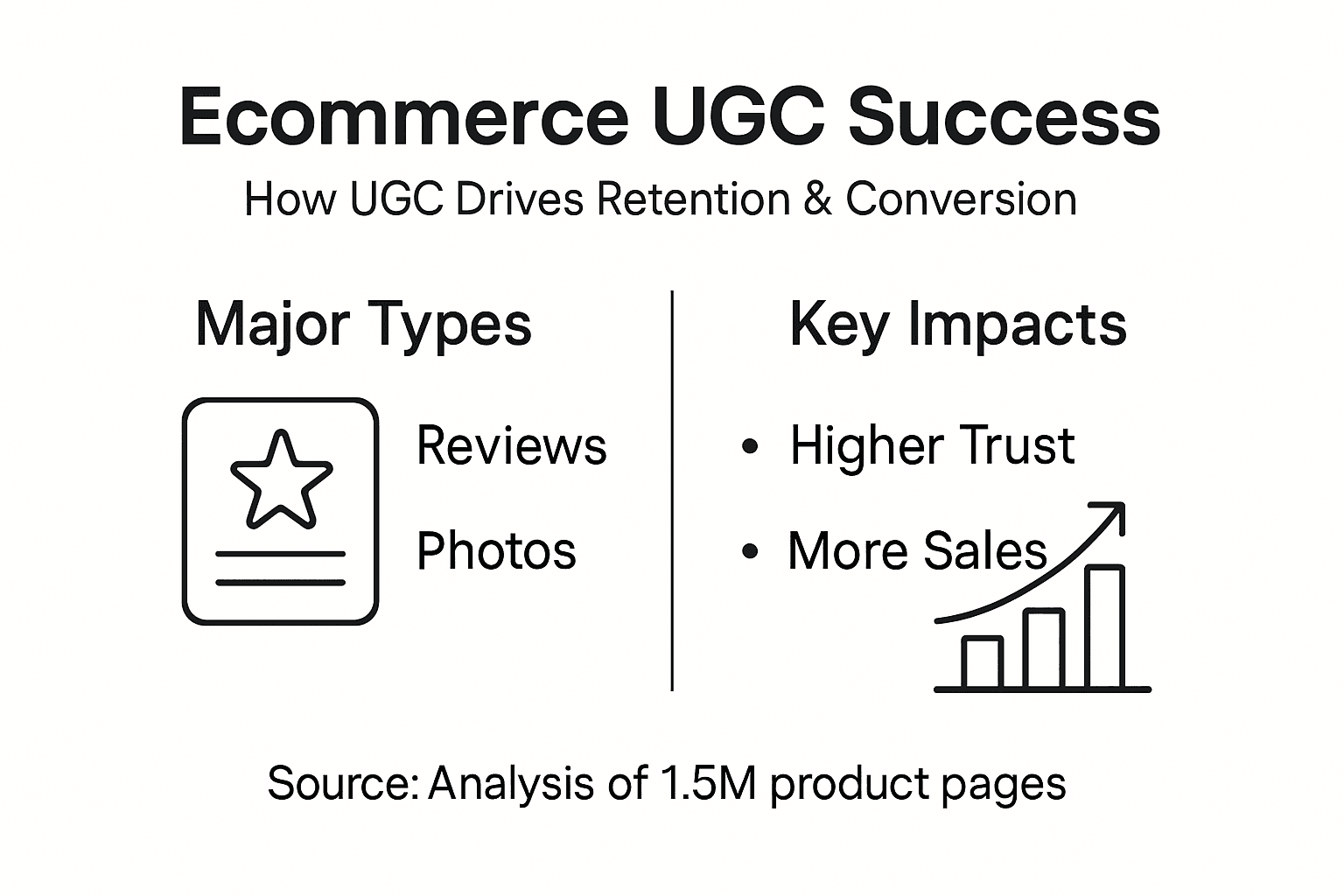
The numbers tell a compelling story. Analysis of over 1.5 million product pages reveals that UGC presence increases conversion by 3.8%, with users interacting with UGC converting over 100% higher than average. These are not marginal improvements. For a mid-sized DTC brand doing 100,000 dollars in monthly revenue, a 3.8% conversion lift translates to nearly 4,000 dollars in additional monthly sales. Customer ratings, reviews, questions, and UGC visuals drive these results consistently across product categories. The mechanism is straightforward: when a prospect sees real people using your product and sharing genuine results, they feel more confident making a purchase. That confidence compounds when combined with email sequences that nurture trust throughout the customer journey. But getting these gains requires more than simply displaying reviews. You need strategy around placement, frequency, and the specific types of UGC that resonate with different customer segments.
Placement and Visibility Matter More Than Volume
Not all UGC displays are created equal. A single high-quality customer testimonial video placed prominently in your welcome email sequence outperforms ten generic one-star reviews buried in your footer. Strategic placement means understanding where in your customer journey UGC has the most impact. At the awareness stage, video testimonials and before-and-after photos work best because they create emotional resonance. A potential customer scrolling their social feed stops when they see a transformation story. At the consideration stage, detailed written reviews and ratings answer specific product questions. At the decision stage (abandoned cart recovery), social proof stating “500+ customers give this five stars” creates urgency. Your Klaviyo flows should reflect these stages. A post-purchase sequence uses different UGC than an abandoned cart sequence. A first-time buyer email emphasizes quality assurance and safety. A loyalty email to repeat customers emphasizes exclusivity and community.
Frequency also matters significantly. Send the same testimonial to the same customer four times in two months, and engagement drops sharply. Rotate your UGC library continuously. If you have 50 customer testimonials, display different ones across your flows so that repeat customers see fresh content. This prevents fatigue while signaling that you have numerous satisfied customers. Quality supersedes quantity always. One compelling video testimonial from a real customer sharing specific results outperforms ten generic five-star reviews. When curating UGC for your email campaigns, prioritize content that includes specifics: “This product reduced my morning routine from 20 minutes to 5 minutes” beats “Great product.” Customer names, photos, and details make testimonials feel authentic and trustworthy.
Building Authenticity Through Consistent Storytelling
UGC marketing builds authenticity and engagement essential in buyer journeys, with brands discovering and curating existing UGC via social listening while incentivizing new content creation using contests and branded hashtags. This two-pronged approach ensures you always have fresh material flowing in. Social listening means actively searching Instagram, TikTok, and Twitter for mentions of your brand and products. When you find a compelling customer post, reach out and request permission to feature it in your marketing. Most customers feel honored and grant permission immediately. Simultaneously, incentivize new content creation by running monthly contests offering discount codes or free products to customers who submit photos or videos using your branded hashtag. This keeps your content library perpetually refreshed.
Consistent brand storytelling using high-quality UGC increases customer trust and conversion rates substantially. The key is aligning your UGC with your brand voice and aesthetic. If your brand positions itself as luxury and high-end, feature testimonials from customers who articulate sophisticated language and lifestyle alignment. If your brand emphasizes sustainability and values, feature testimonials from environmentally-conscious customers discussing impact. Your UGC should feel like it comes from your community, not random internet strangers. This means curation takes time, but the payoff justifies it. A customer seeing their peer use your product and describe results they care about converts at rates significantly higher than those seeing generic testimonials. Test and measure relentlessly. Which testimonials drive the highest click rates in your emails? Do video testimonials consistently outperform photos? Does featuring a customer’s name and location increase conversions more than anonymized testimonials? Use these insights to refine your library, prioritize your best performers, and eliminate content that underperforms.
Pro tip: Create a “top performers” UGC folder in your content management system and track which testimonials drive conversions above your average, then prioritize rotating these highest-converting pieces into your key automations (post-purchase, abandoned cart, loyalty) on a quarterly basis while retiring underperformers.
Risk Management and Compliance for UGC
You’re excited about UGC. Customer testimonials are flowing in, engagement is climbing, and conversions are up. Then reality hits: a customer posted a photo of your product that you didn’t authorize. Another submitted a review containing claims you can’t verify. A third shared content that could be interpreted as misleading health information. Suddenly you realize that leveraging user-generated content introduces risks you hadn’t fully considered. This is where compliance and risk management become non-negotiable. Governance, risk, and compliance frameworks are critical in managing organizational sustainability by helping organizations address operational, financial, and reputational risks including those arising from customer content while ensuring regulatory compliance and ethical standards. For ecommerce brands using Klaviyo to distribute UGC across email campaigns, understanding these risks and implementing safeguards protects both your brand and your customers.
Key Compliance Risks With UGC
The first risk category involves intellectual property and permissions. When a customer submits a photo or video, you need explicit written permission to use it in marketing. Without that permission, you expose yourself to copyright claims and potential legal liability. The solution is straightforward: build permission requests directly into your UGC collection process. When customers submit content through your website form or via branded hashtag submissions, include a checkbox requiring them to confirm they own the content and grant you rights to use it across email, social media, and marketing materials. Document everything. Store these permissions in a database tied to each piece of UGC so you can reference them if questions arise.
The second risk involves false or misleading claims. A customer testimonial claiming your skincare product “cures acne” or “reverifies collagen” creates regulatory exposure, especially if those claims violate FDA or FTC guidelines. You cannot legally include testimonials making unsubstantiated health or medical claims in your marketing materials. Review every piece of UGC before featuring it. If a customer testimonial contains language suggesting medical benefits, reach out to the customer and ask them to revise it. If they refuse, do not use it. Your legal team should provide clear guidelines on permissible language. Common risk phrases include “cures,” “treats,” “prevents,” “heals,” and similar medical terminology. Instead, encourage testimonials using language like “helped,” “supported,” or “complemented my routine.”
The third risk involves defamatory or harmful content. A customer might submit a negative review containing false accusations about your company or other customers. While reviews are protected speech to some degree, knowingly amplifying defamatory content through your marketing channels creates liability. Review all UGC before featuring it, and remove any content that contains unsubstantiated negative claims about your company, your employees, or other customers. A negative review saying “this product didn’t work for me” is legitimate. One saying “this company steals customer data” without evidence is not.
Below is a table outlining UGC risks and matching compliance actions for safer implementation:
| Risk Type | Potential Issue | Recommended Action |
|---|---|---|
| Permission | Unapproved content use | Collect explicit consent |
| False Claim | Unsubstantiated statements | Review content for accuracy |
| Defamatory Content | Reputational harm | Moderate and verify submissions |
Building a UGC Compliance Process
Implement a three-step approval process for all UGC before it appears in your Klaviyo emails. First, verify permissions. Check your permission database to confirm the customer has granted rights. Second, review claims. Does the content make any health, medical, or performance claims that could violate regulations? Third, assess appropriateness. Is the content respectful and professional? Does it align with your brand values? Does it contain language that could be interpreted as defamatory? Only content passing all three checks gets featured.
Create a compliance checklist document and share it with anyone responsible for curating UGC. The checklist should include specific questions: Do we have written permission? Does the content contain health or medical claims? Does it contain potentially false or defamatory statements? Is it respectful and on brand? Does it violate any advertising standards? Train your team on these standards so that compliance becomes habitual rather than burdensome. Document your approval process. Keep records showing who approved each piece of content, when it was approved, and which campaign it appeared in. This documentation protects you if a customer later claims their content was used without permission or if regulatory bodies question your compliance.
Consider implementing a content moderation tool that flags potential risks automatically. Some platforms can identify language suggesting medical claims or inappropriate content. While no tool is perfect, these solutions can catch obvious issues before human review, speeding up your approval process while maintaining quality control.
Pro tip: Create a template permission form as a Google Form or Typeform that customers fill out when submitting UGC, capturing their name, email, content submission, explicit permission to use across all marketing channels, and confirmation that content is original and doesn’t violate anyone else’s rights, then store responses in a spreadsheet tied to your content management system for easy reference during approval workflows.
Unlock the Power of UGC with Expert Email Automation
The challenge with UGC digital marketing lies in harnessing authentic customer voices while maintaining control and compliance across your ecommerce email flows. You want to boost retention with real testimonials, photos, and videos that reduce buyer hesitation and drive repeat purchases, yet managing these assets manually can slow growth and create risk. The key insight from the article is that strategic automation using platforms like Klaviyo transforms UGC from scattered content into a powerful, personalized retention engine.
Take Action specializes in helping ecommerce brands turn this vision into reality by combining deep Klaviyo expertise with data-driven automations tailored to your unique products and customers. We help you segment audiences, integrate customer-generated content seamlessly into flows like abandoned cart and post-purchase emails, and maintain compliance to protect your brand. Empower your retention strategy with UGC that speaks authentically and converts reliably.
Ready to stop letting your valuable UGC slip through the cracks and instead use it to build trust and loyalty at scale? Visit Take Action today to learn how our campaign strategy and email automation services can increase your open and conversion rates while automating your customer retention processes. Don’t miss out on turning your email channel into a primary growth driver fueled by genuine customer stories and powerful Klaviyo automations.
Frequently Asked Questions
What is user-generated content (UGC) in digital marketing?
User-generated content (UGC) in digital marketing refers to content created by customers about a brand’s products or services, including reviews, photos, videos, and social media posts. It helps foster authentic connections between brands and consumers, greatly influencing purchasing decisions.
How can I effectively collect UGC from my customers?
You can effectively collect UGC by making it easy for customers to share content. Consider incentivizing submissions with discounts or using a unique hashtag. Encourage customers to tag your brand in their social media posts, and implement a simple submission process for photos and reviews directly on your website.
What are the best types of UGC to use for increasing conversions?
The most effective types of UGC for increasing conversions include customer reviews, testimonial videos, user-submitted photos, and social media posts. Reviews build trust, while photos and videos provide visual proof of product effectiveness, creating a compelling case for potential buyers.
How can UGC enhance email marketing campaigns?
Integrating UGC into email marketing campaigns can enhance engagement and conversion rates. By featuring customer reviews, photos, and testimonials in your emails, you increase authenticity and build trust, making potential customers more likely to convert when they see real experiences from others.
Recommended
- Customer Retention: Key Driver of Ecommerce Growth | Take Action Blog | Take Action
- UGC Influencer Marketing: Driving Email Retention | Take Action Blog | Take Action
- What is Retargeting? Understanding Its Impact on Sales | Take Action Blog | Take Action
- Content Creation Agencies: Driving Retention Growth | Take Action Blog | Take Action