

Value Proposition Explained: Boosting Ecommerce Growth
Most American shoppers encounter hundreds of online brands every week, yet only a select few stand out with a message that truly connects. In a crowded digital marketplace, understanding what makes an ecommerce brand memorable and trustworthy is more crucial than ever. By exploring the building blocks of a powerful value proposition, you will discover practical strategies that help your store spark interest and inspire genuine loyalty among discerning customers.
Table of Contents
- Defining Value Proposition For Ecommerce Brands
- Types Of Value Propositions In Online Retail
- Crafting High-Impact Value Propositions With Email
- Key Characteristics That Engage And Convert
- Common Pitfalls And How To Avoid Them
Key Takeaways
| Point | Details |
|---|---|
| Value Proposition Importance | A clear and compelling value proposition is essential for ecommerce brands to distinguish themselves in a crowded market and attract customers. |
| Types of Value Propositions | Ecommerce brands can utilize various types of value propositions, including product-based, experience-based, price-driven, and convenience propositions, to meet customer needs effectively. |
| Email Marketing Strategies | Strategic email marketing can effectively communicate a brand’s unique value proposition by crafting tailored messages for specific audience segments. |
| Common Pitfalls | Brands should be cautious about miscommunication and lack of differentiation in their messaging, which can weaken their value propositions and hinder customer trust. |
Defining Value Proposition for Ecommerce Brands
A value proposition represents the foundational promise an ecommerce brand makes to its potential customers. At its core, it articulates why consumers should choose your online store over countless competitors. Understanding brand positioning strategies becomes crucial in developing a compelling narrative that resonates with your target audience.
Traditionally, a value proposition encompasses the unique benefits and solutions your brand delivers, going far beyond simple product descriptions. According to research on business models, the concept emphasizes creating products customers genuinely desire by deeply understanding their underlying needs and expectations. Successful ecommerce brands transform this understanding into a clear, concise statement that communicates their distinctive market advantage.
Crafting an effective value proposition requires strategic thinking. Key elements typically include:
- A clear articulation of the specific problem your product solves
- Unique benefits that differentiate your offering
- Tangible outcomes customers can expect
- Evidence or proof points that validate your claims
By developing a razor-sharp value proposition, ecommerce brands can cut through digital noise, capture consumer attention, and drive meaningful engagement that transforms casual browsers into loyal customers.
Types of Value Propositions in Online Retail
Ecommerce brands can leverage multiple value proposition types to differentiate themselves in a competitive digital marketplace. Increasing online sales requires understanding how different value propositions can attract and retain customers effectively.
Research reveals that digital value propositions in online retail can be categorized into multiple strategic approaches, each targeting specific customer needs and expectations. These digital strategies typically encompass nine core types, including personalized experiences, convenience, security, and innovative service delivery.
Key types of value propositions in online retail include:
-
Product-Based Propositions
- Exclusive or unique product offerings
- Highest quality merchandise
- Limited edition or rare items
-
Experience-Based Propositions
- Seamless user interface
- Personalized shopping recommendations
- Exceptional customer service
-
Price-Driven Propositions
- Competitive pricing
- Frequent discounts
- Price matching guarantees
-
Convenience Propositions
- Fast shipping options
- Easy returns
- Multiple payment methods
Successful online retailers understand that a unique selling proposition goes beyond mere product description. It communicates a distinct benefit that emotionally connects with customers, transforming a simple transaction into a memorable brand experience.

Crafting High-Impact Value Propositions with Email
Email marketing offers a powerful channel for communicating your brand’s unique value proposition directly to potential customers. Email campaign best practices demonstrate that strategic messaging can transform standard communications into compelling conversion opportunities.
Research highlights that effective value propositions in email marketing require crystal-clear communication of unique benefits tailored to specific customer needs. This means moving beyond generic descriptions to craft messages that explicitly demonstrate how your product or service solves a precise customer problem better than any alternative.
Key strategies for developing high-impact email value propositions include:
-
Segmentation Techniques
- Divide email lists by customer personas
- Customize messaging for different audience segments
- Align value proposition with specific customer pain points
-
Compelling Content Elements
- Use clear, concise language
- Highlight specific benefits
- Include quantifiable outcomes
- Incorporate social proof
-
Structural Optimization
- Create attention-grabbing subject lines
- Place core value proposition in first paragraph
- Use visual hierarchy to emphasize key messages
Successful brands understand that a customer value proposition is more than marketing copy. It’s a strategic communication that builds trust, demonstrates understanding, and convinces potential customers that your solution is precisely what they need.
Key Characteristics That Engage and Convert
Engaging and converting customers requires a strategic approach that goes beyond simple marketing tactics. How to increase conversions depends on understanding the psychological triggers that motivate customer decision-making.
Research reveals that brand equity plays a critical role in customer engagement, with successful brands commanding higher customer loyalty and the ability to justify premium pricing. The most compelling value propositions tap into deeper emotional and rational needs, creating a connection that transcends transactional interactions.
Key characteristics that drive engagement and conversion include:
-
Emotional Resonance
- Tell a compelling brand story
- Connect with customer aspirations
- Demonstrate genuine understanding of customer challenges
-
Credibility Signals
- Showcase customer testimonials
- Provide transparent performance data
- Highlight unique expertise or innovations
-
Value Communication
- Clearly articulate unique benefits
- Quantify potential customer gains
- Address specific pain points directly
The Business Model Canvas framework emphasizes that successful engagement requires a holistic approach. Brands must align their value propositions with customer relationships, channels, and core value delivery mechanisms to create a seamless and compelling customer experience that naturally drives conversions.
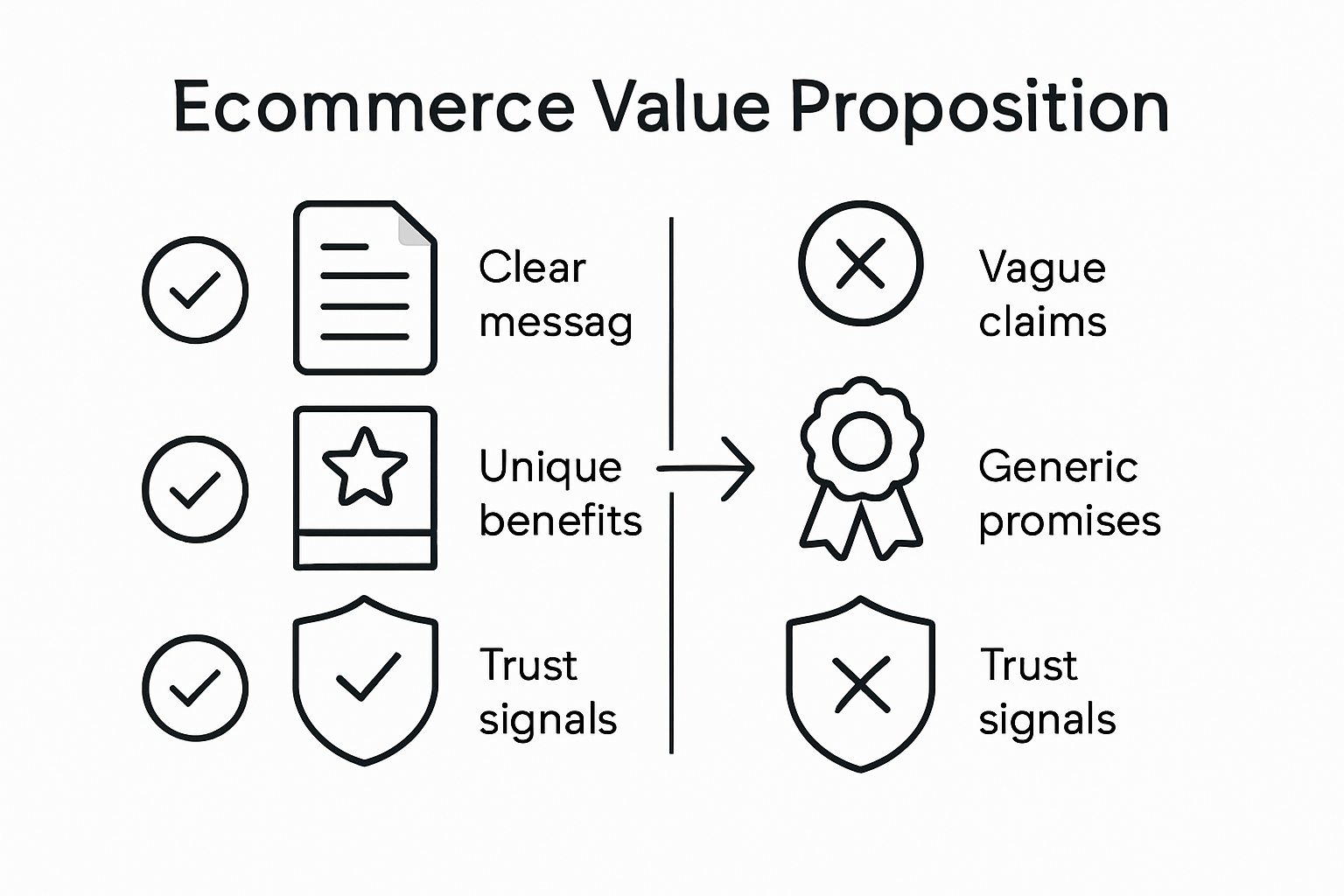
Common Pitfalls and How to Avoid Them
Developing a compelling value proposition requires navigating complex strategic challenges that can derail even the most well-intentioned marketing efforts. Marketing psychology insights reveal that understanding potential missteps is crucial for crafting persuasive brand narratives.
Research highlights that neglecting diverse stakeholder perspectives can lead to critically flawed value propositions. Many brands make the fundamental mistake of creating narrow, internally focused messaging that fails to address the multifaceted needs and expectations of their target audience. This myopic approach results in disconnected communication that fails to resonate with potential customers.
Common value proposition pitfalls include:
-
Strategic Misconceptions
- Overemphasizing product features
- Ignoring customer emotional needs
- Lacking clear differentiation
-
Communication Errors
- Using generic, interchangeable language
- Complex or vague messaging
- Failing to articulate unique benefits
-
Trust and Credibility Issues
- Making unrealistic promises
- Inconsistent brand messaging
- Neglecting transparency
Addressing consumer privacy concerns becomes paramount, as implementing transparent data practices can significantly enhance customer trust. Successful brands recognize that value propositions must balance compelling storytelling with genuine commitment to customer needs, creating a holistic approach that transforms potential skepticism into authentic engagement.
Unlock the Full Potential of Your Ecommerce Value Proposition with Expert Email Marketing
The article highlights the challenge ecommerce brands face in clearly defining and communicating a compelling value proposition that truly resonates with customers and drives growth. Many brands struggle to connect emotionally with their audience or to differentiate themselves in a saturated market. You want to overcome pain points such as low engagement, abandoned carts, and missed retention opportunities by crafting strategic messaging that delivers unique benefits and builds trust.
At Take Action, we specialize in transforming your brand’s specific value propositions into personalized, data-driven email campaigns that convert browsers into loyal customers. With expertise in automation, segmentation, and email campaign best practices, we ensure your messaging cuts through digital noise while aligning perfectly with your brand voice and customer expectations. Whether you need help with email flow setup like welcome sequences or abandoned cart automation, our solutions focus on boosting open rates, recovering lost sales, and increasing lifetime value for scalable growth.
Start turning your unique ecommerce advantages into measurable revenue today.
Ready to transform your ecommerce growth with a value proposition that truly converts

Discover how our tailored email marketing services can automatically engage and retain your customers while driving sales beyond paid ads. Visit Take Action now and take the next step toward sustained ecommerce success.
Frequently Asked Questions
What is a value proposition in ecommerce?
A value proposition in ecommerce is a clear statement that explains how a product or service solves a problem, the unique benefits it offers, and why customers should choose your brand over competitors.
How can I create a compelling value proposition for my online store?
To create a compelling value proposition, identify the specific problems your product addresses, highlight unique benefits, outline the expected outcomes, and provide evidence to support your claims.
What are the different types of value propositions for online retailers?
Types of value propositions in online retail include product-based propositions, experience-based propositions, price-driven propositions, and convenience propositions, each catering to different customer needs.
How can email marketing enhance my value proposition?
Email marketing can enhance your value proposition by delivering tailored messages that clearly communicate unique benefits, resonate with specific customer segments, and create a sense of urgency for potential buyers.
Recommended
- 7 Must-Read Business Book Recommendations for Ecommerce Growth | Take Action Blog | Take Action
- 7 Essential Ecommerce Marketing Strategies for Growth | Take Action Blog | Take Action
- 7 Best Blog Post Formats for Ecommerce Success | Take Action Blog | Take Action
- What Is Social Proof? Complete Guide for Ecommerce Brands | Take Action Blog | Take Action
- Γιατί να ψωνίσω online ρούχα: Πλήρης οδηγός - Judah Club