

Video Marketing for Ecommerce: Boost Sales with Proven Tactics
Over 90 percent of american shoppers say video has influenced their buying decisions, making it a critical tool for ecommerce brands. With so many platforms and video formats available, setting clear objectives can be the difference between generating sales and getting lost in the noise. This guide offers actionable steps to help you transform video viewers into loyal customers while aligning your marketing strategy with real business growth.
Table of Contents
- Step 1: Define Video Objectives Aligned With Ecommerce Goals
- Step 2: Select Video Types For Your Products And Audience
- Step 3: Integrate Videos Into Email And Onsite Marketing
- Step 4: Set Up Automation And Segmentation For Video Delivery
- Step 5: Track Performance And Optimize Video Campaigns
Quick Summary
| Key Insight | Explanation |
|---|---|
| 1. Define clear video objectives | Align your video goals with specific ecommerce outcomes like increasing conversions or reducing cart abandonment. |
| 2. Choose appropriate video types | Match the video format to your products and audience preferences to maximize engagement. |
| 3. Integrate videos into marketing | Use video thumbnails in emails and strategically place videos on your website to enhance user experience. |
| 4. Utilize automation for personalization | Segment customers and use automation to deliver tailored video content based on behavior. |
| 5. Track and optimize video performance | Measure key metrics and continuously refine your video strategies to boost effectiveness and revenue. |
Step 1: Define video objectives aligned with ecommerce goals
Creating successful video marketing strategies for ecommerce requires strategic goal alignment that transforms viewers into customers. According to research from arXiv, multimodal advertising videos must intentionally convey product messages that directly support your core business objectives.
Start by clearly identifying what specific outcomes you want to achieve. Are you aiming to increase product awareness, drive website traffic, reduce cart abandonment, or boost conversions? Each video should have a precise, measurable goal that connects directly to your sales funnel. For instance, an unboxing video might target reducing purchase hesitation, while a customer testimonial could focus on building trust and social proof.
When defining your objectives, leverage insights from user interactions. arXiv research demonstrates that platforms like TikTok and YouTube offer rich opportunities to extract consumer feedback and understand viewer preferences. Track metrics like view duration, engagement rates, and click through percentages to validate whether your videos successfully align with your intended ecommerce goals.
Pro tip: Always map your video objectives back to specific, quantifiable key performance indicators (KPIs) that you can measure and optimize. This ensures your video marketing efforts remain laser focused on driving tangible business results.
Step 2: Select video types for your products and audience
Choosing the right video type is crucial for capturing your audience’s attention and effectively showcasing your products. According to research from Kamaraj College, ecommerce brands can leverage multiple video formats to engage potential customers.
Start by matching video styles with your product characteristics and target audience preferences. Elastic Path suggests several powerful video types that can drive sales. For physical products, demonstration videos work exceptionally well, showing real world functionality. Complex or technical items benefit from detailed walkthrough videos, while lifestyle products shine in narrative driven content that illustrates how they fit into customers’ lives.
Consider diversifying your video portfolio to maintain audience interest. Animation can simplify complex product explanations, while customer testimonial videos build social proof. Unboxing videos create excitement, and behind the scenes content humanizes your brand. Interactive augmented reality videos can provide immersive product experiences that traditional marketing cannot match.
Pro tip: Always prioritize video quality and authenticity. Viewers are more likely to engage with content that feels genuine and provides clear value about your product or service.
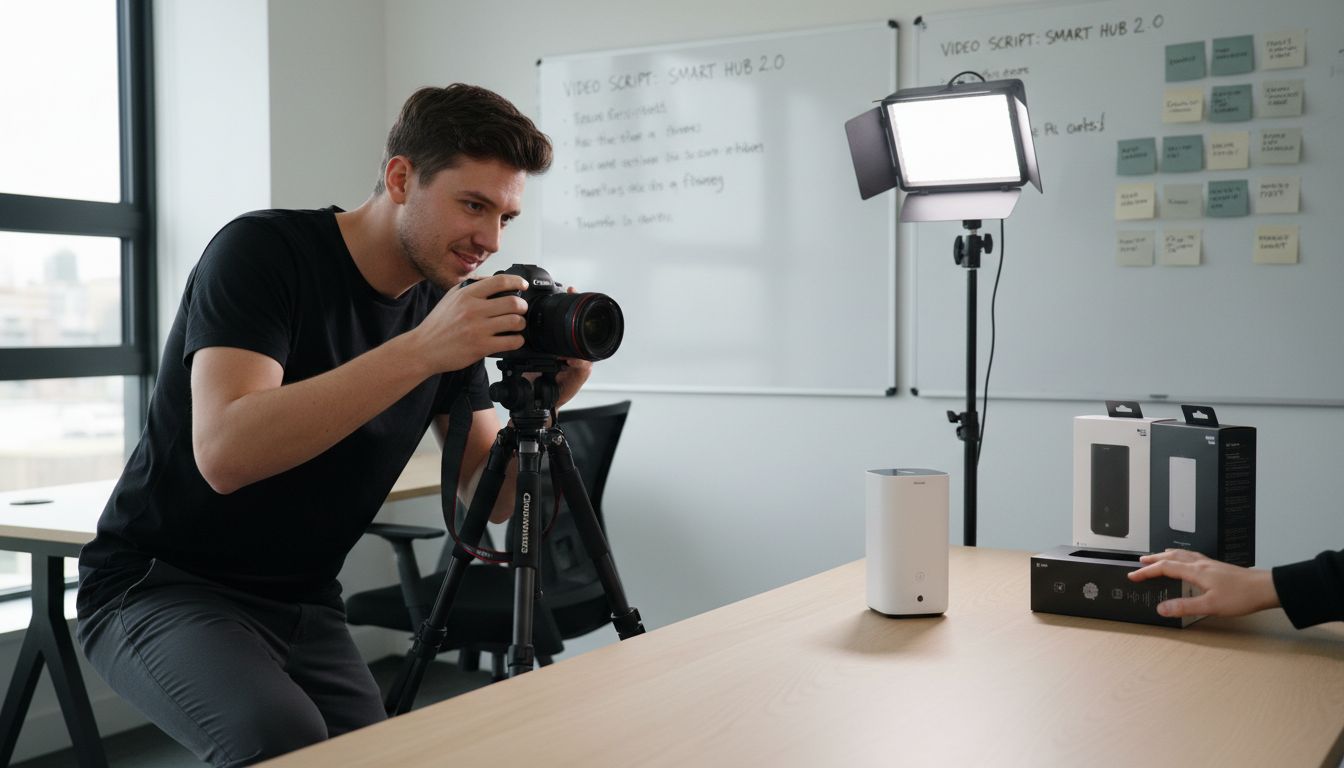
Step 3: Integrate videos into email and onsite marketing
Successfully incorporating video content across your digital marketing channels can dramatically transform customer engagement and conversion rates. Lumen5 highlights innovative strategies for seamlessly blending video content into your email and website marketing efforts.
In email campaigns, prioritize video thumbnails that entice subscribers to click. Create compelling preview images with clear product visuals or intriguing moments from your video content. Most email clients support video thumbnail links that redirect recipients to full video content on your website or landing pages. This approach not only increases email engagement but also drives traffic to your primary conversion channels.
For onsite marketing, strategically place videos throughout your customer journey. Product pages benefit from demonstration videos that showcase item features and usage. Homepage hero sections can feature brand story videos that quickly communicate your value proposition. Consider embedding short testimonial clips in customer review sections to provide social proof and build trust. Interactive product videos that allow zoom or 360degree views can significantly reduce purchase hesitation and provide customers with immersive shopping experiences.
Pro tip: Always ensure your video files are optimized for fast loading and mobile responsiveness. Slow loading videos can frustrate potential customers and negatively impact your conversion rates.
Step 4: Set up automation and segmentation for video delivery
Advanced video marketing requires sophisticated automation and targeted segmentation strategies that deliver personalized content experiences. arXiv research highlights the potential of data driven approaches for extracting and analyzing user interactions across platforms like TikTok and YouTube.
Start by creating customer segments based on specific behavioral attributes. Group viewers by purchase history, engagement levels, and content preferences. Use marketing automation tools to dynamically route different video content to each segment. For instance, new customers might receive introductory product videos, while repeat buyers could get advanced feature demonstrations or exclusive behind the scenes content. arXiv research suggests developing product oriented video frameworks that enable precise content captioning and targeted delivery.
Implement trigger based automation workflows that respond to specific customer actions. When a customer views a particular product category, automatically send follow up videos showcasing related items or customer testimonials. Configure your email marketing platform to track video view duration and engagement metrics, allowing you to continuously refine your segmentation and content strategies.
Pro tip: Always maintain a clean and updated customer database. Regularly audit your segmentation criteria to ensure your automated video delivery remains relevant and responsive to changing customer behaviors.
Step 5: Track performance and optimize video campaigns
Measuring and improving video campaign performance requires a strategic approach to analytics and continuous refinement. arXiv research highlights the importance of developing a multimodal benchmark for understanding advertisement video effectiveness across different customer segments.
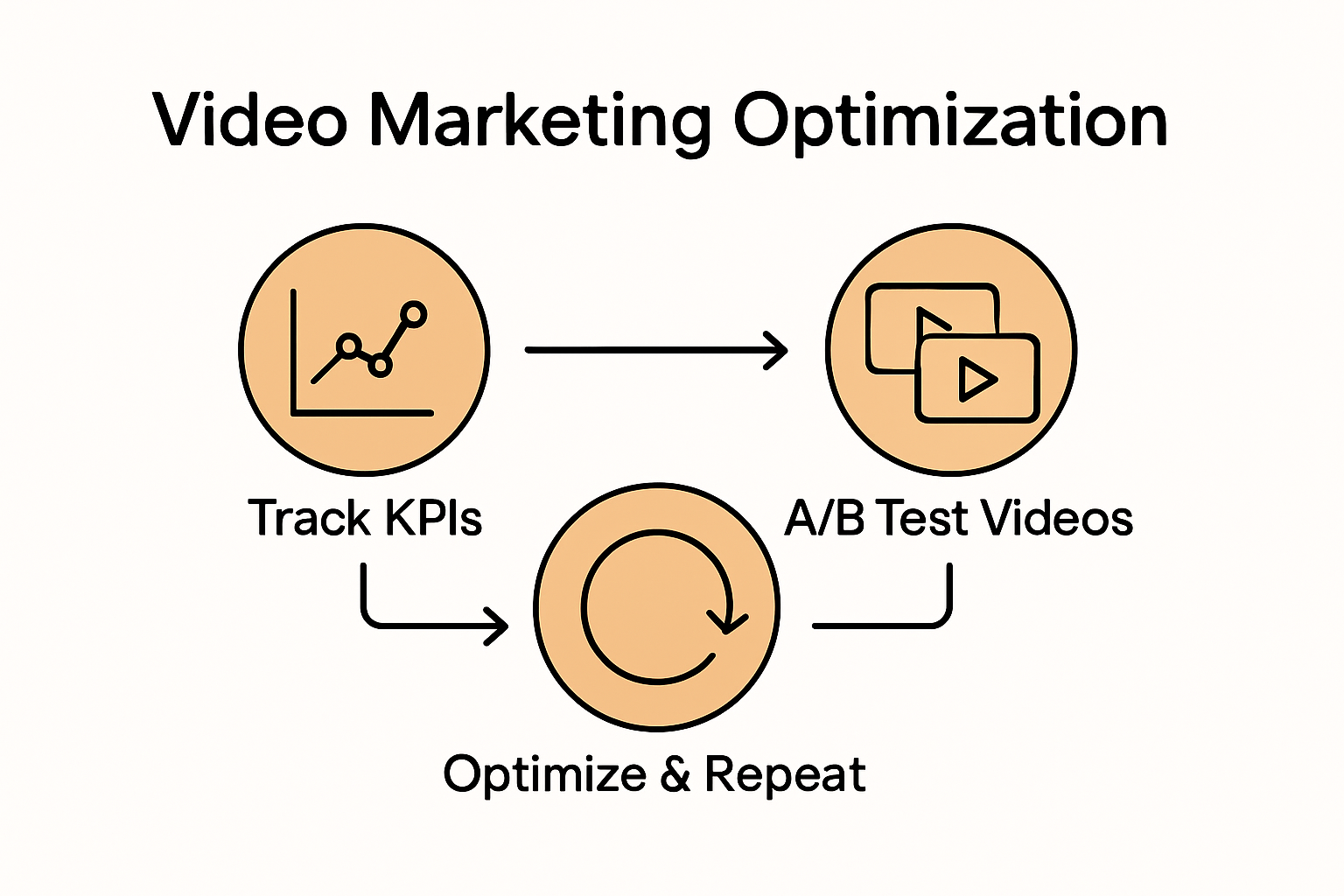
Focus on key performance indicators that directly impact your ecommerce goals. Track metrics like view duration, click through rates, conversion rates, and revenue generated from video content. Pay special attention to viewer drop off points and engagement levels. arXiv suggests leveraging advanced techniques like sound effect detection to identify key moments that capture and maintain viewer attention. Use A/B testing to experiment with different video lengths, styles, and content formats to discover what resonates most with your audience.
Implement a continuous optimization cycle where you regularly review video performance data. Create detailed reports that compare video content across different customer segments, product lines, and marketing channels. Adjust your video strategy based on these insights removing underperforming content and scaling successful video formats. Integrate your video analytics with your overall marketing dashboard to get a comprehensive view of how video content contributes to your sales funnel.
Pro tip: Dont just collect data collect actionable insights. The goal is to transform performance metrics into strategic improvements that directly drive your ecommerce revenue.
Turn Your Ecommerce Video Strategy Into Revenue Growth
Struggling to connect your ecommerce videos with measurable sales results is common. This article highlights key challenges like aligning video objectives with ecommerce goals, selecting the right video types, and integrating video content into email and onsite marketing. If you want to reduce cart abandonment, boost conversions, and personalize content delivery using data-driven automation and segmentation, adding sophisticated email marketing is essential. Combining your video efforts with expert email flows such as abandoned cart reminders and targeted campaigns ensures every viewer engagement drives revenue.
Take Action specializes in turning your video marketing momentum into a scalable email growth engine. By leveraging Klaviyo-powered automation and strategic segmentation, we help ecommerce brands deliver personalized video content through email to keep customers engaged and encourage repeat purchases. Ready to transform your video marketing strategy into measurable ecommerce growth? Discover how our email marketing and retention solutions can elevate your campaigns. Start today to recover more carts, increase click rates, and automate customer journeys that multiply your revenue.
Frequently Asked Questions
What are the key objectives I should focus on for video marketing in ecommerce?
To create effective video marketing strategies, start by defining specific objectives like increasing product awareness or boosting conversions. Aim for measurable outcomes that align with your sales funnel, such as targeting a 10% increase in website traffic within the next quarter.
How can I choose the right video types for my ecommerce audience?
Select video types based on your product characteristics and target audience preferences. For instance, use demonstration videos for physical products and lifestyle content for items that fit into everyday life. Test different formats and gather feedback to see which resonates best.
How do I integrate video into my email marketing campaigns?
Incorporate video by using enticing video thumbnails in your email campaigns to encourage clicks. Ensure that these thumbnails link to full video content on your website, aiming for a 20% increase in email engagement within a few months by doing so.
What strategies can I use for video automation and segmentation in ecommerce?
Implement customer segments based on behavior to deliver personalized video content automatically. For example, send introductory videos to new customers and advanced content to repeat buyers. Monitor engagement metrics to refine your segmentation efforts periodically.
How can I measure the success of my video marketing campaigns?
Track key performance indicators such as view duration, click-through rates, and conversion rates to assess the effectiveness of your video content. Regularly analyze these metrics to identify drop-off points and optimize your strategy for improved sales results over time.
What actionable steps should I take to optimize my video marketing?
Establish a continuous optimization cycle by reviewing performance data regularly. Focus on A/B testing different video styles and lengths to find what works best, and aim to eliminate underperforming content while scaling successful formats.
Recommended
- 7 Essential Ecommerce Marketing Strategies for Growth | Take Action Blog | Take Action
- Complete Guide to SEO for Ecommerce Stores | Take Action Blog | Take Action
- What Is Social Proof? Complete Guide for Ecommerce Brands | Take Action Blog | Take Action
- Complete Guide to Improving Online Visibility | Take Action Blog | Take Action
- 7 Essential Types of Marketing Strategies for Business Growth - Jarrod Harman
- Consejos para posicionar tu tienda online: SEO para ecommerce | RPG Digital