

What Is a Landing Page and Why It Fuels Growth
More than half of American ecommerce shoppers abandon websites that feel cluttered or confusing before taking action. For marketing managers focused on direct-to-consumer success, optimizing landing pages is not just about good design—it is a direct pathway to higher email signups and revenue. This guide offers proven strategies to fine-tune your landing pages for better conversion rates, showing how Klaviyo automation can help create seamless, personalized experiences that American and global customers trust.
Table of Contents
- Defining Landing Pages for Ecommerce Success
- Types of Landing Pages and Their Purposes
- Core Elements That Drive Conversions
- Common Landing Page Mistakes to Avoid
- Optimizing Landing Pages Using Klaviyo
Key Takeaways
| Point | Details |
|---|---|
| Importance of Landing Pages | Landing pages are essential for converting visitors into customers by focusing on specific user actions and removing distractions. |
| Types of Landing Pages | Different landing page types target various stages of the customer journey, including click-through, lead capture, and product pages. |
| Key Elements for Success | Effective landing pages feature compelling headlines, trust signals, minimal form fields, and are optimized for mobile to enhance conversions. |
| Common Mistakes | Avoid cluttered designs, slow load times, and misaligned messaging to improve user engagement and decrease bounce rates. |
Defining Landing Pages for Ecommerce Success
In the dynamic world of online retail, landing pages represent strategic digital destinations designed to convert visitors into customers. Unlike traditional homepages with multiple navigation options, these focused web pages are engineered with a singular purpose: driving specific user actions such as product purchases or email sign-ups. Targeted landing pages act as precision instruments that dramatically improve conversion rates by eliminating distractions and presenting a clear, compelling value proposition.
Ecommerce landing pages function as sophisticated sales funnels, strategically curating product experiences that speak directly to potential buyers. They leverage psychological triggers like urgency, social proof, and personalized recommendations to guide visitors toward making a purchase. By removing complex navigation and concentrating on a singular goal, these pages transform casual browser traffic into measurable revenue opportunities. The most effective landing pages understand their audience’s specific pain points and present solutions with crystal-clear messaging and visually engaging design.
The core components of high-performing ecommerce landing pages typically include targeted headlines, compelling product imagery, concise benefit descriptions, transparent pricing, trust signals like customer reviews, and prominent call-to-action buttons. Each element works in concert to reduce friction in the buying process and increase the likelihood of conversion. By aligning landing page design with specific marketing campaigns and audience segments, brands can create hyper-relevant experiences that feel tailored to individual customer needs.
Pro tip: Implement A/B testing on your landing pages to systematically improve conversion rates by experimenting with different headlines, images, and call-to-action placements.
Types of Landing Pages and Their Purposes
Landing pages are strategically crafted digital experiences designed to serve specific marketing objectives at different stages of the customer journey. Marketers leverage diverse landing page types that correspond to precise conversion goals, transforming website visitors into engaged prospects or direct customers. These specialized pages are not one-size-fits-all solutions but carefully tailored experiences that align with unique business needs and customer intentions.
The primary categories of landing pages include click-through pages, which provide context and warm up potential customers before a primary conversion action, lead capture pages focused on collecting user contact information, and product landing pages that showcase specific offerings with compelling details. Each type serves a distinct purpose within the marketing funnel: top-of-funnel pages generate awareness and interest, middle-funnel pages nurture leads, and bottom-funnel pages drive direct sales. By understanding these variations, ecommerce brands can create hyper-targeted experiences that speak directly to customer motivations and reduce friction in the buying process.
Successful landing pages incorporate strategic elements tailored to their specific purpose. Click-through pages might include detailed product descriptions and benefit-driven narratives, while lead capture pages emphasize value propositions and minimal form fields to encourage submission. Product landing pages typically feature high-quality imagery, customer testimonials, clear pricing information, and prominent call-to-action buttons. The most effective landing pages demonstrate an intimate understanding of their target audience’s needs, presenting solutions with clarity, urgency, and emotional resonance.
Here’s a comparison of major ecommerce landing page types and their best use cases:
| Landing Page Type | Primary Purpose | Conversion Goals |
|---|---|---|
| Click-Through | Warm up visitors | Move to product or sign-up page |
| Lead Capture | Collect contact information | Build email or SMS lists |
| Product Landing Page | Display a specific offering | Drive immediate sales |
Pro tip: Map your landing page types directly to specific customer journey stages and continuously track conversion rates to refine your targeting and messaging strategies.
Core Elements That Drive Conversions
Landing page conversion is an intricate science that blends psychological understanding with strategic design. High-performing landing pages incorporate precise elements that systematically guide visitors toward taking desired actions. The most successful pages transform casual browsers into committed customers by creating an intuitive, compelling digital experience that speaks directly to user needs and motivations.

Critical conversion drivers include compelling headlines that immediately capture attention, persuasive subheadings that elaborate on the core value proposition, and benefit-focused content that clearly articulates what customers will gain. Visual elements play a crucial role, with high-quality imagery, engaging graphics, and strategic use of white space directing user focus. Trust signals such as customer testimonials, security badges, and social proof elements work silently in the background to reduce purchase anxiety and increase visitor confidence in the offering.
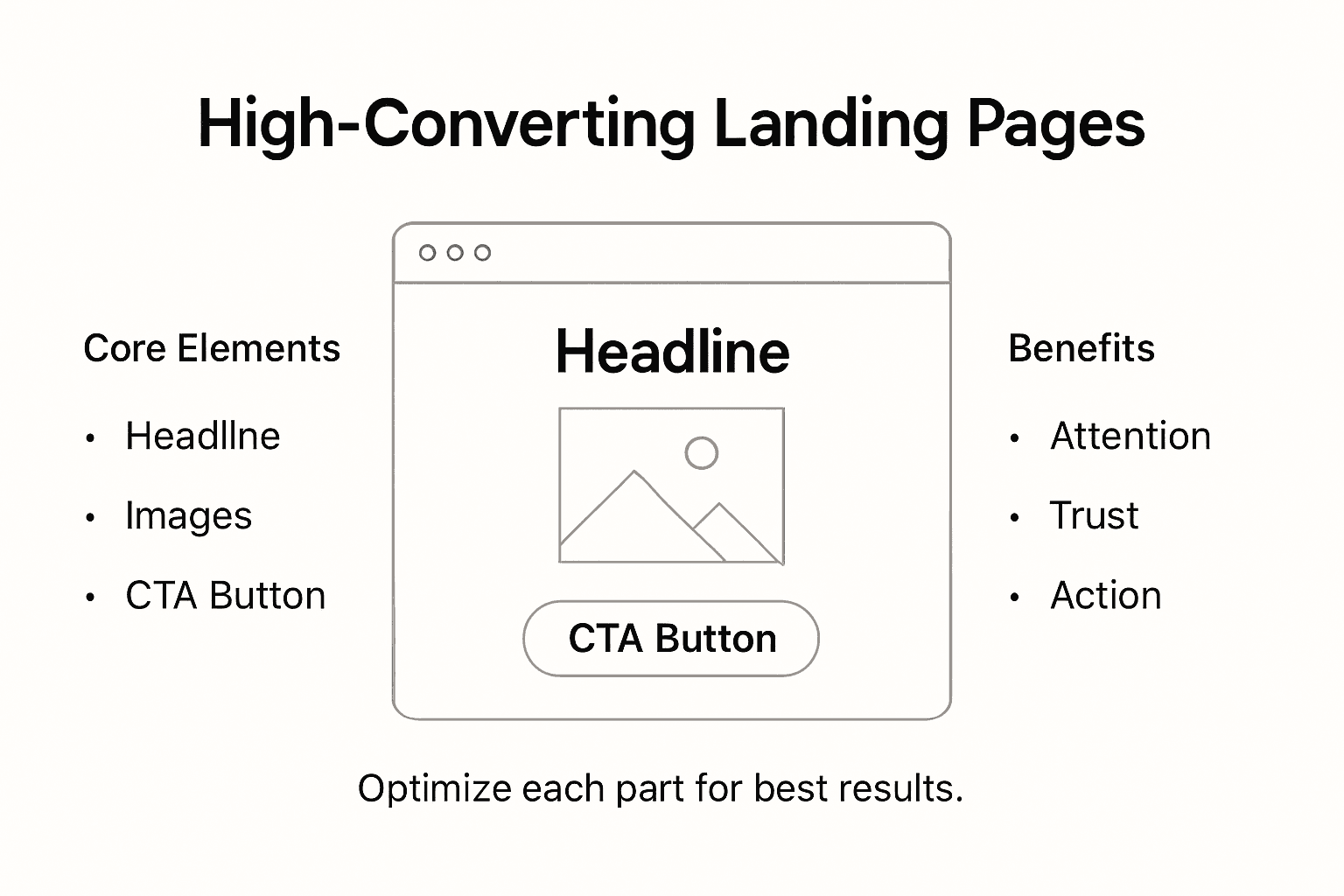
The most impactful landing pages meticulously optimize their conversion funnel through strategic design choices. This includes creating prominent, visually distinct call-to-action buttons, minimizing form fields to reduce friction, ensuring mobile responsiveness, and maintaining consistent messaging that aligns with the originating ad or marketing campaign. Psychological principles like scarcity, urgency, and social validation are subtly woven into the page design, nudging visitors toward making a decisive action. By understanding user intent and crafting an experience that feels personalized and low-risk, brands can dramatically improve their conversion performance.
Below is a summary of high-impact elements for effective ecommerce landing pages and their business benefits:
| Element | Business Benefit | Example Impact |
|---|---|---|
| Prominent Headlines | Grab visitor attention | Improve engagement rates |
| Customer Testimonials | Build trust and reduce buyer hesitation | Lower abandonment |
| Minimal Form Fields | Reduce friction for users | Increase lead submissions |
| Mobile Optimization | Reach customers on any device | Boost conversions on mobile |
Pro tip: Implement heat mapping and user recording tools to gain granular insights into how visitors interact with your landing page and identify potential conversion barriers.
Common Landing Page Mistakes to Avoid
Successful landing pages require precision and strategic design, but many marketers unknowingly sabotage their conversion potential through common critical errors. Landing page performance can be dramatically undermined by seemingly minor design and content mistakes that create significant barriers to user engagement and conversion. Understanding these potential pitfalls is the first step toward creating more effective, user-friendly digital experiences that transform visitors into customers.
One of the most prevalent mistakes is visual complexity that overwhelms visitors. Cluttered layouts with multiple competing elements, excessive text, and unclear navigation paths can quickly drive potential customers away. Effective landing pages demand ruthless simplicity, focusing on a single, clear value proposition with strategically placed visual cues that guide users toward the desired action. This means eliminating unnecessary navigation menus, streamlining form fields, and using white space purposefully to direct attention to key conversion elements like call-to-action buttons and critical messaging.
Technical performance issues represent another significant conversion killer. Slow page load times, poor mobile responsiveness, and inconsistent messaging across devices can destroy user trust and interrupt the conversion journey. Successful landing pages must deliver a seamless, fast experience across all devices, with load times under three seconds and design that adapts flawlessly to different screen sizes. Moreover, misalignment between ad promises and landing page content creates immediate user friction, leading to high bounce rates. Each landing page must precisely match the expectations set by preceding marketing materials, maintaining a consistent tone, visual style, and value proposition that reassures visitors they are exactly where they intended to go.
Pro tip: Conduct regular user testing and utilize heat mapping tools to identify specific user interaction points where potential customers might be experiencing friction or losing interest.
Optimizing Landing Pages Using Klaviyo
Klaviyo offers ecommerce brands a powerful toolkit for creating sophisticated, data-driven landing pages that transform visitor interactions into measurable revenue opportunities. Integrated landing page solutions enable precise marketing personalization by leveraging comprehensive customer data and behavioral insights. The platform’s unique strength lies in its ability to synchronize landing page experiences with existing email marketing strategies, creating a seamless conversion ecosystem that adapts dynamically to individual user preferences.
The core optimization strategy within Klaviyo involves leveraging advanced segmentation and automation capabilities. Marketers can design landing pages that dynamically adjust content based on specific customer attributes like purchase history, browsing behavior, and engagement levels. This means a returning customer might see a completely different landing page experience compared to a first-time visitor, with tailored messaging, product recommendations, and calls-to-action that increase the probability of conversion. Critical elements such as personalized headlines, contextually relevant imagery, and strategically positioned form fields become powerful tools for creating hyper-targeted digital experiences.
Successful Klaviyo landing page optimization requires a holistic approach that combines technical precision with creative storytelling. This involves implementing robust tracking mechanisms, creating modular page designs that can be quickly tested and iterated, and ensuring mobile responsiveness across all device types. Marketers should focus on minimizing friction points, using clear and compelling value propositions, and creating intuitive user pathways that guide visitors toward desired conversion actions. By integrating social proof elements, implementing progressive profiling techniques, and maintaining consistent branding across touchpoints, brands can develop landing pages that not only attract attention but systematically convert interested prospects into loyal customers.
Pro tip: Utilize Klaviyo’s native A/B testing features to experiment with different landing page variants and automatically allocate traffic to the highest-performing design.
Transform Your Landing Pages Into Growth Engines
The article highlights the critical role that focused landing pages play in converting visitors into loyal customers by offering clear value and minimizing distractions. Many ecommerce brands struggle with creating optimized pages that speak directly to customer needs while integrating seamless experiences. If you’re looking to overcome these challenges and harness psychological triggers like urgency and social proof for higher conversions then you need a partner who understands how to align your landing pages with powerful email marketing strategies.
At Take Action, we specialize in combining Klaviyo automation with expertly crafted landing page designs to amplify your growth potential. Our data-driven approach targets visitor pain points and customer journey stages precisely, ensuring your campaigns convert browsers into buyers systematically. From dynamic content personalization to optimization of call-to-action elements we empower ecommerce businesses to unlock sustained revenue from every click.
Ready to elevate your landing pages and email marketing performance?
Discover how our landing page solutions and strategic automation can fuel your growth today. Don’t settle for ordinary conversions when measurable, scalable success awaits. Visit Take Action to start transforming your customer engagement now.
Frequently Asked Questions
What is a landing page?
A landing page is a focused web page designed with a singular purpose, typically to convert visitors into customers by driving specific user actions like product purchases or email sign-ups.
How do landing pages improve conversion rates?
Landing pages improve conversion rates by eliminating distractions, presenting a clear value proposition, and guiding visitors toward a desired action through strategic design and persuasive content.
What are the key elements of a high-performing landing page?
Key elements include compelling headlines, engaging product imagery, concise benefit descriptions, transparent pricing, trust signals like customer reviews, and prominent call-to-action buttons.
What types of landing pages are most commonly used in ecommerce?
Common types of ecommerce landing pages include click-through pages for warming up visitors, lead capture pages for collecting user information, and product landing pages that showcase specific offerings directly aiming to drive sales.
Recommended
- Landing Page vs Homepage – Boost Email Conversions | Take Action Blog | Take Action
- What Is Growth Hacking? Complete Guide for Brands | Take Action Blog | Take Action
- What Is a Lead Magnet and Why It Matters | Take Action Blog | Take Action
- Lead Generation Explained: Driving Ecommerce Growth | Take Action Blog | Take Action