

Four Email Product Drop Email Playbook for Ecommerce, Copy First
A product drop email is a timed announcement telling subscribers a limited or brand-new product is available now (or almost now). Its job is simple: create urgency and turn passive subscribers into buyers within a short window. Ecommerce brands, direct-to-consumer labels, and limited-edition creators all lean on this format when a standard promo email won’t cut it.
TL;DR:
- Product drop emails should be part of a sequence including pre-launch teasers, launch announcements, reminders, and post-launch follow-ups; each stage has a specific goal.
- Timing is critical: send general announcements early in the day, aligned with subscribers’ time zones, and coordinate actual product availability with email sends to avoid lost sales.
- Effective drop emails focus on direct, clear subject lines, single strong CTA, genuine scarcity signals, and benefit-driven content without overloading with multiple offers or stories.
- Automating and segmenting your audience allows VIPs to access early, and keeping the total sequence under four emails reduces unsubscribes and increases effectiveness.
- Authentic scarcity and well-planned sequences generally outperform DIY efforts, making expert help or agency support a better choice for larger or more complex drops.
Table of Contents
- What Is a Product Drop Email and Why Does It Matter for Ecommerce?
- What Emails Belong in a Product Drop Sequence?
- What Elements Make a Product Drop Email Convert?
- What Are the Best Practices for Timing and Frequency?
- Product Drop Email Examples and Subject-Line Templates
- How Do You Measure a Product Drop’s Success?
- How Does Take-action Design High-Converting Product Drop Campaigns?
- Should You Hire an Agency or Run the Drop Yourself?
- How Can Take-action Help With Your Next Product Drop?
- Where Can You Learn More About Product Drop Emails?
- Is a DIY Drop Ever the Right Call?
- Sources
What Is a Product Drop Email and Why Does It Matter for Ecommerce?
A product drop email goes beyond a generic “check out our new stuff” blast. It’s built around scarcity, timing, and a specific release event, whether that’s a sneaker collaboration dropping at noon, a skincare brand’s limited scent restock, or a small-batch furniture maker’s seasonal collection. The email exists to make the release feel like an event, not a catalog update.
The business case is straightforward. A well-timed drop can generate a short burst of revenue, reactivate subscribers who’ve gone quiet, and give your brand a talking point on social media. Lifecycle flows, including the automated sequences that support product launches, are among the highest-leverage email programs an ecommerce brand runs. They generate a disproportionate share of total email revenue relative to the volume of sends, which is exactly why a drop deserves more planning than a routine newsletter.
So when do you choose a drop over a standard announcement? Use the drop playbook when:
- Quantity or time is genuinely limited (real scarcity, not manufactured hype)
- You want a concentrated sales spike rather than a slow trickle
- The product benefits from social proof and FOMO (limited colorways, collabs, restocks)
- You’re trying to reactivate a cooling list with a reason to open email again
If a product is simply joining your permanent catalog with no urgency angle, a standard product launch email works better. Drops are for moments that deserve a countdown clock.
What Emails Belong in a Product Drop Sequence?
A single email rarely carries a drop. Treat it as a sequence, with each stage tied to a distinct goal rather than one big blast hoping to do everything at once.
- Pre-launch teaser or waitlist invite. Sent days or weeks ahead. Goal: build awareness and collect signups from people who want early access. Keep it vague enough to build curiosity but specific enough to be worth opening.
- Announcement or launch-day email. Sent the moment the product goes live. Goal: convert immediately. This is the workhorse message, and it should link straight to a working, tracked product page.
- Reminder or last-chance email. Sent as inventory drops or the window closes. Goal: capture fence-sitters who saw the first email but didn’t act.
- Post-launch follow-up. Sent after the drop ends. Goal: convert stragglers with a final nudge, or cross-sell to buyers with complementary items.
Timing matters as much as content. Coordinate the launch-day send with the actual moment inventory goes live on your site, not before, and account for your subscribers’ time zones if you have a national or global list. A drop that emails East Coast customers at 9 a.m. while West Coast inventory sells out during their breakfast is a self-inflicted wound. For brands running multiple flows at once, mapping the automated workflows that support product releases ahead of time prevents this kind of collision.
What Elements Make a Product Drop Email Convert?
The anatomy of a high-performing drop email is narrower than most marketers assume. Extra sections and multiple CTAs don’t add persuasion, they dilute it.
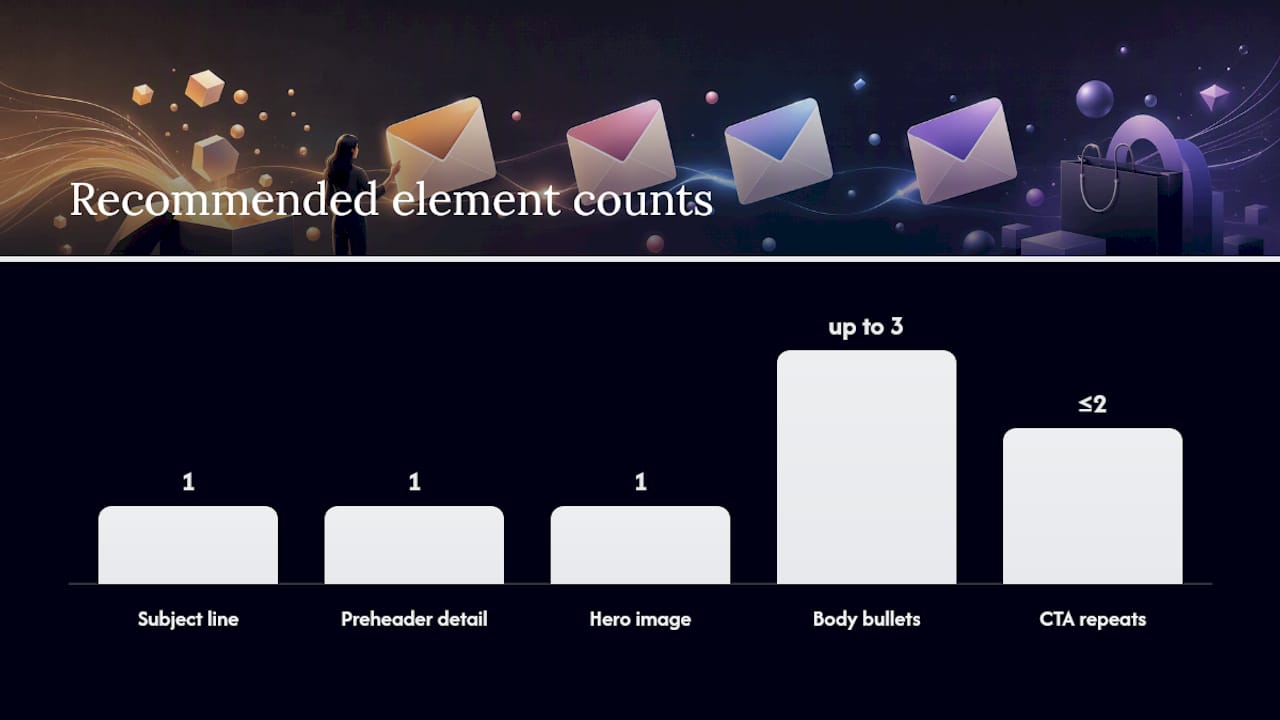
- Subject line: lead with direct availability, not vague hype. “Available now” beats “Something big is coming” almost every time.
- Preheader: reinforce the subject with a concrete detail (price, quantity, or deadline).
- Hero image: show the product itself, styled and lit well, above the fold.
- Body copy: open with what the product does in plain language, then list up to three key features or benefits as short bullets. Resist the urge to open with a brand origin story; readers came for the product, not the backstory.
- Single CTA: one primary action, repeated at most twice (top and bottom of the email), always linking to the live product page.
- Scarcity signal: real numbers, not manufactured ones. “42 left” or “offer ends at midnight ET” builds urgency without sounding like theater.
Pro Tip: Skip the founder’s-journey paragraph entirely. Practitioners who study launch emails find that leading with user benefit and three capability bullets reduces decision paralysis and increases clicks, compared to emails that open with brand storytelling.
Don’t forget the boring stuff: test the CTA link before send, confirm images have alt text for accessibility, and check that your sender domain is authenticated so the email doesn’t land in spam right when demand peaks.
What Are the Best Practices for Timing and Frequency?
Segmentation is where most drop campaigns leave money on the table. Loyal repeat customers and cold prospects don’t need the same message or the same urgency level.
- Give VIPs and repeat buyers early access, 12 to 24 hours before the general list, with a CTA like “shop before everyone else.”
- Send general-list announcements early in the business day, Tuesday through Thursday, aligned to the recipient’s own time zone to avoid inbox pileup.
- Cap the sequence at four emails total for most drops. More than that and you risk unsubscribes rather than conversions.
- Test subject lines that state availability plainly (“Now available: [Product]”) against curiosity-driven ones, then let open rate decide, not instinct.
Lifecycle and automated flows consistently punch above their weight: HubSpot’s research on email marketing performance notes that targeted automations like cart abandonment and lifecycle sequences often return outsized ROI relative to how few emails they represent. A drop sequence, built correctly, behaves the same way. If your list is large enough to warrant deeper segmentation, tailoring offers by customer tier preserves relationship value with your best customers instead of treating them like cold traffic.
Product Drop Email Examples and Subject-Line Templates
Borrow these directly and adjust for tone. They’re built for speed, not originality contests.
- Teaser subject: “Something’s dropping Thursday. Want in early?”
- Launch-day subject: “Available now: [Product Name] — while supplies last”
- VIP early-access subject: “You get 24 hours before anyone else”
- Last-chance subject: “Almost gone: [Product Name] closes tonight”
- Follow-up subject: “Missed it? Here’s what’s next”
For body copy, keep the announcement email tight: one sentence on what the product is, three bullets on what it does, one CTA button. A reminder email can be even shorter. Something like: “[Product Name] sells out fast. As of this morning, fewer than 50 remain. Grab yours before it’s gone” paired with a single button works better than a lengthy re-pitch. VIP early-access copy should acknowledge the relationship directly: “As one of our regulars, you get first pick” reads as reward, not a form letter.
Keep body copy short and focused, typically moderate in length, and resist stacking multiple offers into one email. Visually, the hero image goes first, the three-bullet benefit list comes second, and the CTA button sits with clear space around it so it’s the obvious next click, not one option among several.
How Do You Measure a Product Drop’s Success?
Four numbers tell you almost everything: open rate, click-through rate, conversion rate, and revenue per recipient (RPR). RPR is the most useful single metric because it accounts for both how many people bought and how much they spent, divided across everyone who received the email.
| Metric | What it tells you | Simple calculation |
|---|---|---|
| Open rate | Subject line and send-time effectiveness | Opens ÷ delivered emails |
| Click-through rate | Whether copy and CTA earned attention | Clicks ÷ delivered emails |
| Conversion rate | Whether the landing page closed the deal | Orders ÷ clicks |
| Revenue per recipient | Overall campaign value per subscriber | Total revenue ÷ delivered emails |
Attribution gets messy fast, since a customer might see the teaser, ignore it, then buy after the launch-day email or even after a retargeting ad. Treat email as one touchpoint among several rather than crediting it with 100% of every sale that follows a click. Beyond revenue, track list growth during the teaser phase and any earned media (screenshots, reposts, influencer mentions) the drop generated, since this compound value beyond the immediate sales window.
How Does Take-action Design High-Converting Product Drop Campaigns?
Take-action treats a drop as one moment inside a longer lifecycle, not an isolated event. That means mapping the teaser, launch, and follow-up emails against existing flows like welcome series and post-purchase sequences so a drop doesn’t cannibalize or contradict what’s already running. Segmentation happens before copywriting starts, separating VIPs, engaged subscribers, and cold contacts so each group gets an offer suited to their relationship with the brand.
Before any drop email sends, the checklist includes:
- Confirm the product landing page loads fast and the buy button actually works under load
- Verify Klaviyo tracking and UTM parameters are firing correctly for accurate attribution
- Sync inventory counts so scarcity messaging in the email matches real-time stock
- A/B test at least one variable (subject line, hero image, or CTA copy) before full send
Readers who want a deeper look at how email supports the entire launch arc can check why email carries so much of a product launch’s weight.
Should You Hire an Agency or Run the Drop Yourself?
The decision usually comes down to four things: list size, how mature your segmentation already is, expected revenue from the drop, and whether you have design and copy resources on hand. A brand with a few thousand subscribers and simple segmentation can often run a drop in-house using a template. A brand expecting a significant revenue event, with multiple segments and tight timing across flows, benefits more from outside strategy and setup help.
Agencies typically handle strategy, technical setup, tracking, and creative production, freeing your team to focus on the product itself rather than the plumbing behind the emails.
Ask yourself: do you have the segmentation, the creative bandwidth, and the tracking in place to launch this week? If any answer is no, that’s your signal to get help rather than rush a drop that undersells the product.
How Can Take-action Help With Your Next Product Drop?
Running a drop well means juggling strategy, platform setup, segmentation, copy, creative, and measurement, often on a tight deadline. That’s the exact gap Take-action fills for ecommerce brands that would rather hand off the technical and creative load than build it themselves. The agency’s work centers on Klaviyo, covering everything from flow architecture to the segmentation logic that keeps a VIP early-access email from looking identical to what a cold subscriber receives.
Getting started usually begins with a quick audit of your current email setup and list health, followed by a proposal outlining the specific flows, campaigns, and timeline needed for your launch calendar. From there, deliverables typically include the drop sequence itself (teaser, launch, reminder, follow-up), tracking configuration, and creative that matches your brand’s visual identity. If your next drop is on the calendar and you’d rather not build the sequence solo, visit Take-action’s site to request a consult and see what a managed setup would look like for your list.
Where Can You Learn More About Product Drop Emails?
For hands-on templates, Mailchimp’s product drop guide covers hype-building tactics. Designmodo offers launch email templates and layout examples worth studying.
Is a DIY Drop Ever the Right Call?
Most brands overbuild their first drop email and underbuild the sequence around it. One gorgeous announcement email with no teaser and no follow-up leaves money on the table twice: once from people who needed a heads-up to plan a purchase, and again from people who almost bought but needed a nudge before the window closed.
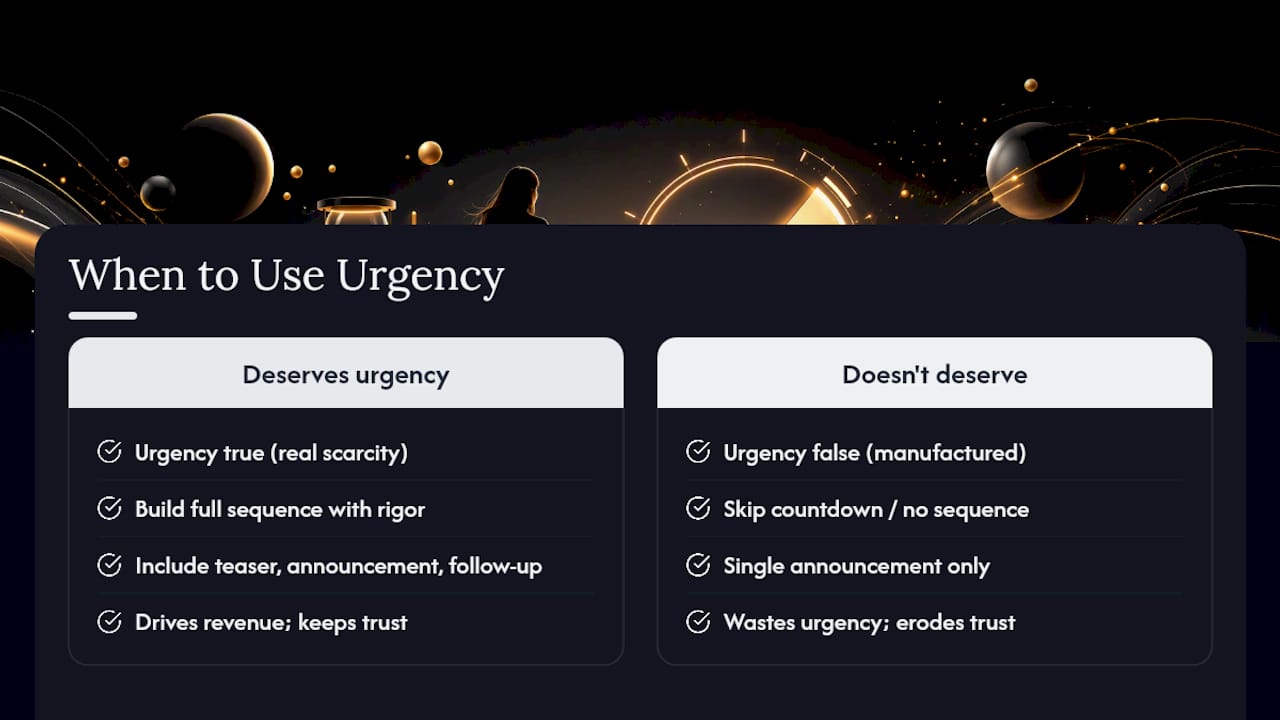
The bigger mistake, though, is treating urgency as a copywriting trick instead of a real constraint. If your “limited” drop quietly restocks the following week, subscribers notice, and the next countdown clock you send gets ignored. Scarcity works because it’s true. Manufactured scarcity works once, maybe twice, before it erodes trust in every email that follows.
The tactical stuff, three-bullet body copy, single CTA, direct subject lines, matters, but it’s downstream of a more basic decision: does this release actually deserve urgency? If yes, build the full sequence and give it the same rigor you’d give any other revenue-driving flow. If no, save the countdown clock for something that earns it.
— Take
Sources
- Ultimate Guide to Email Marketing in 2026 | WordStream
- Best new product launch email templates to use in 2026 | Designmodo
- Product Drops: Generate Hype and Skyrocket Sales | Mailchimp
- Product launch email guide | Shopify