

What Is Lead Nurturing and Why Ecommerce Brands Rely On It
Over eighty percent of American ecommerce businesses struggle to turn casual browsers into loyal buyers. With competition growing every year, standing out means more than just attracting random clicks. Understanding how lead nurturing shapes the customer journey can help brands connect on a deeper level and create real customer loyalty. In this guide, you’ll find practical insights to help any American store move users smoothly from interest to conversion using proven lead nurturing strategies.
Table of Contents
- Defining Lead Nurturing In Ecommerce
- Key Types Of Lead Nurturing Emails
- The Lead Nurturing Process Step By Step
- Automation, Segmentation, And Klaviyo Workflows
- Common Mistakes And How To Avoid Them
Key Takeaways
| Point | Details |
|---|---|
| Effective Lead Nurturing | Transform potential customers into loyal buyers through personalized engagement and a holistic strategy that incorporates marketing techniques and information systems. |
| Types of Lead Nurturing Emails | Utilize specific email types—such as welcome, engagement, and win-back emails—to address various stages of the customer journey and maintain interest. |
| Segmentation and Automation | Implement dynamic audience segmentation and automated workflows to create targeted messaging that resonates with individual customer needs. |
| Avoid Common Mistakes | Focus on personalized communication, proper audience segmentation, and tracking metrics to enhance lead nurturing effectiveness and foster long-term customer relationships. |
Defining Lead Nurturing in Ecommerce
Lead nurturing in ecommerce represents a strategic approach to transforming potential customers into loyal buyers through personalized, targeted engagement. At its core, this process involves building relationships with potential customers through timely and relevant content, guiding them systematically through their purchasing journey.
Successful lead nurturing goes beyond simple marketing tactics. It requires a holistic strategy that integrates sophisticated marketing techniques with intelligent information systems designed to attract, educate, and meaningfully engage potential customers. By understanding individual customer needs, preferences, and behaviors, ecommerce brands can craft nuanced communication pathways that resonate on a personal level.
The mechanics of lead nurturing typically involve multiple strategic touchpoints across various channels. These may include targeted email sequences, personalized product recommendations, retargeting advertisements, and dynamic content that speaks directly to a customer’s specific interests. An effective approach integrates marketing strategies with information systems to comprehensively support potential buyers, ensuring each interaction moves them closer to making a purchase.
Key components of a robust lead nurturing strategy include:
- Segmenting potential customers based on behavior and demographics
- Creating personalized content that addresses specific customer pain points
- Implementing automated communication workflows
- Tracking and analyzing customer interaction data
- Continuously refining engagement strategies based on performance metrics
Key Types of Lead Nurturing Emails
Lead nurturing emails represent a sophisticated approach to guiding potential customers through their purchasing journey. Key types of lead nurturing emails include welcome emails, engagement emails, win-back emails, recommendation emails, and customer success story emails, each strategically designed to address different stages of customer interaction and motivation.

Welcome emails serve as the critical first touchpoint, introducing brand personality and setting expectations. These initial communications establish trust and provide an opportunity to showcase value proposition. Engagement emails follow, maintaining momentum by delivering relevant content that speaks directly to the customer’s interests and demonstrated behaviors.
Effective lead nurturing strategies also encompass cross-sell and up-sell emails, cart abandonment emails, and highly personalized content tailored to individual customer profiles. These targeted communications help transform potential leads into committed customers by addressing specific needs, overcoming potential objections, and creating compelling reasons to complete a purchase.
The most impactful lead nurturing email types include:
- Welcome emails introducing brand and value
- Engagement emails maintaining customer interest
- Win-back emails targeting dormant customers
- Product recommendation emails
- Cart abandonment recovery emails
- Customer success story emails building social proof
- Cross-sell and up-sell promotional emails
Successful ecommerce brands recognize that each email type serves a unique purpose in gradually building customer relationships and guiding potential buyers toward conversion.
The Lead Nurturing Process Step by Step
The lead nurturing process involves a series of strategic communications intended to build trust and awareness, transforming potential customers from passive observers into active buyers. This systematic approach requires careful planning, precise targeting, and continuous refinement of engagement strategies.
The initial stage centers on lead identification and segmentation, where potential customers are categorized based on specific demographic, behavioral, and engagement criteria. By understanding unique customer attributes, brands can develop tailored communication pathways that resonate with individual needs and preferences. An effective lead nurturing strategy encompasses targeted email campaigns, personalized content delivery, and continuous engagement designed to guide prospects seamlessly through their buying journey.
A comprehensive lead nurturing process typically follows these strategic steps:
- Lead capture and initial data collection
- Audience segmentation and profiling
- Content mapping and personalization
- Multi-channel communication strategy
- Performance tracking and optimization
- Continuous relationship building
Successful implementation requires brands to remain agile, continuously analyzing customer interactions and adapting communication strategies to maintain relevance and drive meaningful engagement. The ultimate goal is transforming potential interest into committed customer relationships through thoughtful, personalized interactions.
Automation, Segmentation, and Klaviyo Workflows
Harnessing marketing automation for content delivery involves integrating sophisticated tools to streamline lead nurturing processes, enabling ecommerce brands to create more intelligent, responsive customer engagement strategies. Klaviyo workflows represent a powerful approach to transforming raw customer data into personalized, targeted communication pathways.
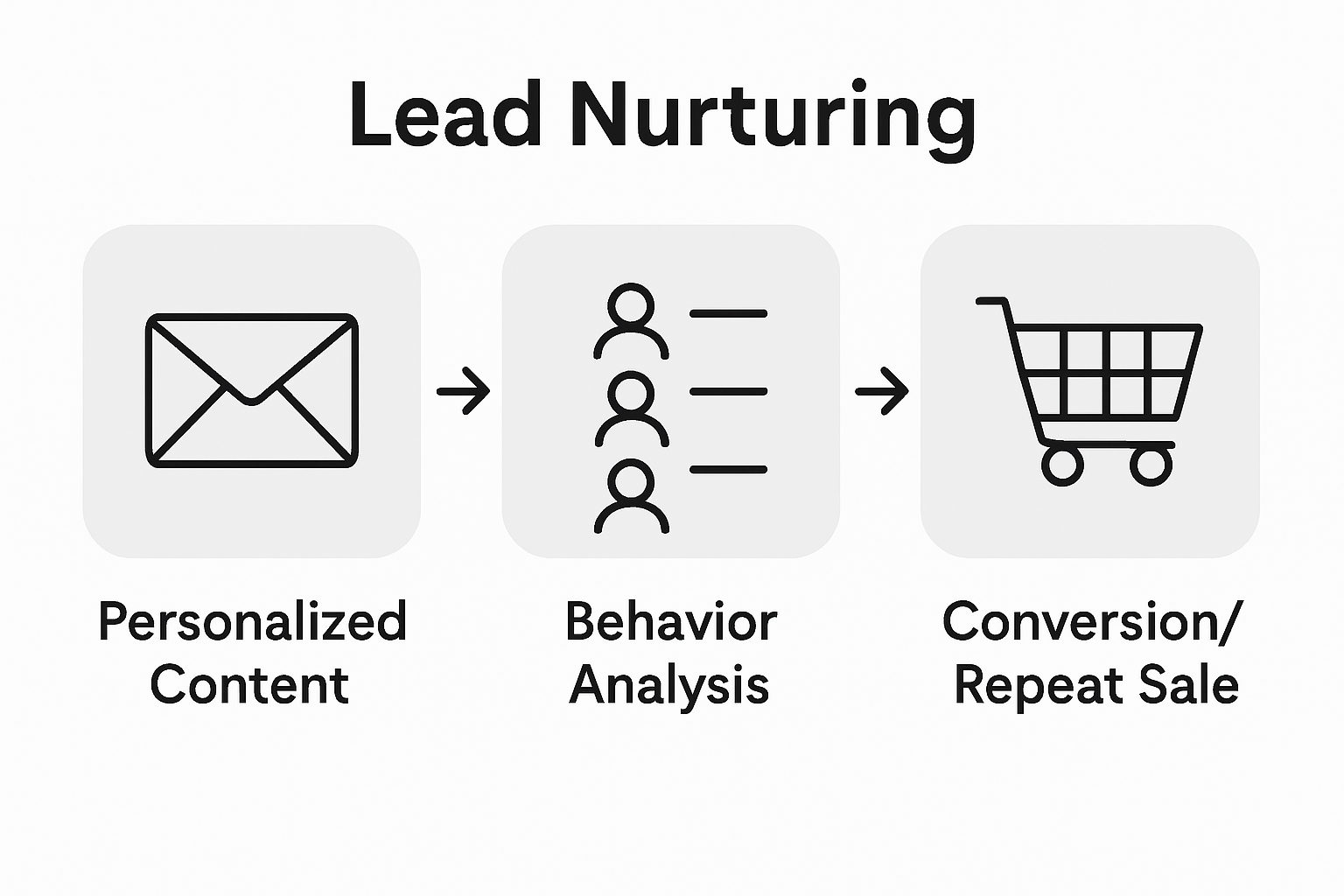
Segmentation stands as the cornerstone of effective automation, allowing brands to divide their audience into granular groups based on specific behaviors, purchase history, engagement levels, and demographic characteristics. By creating these precise customer segments, ecommerce brands can craft hyper-targeted messaging that speaks directly to individual customer motivations and needs.
Automated lead nurturing can significantly boost sales by improving engagement and enhancing interactions between brands and potential customers, though its effectiveness varies across different customer segments. Klaviyo workflows enable this through several key capabilities:
- Dynamic audience segmentation
- Behavioral trigger-based communications
- Personalized email sequence design
- Real-time performance tracking
- Automated customer journey mapping
Successful implementation requires a strategic approach that balances technological sophistication with genuine, human-centered communication. By leveraging Klaviyo’s advanced automation tools, ecommerce brands can create seamless, intelligent workflows that transform potential leads into loyal, long-term customers.
Common Mistakes and How to Avoid Them
Lead nurturing requires precision and strategic thinking. Many ecommerce brands unknowingly undermine their efforts by failing to implement robust, data-driven approaches that transform potential customers into loyal buyers. The most critical errors often stem from a lack of understanding about how to effectively engage and convert leads.
Over-generalization represents one of the most significant pitfalls in lead nurturing strategies. Brands that blast identical messages to their entire audience fail to recognize the nuanced differences among customer segments. Measuring the impact of targeted remarketing requires setting clear metrics and rigorously analyzing performance data, a step many organizations overlook in their rush to implement automated campaigns.
Common lead nurturing mistakes include:
- Sending generic, non-personalized content
- Neglecting proper audience segmentation
- Inconsistent communication frequency
- Failing to track and analyze engagement metrics
- Ignoring customer behavior signals
- Using complex, technical language
- Not providing clear value in each interaction
Successful lead nurturing demands a holistic approach that balances technological sophistication with genuine, customer-centric communication. Brands must continuously refine their strategies, adapting to evolving customer preferences and leveraging data-driven insights to create meaningful, targeted interactions that drive conversions and build long-term relationships.
Unlock the Power of Lead Nurturing to Boost Your Ecommerce Growth
The article highlights the challenge ecommerce brands face in engaging potential customers effectively through personalized lead nurturing sequences. Many struggle with issues like audience segmentation, crafting targeted emails, and automating workflows that truly resonate and convert. If you want to avoid common mistakes such as generic messaging or inconsistent communication and instead build meaningful customer relationships that increase sales, it is essential to leverage expert strategies and proven automation tools.
Take Action specializes in turning these lead nurturing complexities into a streamlined revenue engine. With deep expertise in Klaviyo workflows, automation, and segmentation, we help ecommerce brands automate customer retention, recover abandoned carts, and deliver personalized experiences that grow lifetime value.
Discover how a data-driven, conversion-focused approach can transform your email marketing into a primary growth channel.
Ready to elevate your ecommerce brand by mastering lead nurturing and maximizing your email potential? Visit Take Action now to explore our email flow setup services, and learn how our strategic campaigns and automation can bring your customers closer to purchase. Partner with us today for long-term growth powered by intelligent, human-centered email marketing.
Frequently Asked Questions
What is lead nurturing in ecommerce?
Lead nurturing in ecommerce is a strategic process designed to engage potential customers through personalized content and timely communications, guiding them through their purchasing journey toward becoming loyal buyers.
Why is lead nurturing important for ecommerce brands?
Lead nurturing is crucial for ecommerce brands as it helps build relationships with potential customers, enhances customer engagement, and ultimately increases conversion rates by addressing individual needs and preferences.
What types of emails are commonly used in lead nurturing?
Common types of lead nurturing emails include welcome emails, engagement emails, win-back emails, recommendation emails, cart abandonment emails, and customer success story emails, each designed for different stages of the customer journey.
How can ecommerce brands avoid common mistakes in lead nurturing?
To avoid common mistakes in lead nurturing, ecommerce brands should focus on personalizing content, properly segmenting the audience, maintaining consistent communication frequency, tracking engagement metrics, and adjusting strategies based on customer behavior.
Recommended
- Lead Generation Explained: Driving Ecommerce Growth | Take Action Blog | Take Action
- SEO Matters: Complete Guide for Ecommerce Brands | Take Action Blog | Take Action
- Mastering Brand Positioning Strategies for Ecommerce Success | Take Action Blog | Take Action
- 7 Essential Networking Tips for Professionals in Ecommerce | Take Action Blog | Take Action