

What Is Thought Leadership and Why It Matters
Most American business leaders agree that building real authority takes more than clever advertising. In a landscape crowded with opinions, audiences crave voices they can trust. Thought leadership transforms companies into respected sources of insight, not just sales. With over 60 percent of American executives saying they value original ideas from industry peers, understanding what makes thought leadership truly effective has never mattered more. Discover how expertise, credibility, and innovation can separate your brand from the competition.
Table of Contents
- Defining Thought Leadership In Business
- Types Of Thought Leadership Content
- Key Traits Of Effective Thought Leaders
- How Thought Leadership Drives Brand Growth
- Common Pitfalls And Misconceptions
Key Takeaways
| Point | Details |
|---|---|
| Thought Leadership Redefines Business Roles | Businesses evolve from product providers to trusted advisors through genuine insights and expertise. |
| Deep Expertise is Crucial | Successful thought leadership relies on deep industry knowledge and the ability to communicate complex ideas simply. |
| Focus on Unique Solutions | Create distinctive, actionable content that addresses pressing industry challenges rather than generic advice. |
| Avoid Common Mistakes | Organizations should ensure alignment between content and genuine expertise to maintain authenticity and credibility. |
Defining Thought Leadership in Business
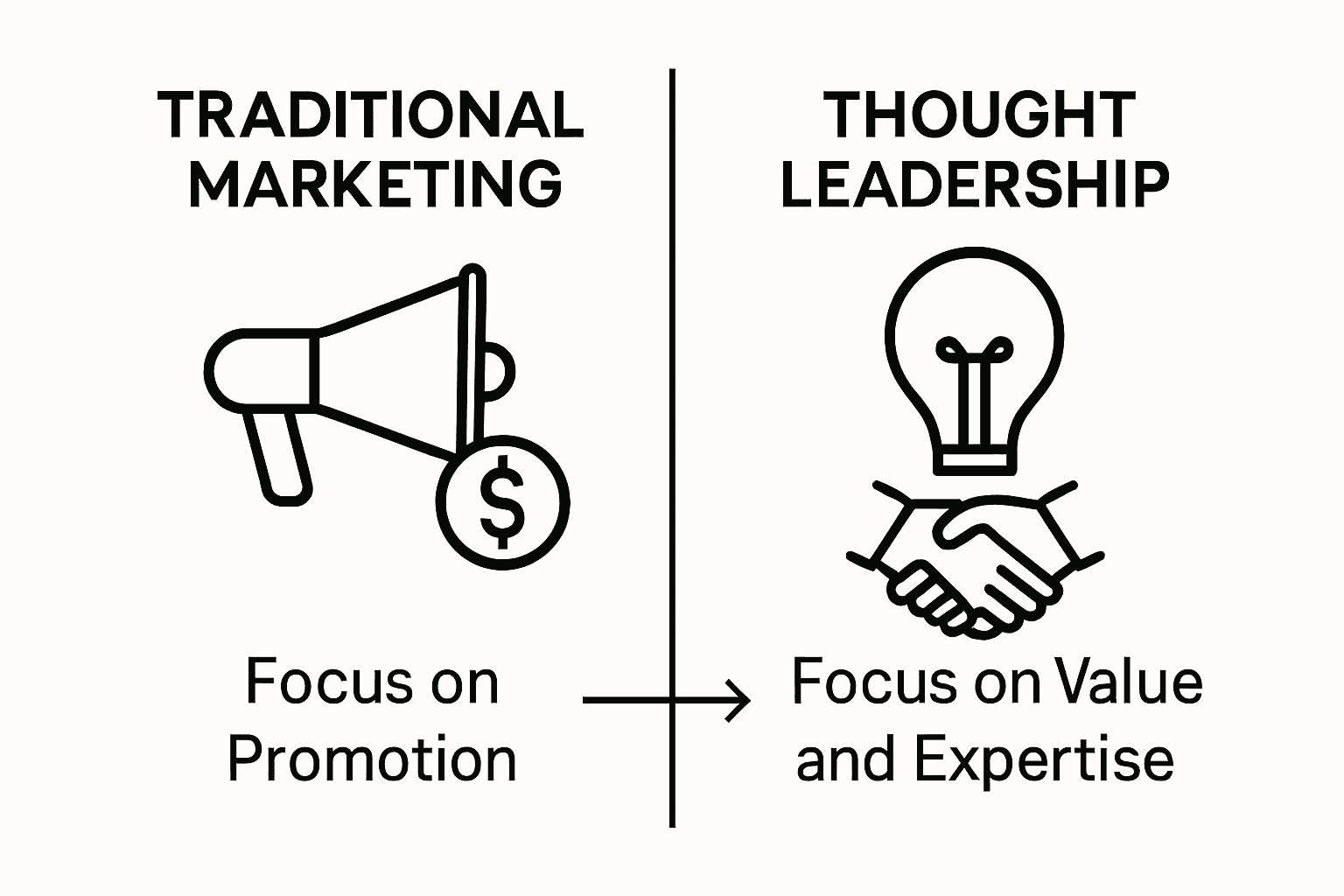
Thought leadership represents a strategic approach where businesses demonstrate expertise by sharing innovative insights that address critical challenges facing their industry. Beyond traditional marketing, thought leadership transforms companies from mere service providers into trusted advisors and intellectual pioneers. Businesses need a nuanced understanding of knowledge generation that goes beyond surface-level content.
At its core, thought leadership involves creating authoritative, forward-thinking content that provides genuine value to stakeholders. According to research from the SAGE Encyclopedia of Corporate Reputation, it encompasses offering thought-provoking insights on issues that matter deeply to customers and industry professionals. Successful thought leadership isn’t about self-promotion, but about demonstrating profound understanding of complex challenges and presenting actionable solutions.
Effective thought leadership requires several key elements: deep industry knowledge, unique perspectives, credible research, and the ability to communicate complex ideas clearly. Businesses must move beyond generic advice and deliver genuinely transformative insights that challenge existing paradigms. This means going beyond standard industry talking points and presenting original research, innovative frameworks, and strategic recommendations that help audiences solve real problems.
Pro Tip for Aspiring Thought Leaders: Start by identifying the most pressing challenges in your industry and develop comprehensive, data-driven perspectives that offer unique solutions. Focus on creating content that provides clear, actionable strategies rather than generic observations.
Here’s a summary of key differences between traditional marketing and thought leadership in business:
| Aspect | Traditional Marketing | Thought Leadership |
|---|---|---|
| Primary Focus | Promoting products/services | Sharing expertise and insights |
| Audience Perception | Seller or service provider | Trusted advisor, industry leader |
| Content Approach | Sales-driven, broad messages | Research-backed, in-depth content |
| Long-term Impact | Brand awareness or short-term sales | Industry credibility and influence |
Types of Thought Leadership Content
Thought leadership content spans multiple formats, each designed to showcase expertise and provide valuable insights to target audiences. Businesses can leverage various content types to demonstrate their intellectual depth and industry understanding. These content formats range from traditional written pieces to more dynamic, interactive mediums that engage and educate stakeholders.
The primary types of thought leadership content include research reports, detailed whitepapers, expert blog articles, keynote presentations, industry webinars, and strategic social media insights. Each format serves a unique purpose in communicating complex ideas and establishing organizational credibility. Expert opinions and innovative perspectives are particularly effective when they challenge existing industry paradigms and offer fresh, actionable solutions to critical challenges.
Digital platforms have significantly expanded the potential reach of thought leadership content. Podcasts, video essays, infographics, and interactive online workshops now complement traditional written materials. These multimedia approaches allow businesses to break down complex concepts, making sophisticated insights more accessible to diverse audiences. The key is maintaining intellectual rigor while creating content that is engaging, visually compelling, and directly relevant to the audience’s strategic interests.
Pro Tip for Content Strategy: Diversify your thought leadership content across multiple formats to maximize engagement and reach different learning preferences. Combine in-depth written analysis with visual storytelling to create a comprehensive intellectual narrative that resonates with your target audience.
Key Traits of Effective Thought Leaders
Thought leadership demands a unique combination of intellectual prowess and communication skills that set industry experts apart from ordinary professionals. Effective thought leaders possess a distinctive set of traits that enable them to transform complex ideas into compelling narratives that resonate with their audiences. These characteristics go beyond traditional expertise, encompassing emotional intelligence, strategic communication, and the ability to challenge existing paradigms.

Key traits of exceptional thought leaders include critical thinking, remarkable public speaking abilities, profound empathy, and unwavering confidence. The ability to synthesize complex information and present it in an accessible, engaging manner is paramount. Unique perspectives and deep expertise allow thought leaders to not just describe current industry conditions, but to anticipate and shape future trends. They consistently demonstrate the capacity to provide innovative solutions that address critical challenges facing their respective fields.
Beyond technical knowledge, successful thought leaders cultivate strong interpersonal skills that build trust and credibility. They are active listeners who understand the nuanced needs of their audience, adapting their communication style to effectively connect with diverse stakeholders. Curiosity drives their continuous learning, enabling them to remain at the forefront of industry developments and maintain their intellectual relevance. Their approach combines scholarly rigor with practical insights, making complex concepts digestible and actionable for their professional community.
Pro Tip for Aspiring Thought Leaders: Develop a consistent personal brand that reflects your unique insights and expertise. Regularly publish content across multiple platforms, demonstrating your depth of knowledge and commitment to advancing your professional field.
How Thought Leadership Drives Brand Growth
Brand growth relies on more than traditional marketing strategies in today’s competitive business landscape. Thought leadership emerges as a powerful mechanism for expanding business opportunities by establishing companies as authoritative voices within their industries. When organizations consistently demonstrate deep expertise and innovative thinking, they transform from simple service providers into trusted strategic partners that clients actively seek out.
Thought leadership directly impacts brand growth by creating multiple strategic advantages. Actionable knowledge from trusted sources helps brands differentiate themselves by showcasing unique perspectives and solving complex industry challenges. This approach goes beyond conventional advertising, generating credibility through substantive insights that demonstrate genuine understanding of market dynamics. By consistently producing high-quality, forward-thinking content, brands can attract higher-quality leads, command premium pricing, and develop stronger relationships with potential clients.
The most effective thought leadership strategies transcend surface-level content marketing. They require a genuine commitment to understanding industry challenges, developing innovative solutions, and communicating those insights with clarity and authenticity. Successful brands invest in developing deep subject matter expertise, creating platforms for knowledge sharing, and nurturing a culture of continuous learning. This approach positions the organization as an intellectual leader, building trust and establishing a reputation that extends far beyond traditional marketing reach.
Pro Tip for Strategic Growth: Develop a consistent thought leadership approach by identifying your organization’s unique insights and creating a structured content strategy that systematically demonstrates your expertise across multiple platforms and communication channels.
Common Pitfalls and Misconceptions
Many organizations misunderstand thought leadership, transforming it into a superficial marketing exercise instead of a genuine intellectual contribution. Businesses often conflate inputs, processes, and outcomes with authentic thought leadership, creating content that lacks depth and strategic insight. This fundamental misunderstanding leads to generic, uninspired material that fails to distinguish the brand or provide meaningful value to its audience.
One critical misconception is treating thought leadership as a pure content production strategy. Rigorous research and empirical data must underpin genuine thought leadership, yet many brands publish superficial content without substantive research or original perspectives. Common mistakes include recycling existing industry knowledge, prioritizing quantity over quality, and creating content that sounds more like promotional material than insightful analysis. Thought leadership requires original thinking, deep subject matter expertise, and the ability to challenge existing industry paradigms.
Another significant pitfall involves misalignment between content and organizational capabilities. Many brands attempt to position themselves as thought leaders in areas where they lack genuine expertise, resulting in inauthentic and unconvincing narratives. Successful thought leadership demands a transparent, authentic approach that genuinely reflects an organization’s unique insights, capabilities, and strategic understanding. It requires consistent investment in developing deep knowledge, fostering a culture of continuous learning, and creating platforms for meaningful intellectual discourse.
The following table outlines key risks of poor thought leadership and ways to avoid them:
| Pitfall | Consequence | Solution |
|---|---|---|
| Superficial content | Loss of audience trust | Invest in original research |
| Overemphasis on promotion | Perceived as inauthentic | Prioritize strategic, value-driven ideas |
| Misaligned expertise claims | Damaged brand reputation | Align topics with actual strengths |
| Lack of sustained effort | Diminished industry impact | Maintain consistent, focused publishing |
Pro Tip for Authentic Thought Leadership: Conduct a thorough internal assessment of your organization’s genuine expertise and unique perspectives before developing any thought leadership strategy. Focus on areas where your team can provide truly original, research-backed insights that meaningfully advance industry understanding.
Elevate Your Brand with Strategic Thought Leadership and Email Marketing
The article highlights the challenge of transforming generic content into authentic thought leadership that builds trust and industry credibility. If your goal is to move beyond superficial marketing and deliver original, data-driven insights that resonate with your audience, then combining these efforts with targeted, automated email campaigns can amplify your brand’s authority and growth. Thought leadership demands a consistent strategy that communicates your unique expertise clearly and effectively — a challenge perfectly matched by Take Action’s deep specialization in email marketing automation backed by human expertise and AI-driven insights.
Maximize customer engagement by integrating thoughtfully crafted emails with your intellectual content to nurture long-term relationships and increase conversion rates. Our services include campaign strategy, email flow setups such as abandoned cart and post-purchase sequences, and ongoing partnership to scale your brand’s growth through automation and segmentation. By automating customer retention and aligning email marketing with your brand’s thought leadership narrative, you avoid the pitfalls of superficial promotion discussed in the article.
Take control of your brand’s story today with a clear, conversion-focused approach tailored to your ecommerce or online business needs.
Learn how to turn email into your primary growth channel and start showcasing your expertise with strategic campaigns that deliver results.

Ready to become a trusted industry leader through compelling email marketing and authentic thought leadership? Visit Take Action now to discover tailored automation solutions that elevate your brand and drive measurable revenue growth.
Frequently Asked Questions
What is thought leadership in business?
Thought leadership is a strategic approach where businesses showcase expertise by sharing innovative insights that address significant challenges in their industry, moving from being service providers to trusted advisors.
How does thought leadership differ from traditional marketing?
Thought leadership focuses on sharing expertise and insights to build trust and credibility, while traditional marketing emphasizes promoting products and services, often with a sales-driven approach.
What types of content are considered thought leadership?
Thought leadership content includes research reports, whitepapers, expert blog articles, keynote presentations, webinars, and social media insights, each designed to provide valuable insights and showcase expertise.
Why is thought leadership important for brand growth?
Thought leadership is essential for brand growth as it establishes organizations as authoritative voices in their industry, generating credibility, attracting high-quality leads, and enabling companies to build strong relationships with clients.
Recommended
- Understanding Thought Leadership Marketing for Brands | Take Action Blog | Take Action
- Understanding the Value of Branded Content in Marketing | Take Action Blog | Take Action
- Understanding Storytelling in Marketing for Brands | Take Action Blog | Take Action
- Building Brand Authority: Complete Expert Guide | Take Action Blog | Take Action