

SEO Matters: Complete Guide for Ecommerce Brands
Most american businesses find that over 90 percent of all online experiences begin with a search engine. Yet many brands are still unaware how much strategic SEO impacts their visibility and sales. The right SEO practices do more than just drive website traffic, they create lasting connections and real revenue opportunities. Understanding these core principles helps any american brand gain an edge in the digital marketplace and avoid common mistakes that hold back growth.
Table of Contents
- Defining SEO and Its Core Principles
- Types of SEO Relevant to Ecommerce
- How SEO Drives Ecommerce Growth
- Integrating SEO With Email Retention Strategies
- Common SEO Mistakes Ecommerce Brands Make
Key Takeaways
| Point | Details |
|---|---|
| Core SEO Principles | SEO focuses on enhancing website visibility through keyword research, on-page optimization, content quality, and backlink development. A balanced approach is necessary for success. |
| Types of SEO for Ecommerce | E-commerce brands should employ organic, local, technical, and paid SEO strategies to improve visibility and cater to various target markets effectively. |
| Impact on Growth | Implementing effective SEO can increase organic traffic, enhance brand visibility, and improve conversion rates while being more cost-effective than paid advertising. |
| Avoid Common Mistakes | E-commerce brands must avoid pitfalls like duplicate content, poor site architecture, and inadequate mobile optimization to maintain high search engine rankings. |
Defining SEO and Its Core Principles
Search engine optimization (SEO) represents a strategic approach to improving website visibility and performance in organic search results. According to dxstudio, SEO is fundamentally “the practice of optimizing websites to increase their discoverability through organic search results” - a critical capability for ecommerce brands seeking digital prominence.
At its core, SEO encompasses several interconnected principles designed to enhance a website’s search engine rankings. Loopo highlights key fundamental elements including:
- Keyword Research: Identifying precise search terms potential customers use
- On-Page Optimization: Structuring website content for maximum search relevance
- Content Quality: Creating valuable, authoritative information matching user intent
- Backlink Development: Building credible external references to your website
Successful SEO requires a holistic approach that balances technical website infrastructure with compelling, user-focused content. Ecommerce brands must understand that search engines prioritize websites delivering genuine value, seamless user experiences, and relevant information. This means going beyond simple keyword stuffing and focusing on creating meaningful digital experiences that naturally attract and retain audience attention.
For ecommerce brands looking to dive deeper into strategic optimization, our comprehensive guide to improving online visibility offers advanced insights into transforming your digital marketing approach.
Types of SEO Relevant to Ecommerce
E-commerce brands must understand the nuanced landscape of search engine optimization strategies to effectively boost their online visibility. According to GeeksforGeeks, e-commerce SEO involves a comprehensive approach that encompasses multiple critical optimization techniques, including precise keyword research, compelling product descriptions, and robust site infrastructure.
Four primary types of SEO are particularly crucial for e-commerce success:
- Organic SEO: Focuses on unpaid strategies to improve search rankings through high-quality content and website optimization
- Local SEO: Targets geographic-specific search results for businesses with physical locations or regional market focus
- Technical SEO: Addresses website infrastructure, speed, mobile responsiveness, and backend optimization
- Paid SEO: As AMA explains, involves strategic pay-per-click (PPC) advertising that complements organic search efforts
Successful e-commerce SEO requires a holistic strategy that integrates these approaches. While organic tactics build long-term credibility, paid strategies can provide immediate visibility.
 Technical optimization ensures search engines can efficiently crawl and understand your website, while local SEO helps target specific customer segments.
For e-commerce brands seeking deeper insights into strategic optimization, our comprehensive guide to SEO for ecommerce stores offers advanced techniques to elevate your digital marketing approach.
How SEO Drives Ecommerce Growth
Search engine optimization transforms how e-commerce brands attract and convert online customers. Coursera explains that effective SEO enhances online store visibility in unpaid search results, attracting more visitors without relying on costly advertising campaigns. This strategic approach allows businesses to generate organic traffic by optimizing their digital presence.
The key mechanisms through which SEO drives e-commerce growth include:
- Increased Organic Traffic: Improving search rankings to attract potential customers
- Enhanced Brand Visibility: Building credibility through consistent search engine presence
- Higher Conversion Rates: Targeting specific customer segments with precise keyword strategies
- Cost-Effective Marketing: Reducing dependence on paid advertising channels
According to 2Visions, implementing comprehensive SEO strategies leads to significant business outcomes, including improved brand awareness and higher conversion rates. The most successful approaches involve meticulous product page optimization, creating user-centric content, and developing a robust technical infrastructure that search engines can easily understand and rank.
For e-commerce brands looking to unlock advanced growth strategies, our guide on essential ecommerce marketing strategies provides comprehensive insights into leveraging digital marketing techniques for sustainable business expansion.
Integrating SEO With Email Retention Strategies
Successful e-commerce brands recognize the powerful synergy between search engine optimization and email marketing. Coursera highlights that integrating SEO with email strategies can significantly enhance customer retention by driving traffic to optimized landing pages and delivering personalized content experiences.
Key strategies for seamless SEO and email marketing integration include:
- Keyword-Optimized Email Content: Crafting email copy that aligns with search intent
- Personalized Landing Pages: Creating targeted, SEO-friendly destination pages for email campaigns
- Cross-Channel Tracking: Analyzing user interactions across email and search channels
- Content Synchronization: Ensuring consistent messaging and optimization across platforms
According to 2Visions, combining SEO efforts with email marketing strategies can dramatically increase customer engagement and retention. This approach involves directing subscribers to carefully optimized content and product pages that not only answer their immediate questions but also rank effectively in search results.
For e-commerce brands seeking to master the intricate balance of email marketing and SEO, our comprehensive guide to email marketing strategies provides in-depth insights into creating cohesive, high-performing digital marketing campaigns.
Common SEO Mistakes Ecommerce Brands Make
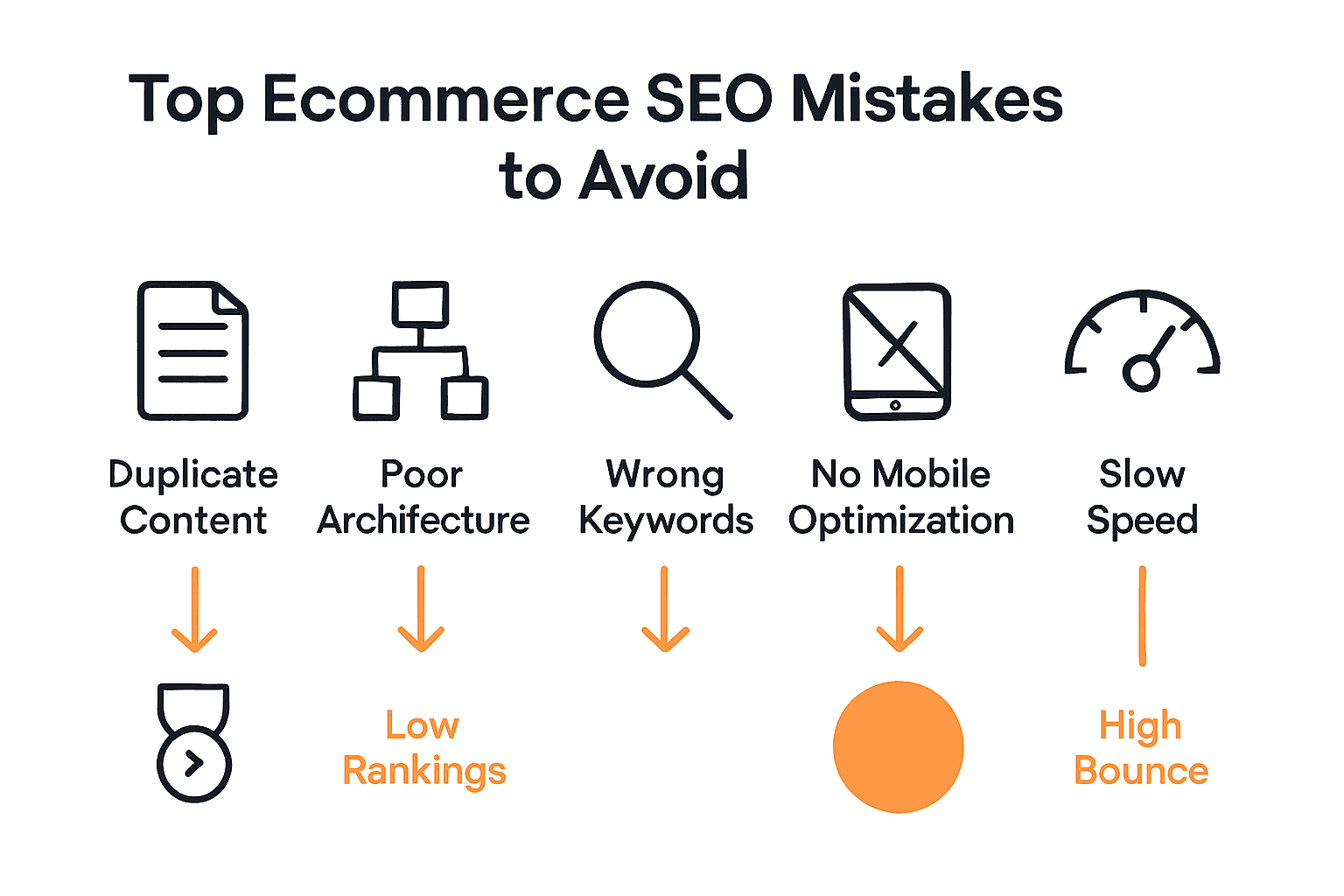
E-commerce brands often undermine their digital success by falling into predictable SEO traps that significantly reduce their online visibility. 2Visions reveals that neglecting user experience factors like site speed and mobile optimization can lead to dramatically higher bounce rates and plummeting search rankings.
The most critical SEO mistakes e-commerce brands consistently make include:
- Duplicate Content: Creating multiple product pages with nearly identical descriptions
- Poor Site Architecture: Developing complex, non-intuitive website navigation
- Inadequate Keyword Targeting: Using generic or irrelevant search terms
- Neglecting Mobile Optimization: Failing to create responsive, mobile-friendly design
- Slow Page Loading: Ignoring website performance and page speed metrics
Coursera emphasizes that e-commerce sites frequently overlook technical SEO aspects such as site functionality, internal linking, and content quality. These oversights can catastrophically impact search engine performance, essentially rendering sophisticated marketing efforts ineffective.
For brands seeking to avoid these common pitfalls and transform their digital strategy, our guide on branding mistakes to avoid provides comprehensive insights into building a robust, search-engine-friendly online presence.
Unlock Ecommerce Growth by Mastering SEO and Email Retention
The journey to boost your ecommerce brand’s visibility in search engines is only half the battle. As the article highlights, challenges like optimizing site structure, improving content relevance, and integrating SEO with email marketing are critical yet complex. You need strategies that not only attract traffic but also convert visitors into loyal customers while keeping them engaged over time. That is where specialized, data-driven email marketing solutions tailored for ecommerce become essential.

At Take Action, we understand the pain points of managing keyword targeting, technical SEO issues, and harmonizing email with search intent to increase retention. Our expertise in Klaviyo automation helps you automate customer flows such as abandoned carts and post-purchase sequences to recover lost revenue and nurture ongoing engagement. Combine these with your SEO efforts and watch your brand grow stronger through automation, segmentation, and strategic campaigns. Get started now to turn your SEO gains into lasting revenue streams with proven, conversion-focused email marketing designed for ecommerce. Visit our homepage and explore how to transform your digital strategy today.
Frequently Asked Questions
What is SEO and how does it benefit e-commerce brands?
SEO, or search engine optimization, is the practice of optimizing websites to improve visibility in organic search results. For e-commerce brands, effective SEO drives organic traffic, enhances brand visibility, and increases conversion rates, making it vital for online success.
What are the key types of SEO relevant to e-commerce?
E-commerce brands should focus on four primary types of SEO: Organic SEO, which enhances unpaid search rankings; Local SEO, for regional search results; Technical SEO, which optimizes website infrastructure; and Paid SEO, which involves pay-per-click advertising to complement organic efforts.
How can SEO drive growth for my e-commerce store?
SEO drives growth by increasing organic traffic, enhancing brand visibility, improving conversion rates through targeted keyword strategies, and reducing reliance on paid advertising campaigns. A robust SEO strategy also builds long-term credibility.
What common SEO mistakes should e-commerce brands avoid?
E-commerce brands often make mistakes like creating duplicate content, neglecting site architecture, using inadequate keyword targeting, failing to optimize for mobile devices, and ignoring page speed. These can significantly harm search engine performance.
Recommended
- Complete Guide to SEO for Ecommerce Stores | Take Action Blog | Take Action
- Complete Guide to Improving Online Visibility | Take Action Blog | Take Action
- Mastering Brand Positioning Strategies for Ecommerce Success | Take Action Blog | Take Action
- 7 Must-Read Business Book Recommendations for Ecommerce Growth | Take Action Blog | Take Action