

What Brand Voice in Email Means for Your Marketing
Brand voice in email is the consistent personality your company expresses through every subject line, preview text, greeting, body paragraph, call to action, and signature a subscriber sees. It’s not a tagline or a font choice. It’s whether your welcome email, your shipping confirmation, and your win back campaign all sound like they came from the same person.
Get this right and readers start recognizing your brand before they even open the message. Get it wrong, and every email feels like a stranger wrote it.
Three things to do this week:
- Document three to five voice traits in plain language (example: “direct, warm, never salesy”).
- Apply those traits to one email type first — welcome flows are the easiest testing ground since new subscribers set no prior expectations.
- Track one metric before and after — open rate or click-through rate — to see if consistency moves the needle.
Key Takeaways
Consistent brand voice in email increases recognition and trust, and it directly influences open rates, click rates, and unsubscribe rates over time.
| Point | Details |
|---|---|
| Define voice before writing | Document three to five personality traits and a banned-word list before touching templates. |
| Keep voice fixed, flex tone | Voice stays constant across every email type; tone adjusts to the situation, like an apology versus a launch. |
| Build a real style guide | Include vocabulary rules, subject-line and CTA guidelines, signature templates, and an approval workflow. |
| Audit quarterly, test constantly | Sample 15 to 20 emails, tag tone, and run A/B tests on subject lines and CTAs to catch drift early. |
| Start with one pilot flow | Roll out voice changes in welcome or post-purchase flows first, then expand once results confirm the approach. |
| Get agency support if scaling fast | Take-action builds voice-consistent Klaviyo flows and runs the tests that prove the voice is working. |
Table of Contents
- What Is Brand Voice in Email, Exactly?
- Brand Voice vs. Tone: What Changes in Email and What Doesn’t
- Why Brand Voice in Email Actually Moves Revenue
- How to Define Your Email Brand Voice, Step by Step
- Building an Email Style Guide That Writers Actually Use
- Auditing Your Emails and Testing Your Voice Over Time
- Three Email Voice Examples You Can Steal and Adapt
- Agency Checklist: Rolling Out Voice Across a Real Email Program
- Why We Treat Email as the Starting Point for Voice Work
- How Take-action Turns Your Voice Guide Into Working Email
- Frequently Asked Questions
- Sources
What Is Brand Voice in Email, Exactly?
Brand voice in email breaks down into a handful of controllable parts: perspective (do you write as “we” or as a named person?), vocabulary (the words you use and the ones you ban), sentence structure (short and punchy versus longer and conversational), formality level, empathy (how you acknowledge frustration or excitement), and formatting habits (how you use bold text, emoji, or bullet points).
A single voice should show up identically across every piece of an email. Here’s what that looks like in practice for a brand with a “direct, warm, slightly funny” voice:
- Subject line: “Your cart called. It misses you.”
- Greeting: “Hey [First Name],”
- Body fragment: “We noticed you left something behind. No judgment. It happens to the best of us.”
- CTA: “Grab it before it’s gone”
That same brand wouldn’t suddenly write “Dear Valued Customer” in a shipping notification and switch back to casual banter in the next promotional send. Sproutsocial describes brand voice as the combination of language choices, sentence structure, and personality traits that stay recognizable no matter the channel, and email is where that consistency gets tested hardest because a single subscriber might receive five different email types from you in a single month.
Voice that shifts between a transactional receipt and a marketing campaign breaks the illusion that a real, consistent brand is behind the messages. Consistency across every touchpoint, including the boring ones, is what builds recognition over time.
Brand Voice vs. Tone: What Changes in Email and What Doesn’t
Voice is who you are. Tone is how that personality flexes for the moment. A brand’s voice stays fixed across a year of sending; its tone shifts from email to email depending on what’s happening.
Hootsuite frames it simply: voice is the consistent personality your brand expresses across channels, while tone adapts to context. In email, that distinction plays out constantly:
- Product launch: Voice stays confident and clear. Tone runs excited and energetic.
- Apology or refund email: Voice stays warm and direct. Tone shifts to calm, measured, and accountable.
- Onboarding sequence: Voice stays friendly and helpful. Tone leans encouraging and patient.
The practical rule for anyone writing email copy: keep the voice constant across every send, and let tone flex based on what the subscriber just experienced. A brand that sounds identical in a refund apology and a flash sale announcement isn’t showing consistency. It’s showing tone deafness.
Why Brand Voice in Email Actually Moves Revenue
A recognizable voice does real work: it builds trust, speeds up recognition in a crowded inbox, and reduces the friction that makes people hesitate before opening or clicking. HubSpot’s research on brand voice notes that a large majority of U.S. consumers say brand trust factors into their purchase decisions, and voice consistency is one of the clearest, most repeatable ways to build that trust over dozens of touchpoints.
Direct benefits for your email program:
- Faster subject line recognition, which supports higher open rates
- Stronger trust signals that translate into more clicks
- Fewer unsubscribes from readers who feel like they know what to expect
- Better conversion rates because CTAs feel like a natural next step, not a jarring sales pitch
Metrics worth watching as you tighten voice consistency:
- Open rate (recognition and subject-line trust)
- Click-through rate (body copy and CTA effectiveness)
- Unsubscribe rate (tone mismatches often show up here first)
- Reply rate, particularly on conversational or post-purchase emails
Pro Tip: Track unsubscribe rate by email type, not just campaign-wide. A voice mismatch in your abandoned cart flow will often show up as a spike there long before it shows up in your newsletter numbers.
There’s an internal payoff too. Qualtrics points out that a documented voice gives writers, designers, and support teams a shared reference, which cuts down on rewrites and speeds up approvals. Teams stop debating whether a line “sounds right” and start checking it against a guide.
How to Define Your Email Brand Voice, Step by Step
Most brands don’t need a rebrand. They need a working session and a document. Here’s a process that holds up across teams of any size.
- Audit your last 15 to 20 emails. Pull a mix of transactional, promotional, and lifecycle sends. Read them back to back and flag anywhere the voice shifts unexpectedly.
- Run a personality workshop. Get your marketing lead, a copywriter, and ideally someone from customer support in a room (or a call) for 60 to 90 minutes.
- Map traits to email elements. Decide how each trait shows up specifically in subject lines, greetings, body copy, and sign offs.
- Write and approve two or three template emails. Don’t try to rewrite everything at once. Start with your welcome flow or order confirmation.
- Train every writer on the guide. Whether that’s one person or an agency team, everyone touching email copy needs the same reference document.
A workshop activity that works well in 60 to 90 minutes: Give each participant five minutes to write down three adjectives that describe the brand if it were a person walking into a room. Compare notes, circle the traits that repeat, and cut anything vague like “professional” or “innovative” that could describe literally any company. Then have the group draft one banned word list and one “always do this” list on the spot. Shopify’s guidance on building a brand voice follows the same logic: start broad with personality traits, then get specific about the language choices that bring them to life.
Dos and don’ts to keep the process from stalling:
- Don’t try to sound like everything to everyone. HubSpot’s brand voice guidance points out that audiences respond better to a human, accessible voice than a stuffed, jargon-heavy “content voice” that tries to check every box.
- Do pick a lane and defend it, even if it means some readers aren’t the target.
- Don’t let signatures drift. If your CEO signs one email and “The Team” signs the next, that’s a voice break most brands never catch.
- Do write down what you won’t say, not just what you will. Banned word lists prevent more drift than style guidelines ever do.
Building an Email Style Guide That Writers Actually Use
A voice guide only works if it’s specific enough to settle an argument. “Be friendly” isn’t a rule. “Use contractions, avoid exclamation points in subject lines, and never write ‘Dear Customer’” is a rule.
Your email voice guide should include:
- Three to five personality traits with a one-line definition for each
- A vocabulary list: preferred words and banned words side by side
- Subject-line rules (length, punctuation, capitalization, emoji policy)
- Preview-text rules (how it should complement, not repeat, the subject line)
- CTA tone guidelines (commanding versus inviting language)
- Signature templates for each email type
- Two or three annotated example rewrites showing before and after
- An approval workflow naming who signs off before send
- Testing rules for how voice changes get validated before rolling out broadly
Before: “We are writing to inform you that your order has shipped.” After: “Good news. Your order’s on its way.”
Before: “Please be advised your subscription will renew automatically.” After: “Heads up. Your subscription renews on [date], so nothing to do on your end.”
A guide that stays in a shared drive and never gets opened isn’t a guide. It’s documentation theater. The version that works gets revisited every quarter, gets updated when voice drifts get caught, and gets handed to every new writer or agency partner on day one.
Left Brain Marketing’s research on staying consistent across multiple writers confirms this: version control and a shared approval workflow are what keep voice intact once more than one person is writing copy.
Auditing Your Emails and Testing Your Voice Over Time
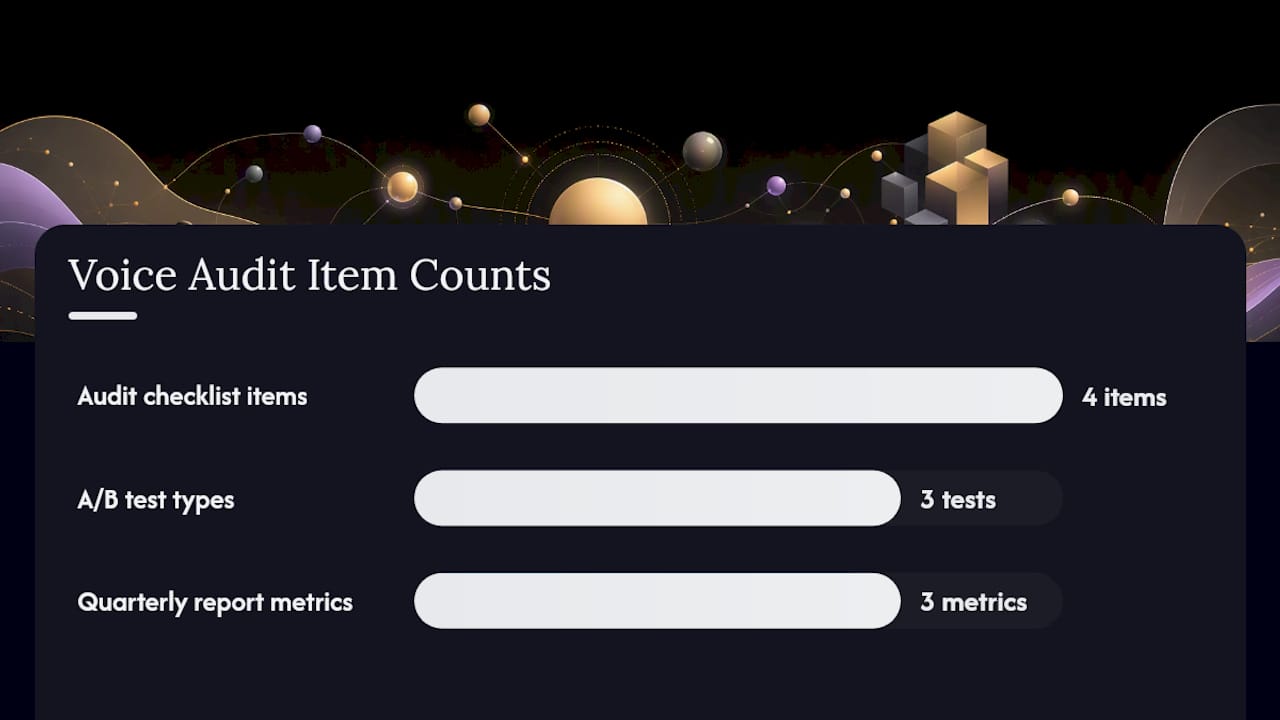
Voice work isn’t a one-time project. It drifts the moment a new writer joins, an agency takes over a flow, or a founder starts editing copy again after months away.
A practical audit checklist:
- Pull a random sample of 15 to 20 emails across the last quarter
- Tag each one by tone (celebratory, apologetic, neutral, urgent) and flag anything that reads off-brand
- Cross-reference off-brand emails against their performance data to spot correlation
- Note which writer or team produced each flagged email
Brandwatch’s guidance on brand voice audits recommends checking voice consistency across every channel, not just email, since drift in one place often signals drift everywhere.
A/B tests worth running specifically for voice:
- Subject lines written in two distinct tones (playful versus direct) against the same audience segment
- CTAs that swap a commanding verb (“Buy Now”) for an inviting one (“See What’s Inside”)
- Greeting variations (first name versus no greeting at all) to measure open and reply impact
Set a quarterly cadence for a short voice health report: sample size reviewed, percentage flagged off brand, and any correlation with open or click movement. Hootsuite’s take on evolving a voice over time is worth repeating here: change should be iterative and backed by data, not a sudden overhaul based on one person’s gut feeling.
Three Email Voice Examples You Can Steal and Adapt
Seeing voice in action makes it easier to define your own. Here are three distinct approaches, each built the same way: subject line, two or three body lines, and a CTA.
- Friendly and helpful. Subject: “Quick question about your order.” Body: “We noticed you haven’t picked a delivery date yet. No rush, just want to make sure it doesn’t sit in limbo.” CTA: “Pick a date.” Works well for support-adjacent emails where the reader needs a nudge, not a pitch.
- Confident and expert. Subject: “The fabric difference you’re not seeing.” Body: “Most cotton pills after five washes. Ours doesn’t. Here’s the weave that makes the difference.” CTA: “See the comparison.” Fits brands selling on quality or technical differentiation to a more skeptical reader.
- Playful and quirky. Subject: “Your cart is getting lonely.” Body: “It’s been sitting there. Just sitting. Waiting. Kind of dramatic, honestly.” CTA: “End the drama.” Best for younger, casual audiences who expect humor and won’t read it as unprofessional.
Treat these as starting points, not scripts. The traits your workshop surfaced should shape the actual words you use, not a template pulled from an article.
Agency Checklist: Rolling Out Voice Across a Real Email Program
Here’s what tends to separate a voice guide that gets used from one that gets ignored: a pilot, not a full rollout.
Implementation checklist:
- Assign one owner accountable for voice consistency
- Pick a single pilot flow (welcome or post-purchase works best)
- Document the voice rules specific to that flow
- Build two or three reusable templates from those rules
- Run an A/B test on subject line or CTA tone within that flow
- Measure results, adjust the guide, and expand to the next flow
A short swipe file to adapt, not copy:
-
Subject formats: “[First Name], quick update,” “Still thinking about [product]?”, “You’re going to want to see this,” “One thing before you go,” “The story behind [product]”
-
Greetings and sign-offs: “Hey [First Name],” paired with “Talk soon,”; or a no-greeting direct-open paired with “Here to help,”
-
Recommended early tests: subject-line tone variants and CTA phrasing, since both are cheap to test and produce fast, readable signal.
-
Common friction point: onboarding a second or third writer without a banned-words list, which is the fastest way voice drift creeps back in.
-
Quick QA check: read every new template out loud. If it doesn’t sound like a real person, it needs another pass.
Pro Tip: Run your pilot flow’s A/B test for a minimum of two full send cycles before declaring a winner. Voice-driven lift often shows up in click and reply rates before it shows up in opens.
Why We Treat Email as the Starting Point for Voice Work
Email is the channel where a brand’s voice gets tested most often, sometimes dozens of times a month for a single subscriber. That repetition is exactly why we push clients to nail voice here before spreading it across social, ads, or customer service scripts. Get the email voice guide wrong and you’re compounding the mistake with every send.
We measure voice work the same way we measure everything else: open rate, click rate, and ultimately revenue lift tied to specific flows. A style guide that doesn’t move any of those numbers isn’t finished yet.
If you want a second opinion on whether your current emails sound like one brand or five, send us a sample flow and we’ll tell you what we see.
How Take-action Turns Your Voice Guide Into Working Email
Take-action closes the gap between a documented voice guide and emails that actually convert. Most brands write the style guide and then watch it collect dust because nobody has time to rebuild every flow around it. We do the opposite: we build your welcome series, abandoned cart flow, and post-purchase automation directly on Klaviyo with your voice rules baked into every template from day one, then run the subject-line and CTA tests that tell you whether the voice is actually working.

This fits ecommerce brands and marketing teams that need faster, measurable results without hiring a full internal copy team. We’ve applied this exact process to help brands build a distinctive voice inside Klaviyo that shows up in retention numbers, not just style points. If your emails need a voice audit, a documented guide, or a full flow rebuild, start with Take-action and get a plan built around your actual send data.
Frequently Asked Questions
What is brand voice in email, in one sentence? Brand voice in email is the consistent personality expressed through every subject line, greeting, body paragraph, CTA, and signature a subscriber receives, regardless of email type.
Is brand voice the same as tone in email marketing? No. Voice stays the same across every email you send; tone shifts based on context, like a celebratory launch email versus an apologetic refund notice.
How often should a brand voice guide be updated? Most teams review it quarterly, adjusting based on audit findings and A/B test results rather than overhauling it on instinct.
What’s the fastest way to test if our email voice is working? Run an A/B test on subject-line tone or CTA phrasing within a single flow, like welcome or post-purchase, and track open, click, and unsubscribe rates over at least two send cycles.
Do transactional emails need the same brand voice as marketing emails? Yes. A shipping confirmation that sounds robotic while your promotional emails sound casual and warm creates the exact inconsistency that erodes subscriber trust.
Sources
These sources informed the definitions, benefits, and practical steps covered above:
- How to build a strong brand voice in 2026
- Craft your best brand voice: Expert tips, examples, and templates
- What Is Brand Voice? How To Create One for Your Brand (2025)
- Brand Voice in Email: How to Stay Consistent Across Multiple Writers